
Vieux-Port de Marseille and the harbour basin at Marseille’s historic heart
Published on 09/19/2026 at 16:14 | Editorial responsibility: Rafael Müller, Editor-in-Chief AD HOC NEWS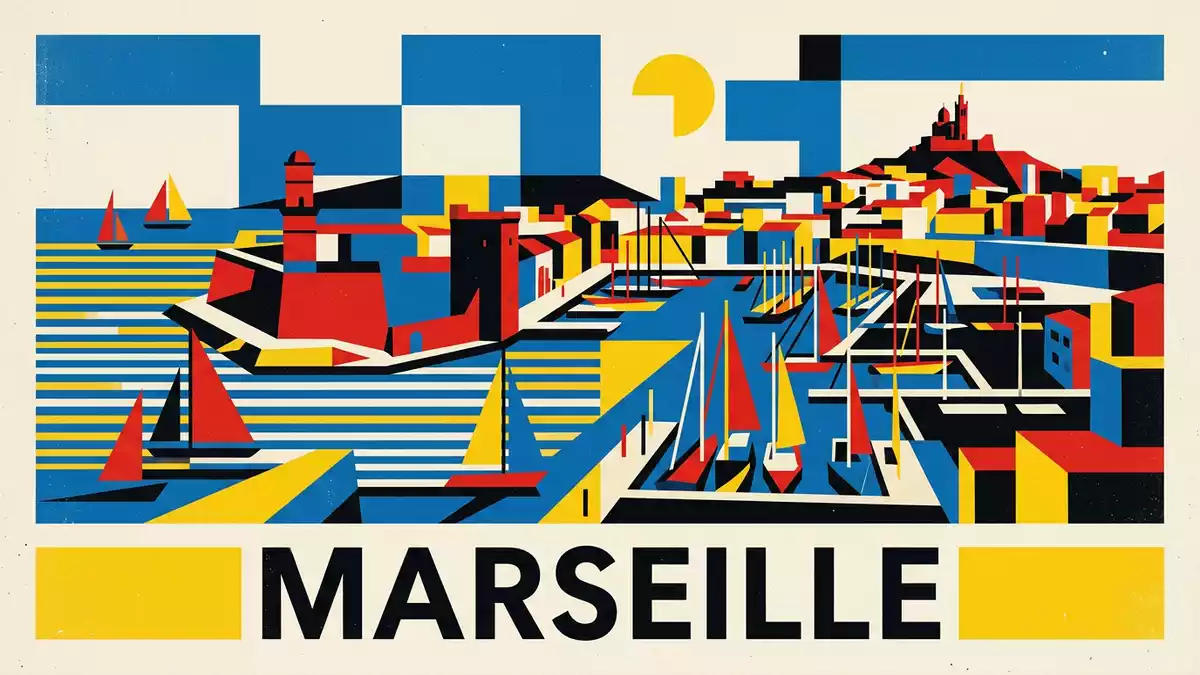
Vieux-Port de Marseille is the historic harbour basin at the centre of Marseille, a natural inlet where the city’s story began around a sheltered waterfront open to the Mediterranean. The Old Port has served as Marseille’s main harbour since antiquity and still forms a broad basin lined with quays, public spaces and moored boats.
The harbour where Massalia was founded
Vieux-Port de Marseille occupies a natural harbour at the western end of La Canebière, the major street that runs down towards the water from the city centre. The inlet was known in antiquity as Lacydon and has functioned as Marseille’s principal port since at least the sixth century BC, when Greek settlers from Phocaea founded the city of Massalia on its shores.principal port since at least the sixth century BC Over time, Massalia became the Roman city of Massilia and later the medieval town of Marsiho, but the harbour at Vieux-Port de Marseille remained the focal point.
Along the mouth of the basin stand Fort Saint-Jean and Fort Saint-Nicolas, two major fortifications raised from the seventeenth century onwards to guard the harbour entrance on either side.Fort Saint-Jean and Fort Saint-Nicolas Their stone walls and bastions frame the view from the inner basin towards the open sea, underlining how closely Marseille’s defence and growth have been tied to this stretch of water.
From working port to waterfront basin
For centuries Vieux-Port de Marseille concentrated almost all of Marseille’s maritime activity, accommodating merchant shipping, shipyards and fishing boats along its quays.concentrated almost all of Marseille’s maritime activity The harbour basin covers around 200,000 square metres (approximately 49 acres), a generous expanse of water flanked by stone embankments, slipways and landing stages.around 200,000 square metres In the nineteenth century, as steamships grew larger and demanded deeper berths, industrial and commercial shipping shifted northwards to new docks, while the Old Port gradually took on a different role.
Vieux-Port de Marseille today functions primarily as a marina and civic harbour, with pleasure craft and smaller vessels moored around the basin and only a limited number of working fishing boats using the quays.functions primarily as a marina and civic harbour The area around the inner harbour is pedestrian-focused, with wide promenades, paved squares and gathering spaces that connect directly with the historic streets rising towards the rest of Marseille.
Vieux-Port de Marseille in the cityscape
The basin of Vieux-Port de Marseille lies in the geographical centre of Marseille, surrounded by limestone hills and closely integrated with the road and tram networks of the city.surrounded by limestone hills La Canebière reaches the head of the harbour, while other streets and quays run along both the north and south sides of the water, providing continuous frontages of buildings, terraces and landing points. The quays themselves developed between the fifteenth and seventeenth centuries, giving much of the waterfront a historic stone edge that still frames the water today.quays from the fifteenth to seventeenth centuries
At the head of the basin, near the Quai des Belges, an open canopy known as L’Ombrière spans part of the quay, its polished underside reflecting the harbour scene and the people moving beneath it.L’Ombrière spans part of the quay Around the basin, buildings range from older stone structures to later blocks, with the Abbatiale Saint-Victor de Marseille standing on the south side above the quays, marking the long religious and civic history attached to this waterfront.Abbatiale Saint-Victor de Marseille on the south side
Visiting Vieux-Port de Marseille: what travellers from Western Europe should know
- Vieux-Port de Marseille lies on Marseille’s central waterfront at the western end of La Canebière, and is reached directly by tram and metro services that stop near the head of the harbour.
- The harbour edges are mainly level promenades and paved quays, with some sections involving steps up to streets or down to landing stages and ferry points.
- The entrance to the basin is flanked by Fort Saint-Jean on the north side and Fort Saint-Nicolas on the south, both within walking distance along the quays.
- Marseille is in France; the official language is French and the currency is the euro.
Searching for Vieux-Port de Marseille on social platforms
These links open searches for Vieux-Port de Marseille on each platform.
Frequently asked questions about Vieux-Port de Marseille
Where is Vieux-Port de Marseille located within Marseille?
Vieux-Port de Marseille forms the central harbour basin on Marseille’s waterfront, at the western end of La Canebière, surrounded by the inner districts of the city.
What can visitors expect when they arrive at the Old Port?
Visitors encounter a wide basin of water bordered by quays, promenades and historic fortifications, with moored boats and direct views towards the limestone hills and the open sea.
What makes Vieux-Port de Marseille distinctive compared with other parts of the city?
The Old Port combines a natural harbour that dates back to the Greek foundation of Massalia with later stone quays, fortresses and civic spaces, making it both Marseille’s historic centre and a major waterfront basin.


