

Vinh Ha Long: limestone towers rising from the Gulf of Tonkin
Published on 08/16/2026 at 14:47 | Editorial responsibility: Rafael Müller, Editor-in-Chief AD HOC NEWS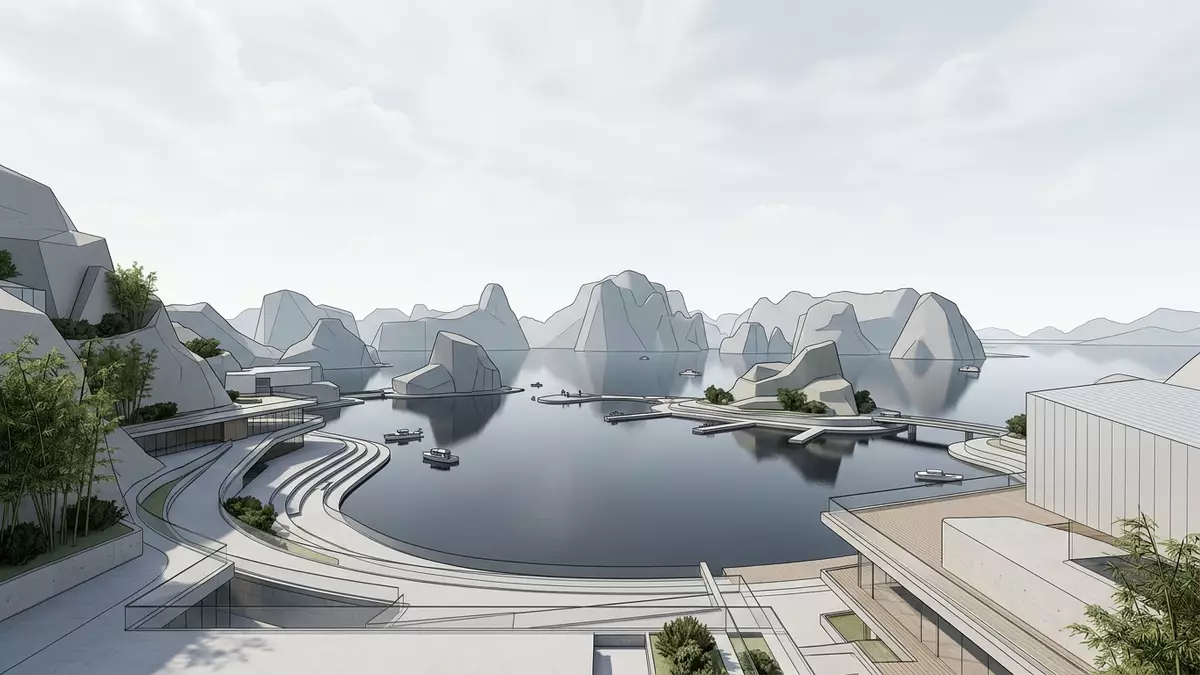
Vinh Ha Long, known worldwide as Ha Long Bay, is a broad bay in north-eastern Vietnam where forested limestone towers rise directly from the Gulf of Tonkin. The bay lies off the coast of Quang Ninh province near the city of Ha Long and forms a distinctive seascape of islands, cliffs and sheltered channels.
Limestone towers and a drowned karst landscape
The defining feature of Vinh Ha Long is the limestone karst landscape, shaped into steep-sided towers and clustered peaks that stand in the water. The bay forms part of a wider karst area in north-eastern Vietnam where limestones have been eroded into a mature relief of fengcong, clusters of conical peaks, and fenglin, more isolated towers rising above the sea.mature landscape of fengcong and fenglin The towers and larger islands create narrow passages and wide basins between them, giving the bay a varied, three-dimensional character.
The limestones that make up the islands were formed from marine sediments and shells laid down on the sea floor during the Palaeozoic era.limestone deposited between about 390 million and 260 million years ago Over geological time the block was uplifted and then invaded by the sea, producing what geomorphologists describe as a drowned karst landscape where hills, valleys and towers are partly submerged.drowned karst landscape Many of the island slopes are sheer, and the smaller towers rise tens of metres above the water with height-to-width ratios that emphasise their vertical form.fenglin towers of 50m to 100m high
Islands, caves and hidden interiors
Across the surface of Vinh Ha Long stand numerous islands and islets of varying size, from larger landmasses with internal valleys to smaller pinnacles that barely have space for vegetation. Within the limestone, karst processes have carved caves and enclosed chambers, some reached through openings at sea level and others accessible from paths on the islands.karst and caves of Ha Long Bay Many caves preserve speleothems and other features associated with long periods of dissolution and re-precipitation in humid tropical conditions.
Ha Long Bay forms part of a wider archipelago that includes Cat Ba, and together they show a broad range of marine-invaded tower karst forms, from domes and ridges to isolated stacks and more complex island groups.Ha Long Bay - Cat Ba Archipelago The combination of steep limestone relief, enclosed basins and channels gives the bay many interior spaces where the surrounding towers limit wider views. In places, small bays are bordered by cliffs and lower slopes carrying vegetation, creating contrasts between rock, water and foliage within short distances.
World Heritage status and regional setting
Vinh Ha Long lies in the northern Gulf of Tonkin, off the coast of Quang Ninh province to the east of Hanoi, and is administered within Vietnam as part of a coastal zone that includes offshore islands and mainland areas.bay located in Northeastern Vietnam, administered by Qu?ng Ninh province The wider Ha Long Bay area has long been recognised for its scenic and geological qualities and has been inscribed on the UNESCO World Heritage List for its outstanding aesthetic and geomorphological values.inscribed on the World Heritage List More recently, the recognised World Heritage area has been expanded to include the Cat Ba Archipelago, forming an inter-provincial site across Quang Ninh and Hai Phong.Ha Long Bay - Cat Ba Archipelago recognised as UNESCO's World Natural Heritage
The bay’s islands and karst features are part of larger structural units where blocks of limestone have been faulted and submerged, creating synclinal basins and elevated remnants that now form the island groups.Ha Long karst type Within this setting, Vinh Ha Long acts as a central bay among other coastal formations, with channels linking it to surrounding waters and shipping routes passing nearby. The relationship between submerged platforms, deeper channels and emergent towers contributes to the distinctive profile of the bay when seen from boats or viewpoints on the mainland.
Visiting Vinh Ha Long: what travellers from Western Europe should know
- Vinh Ha Long lies off the coast of Quang Ninh province in north-eastern Vietnam, with approaches from the city of Ha Long and road connections from Hanoi and other northern centres.
- Many islands have steep limestone slopes and limited landing points, and access on foot on those that can be visited often involves stairways, uneven paths and changes in gradient.
- The bay sits in a humid tropical coastal region, and conditions on exposed decks, small boats and open viewpoints can be affected by wind and sea spray.
- Nearby areas include the Cat Ba Archipelago in Hai Phong, which together with Ha Long Bay forms a wider recognised karst island system.
- The official language is Vietnamese and the currency is the Vietnamese dong.
Searching for Vinh Ha Long on social platforms
These links open searches for Vinh Ha Long on each platform.Frequently asked questions about Vinh Ha Long
Where is Vinh Ha Long?
Vinh Ha Long is a bay on the north-eastern coast of Vietnam, off Quang Ninh province near the city of Ha Long, in the northern Gulf of Tonkin.
What can visitors expect when exploring the bay?
Visitors encounter limestone islands rising from the sea, narrow channels, enclosed basins and caves cut into the rock, alongside areas of vegetation on accessible slopes and interior valleys.
What makes Vinh Ha Long distinctive among coastal landscapes?
The bay brings together a drowned karst landscape of fengcong and fenglin limestone towers, extensive island groups and recognised World Heritage status within a single coastal setting.


