
Vinicunca’s mineral stripes above Cusco’s high plateau
Published on 09/19/2026 at 18:32 | Editorial responsibility: Rafael Müller, Editor-in-Chief AD HOC NEWS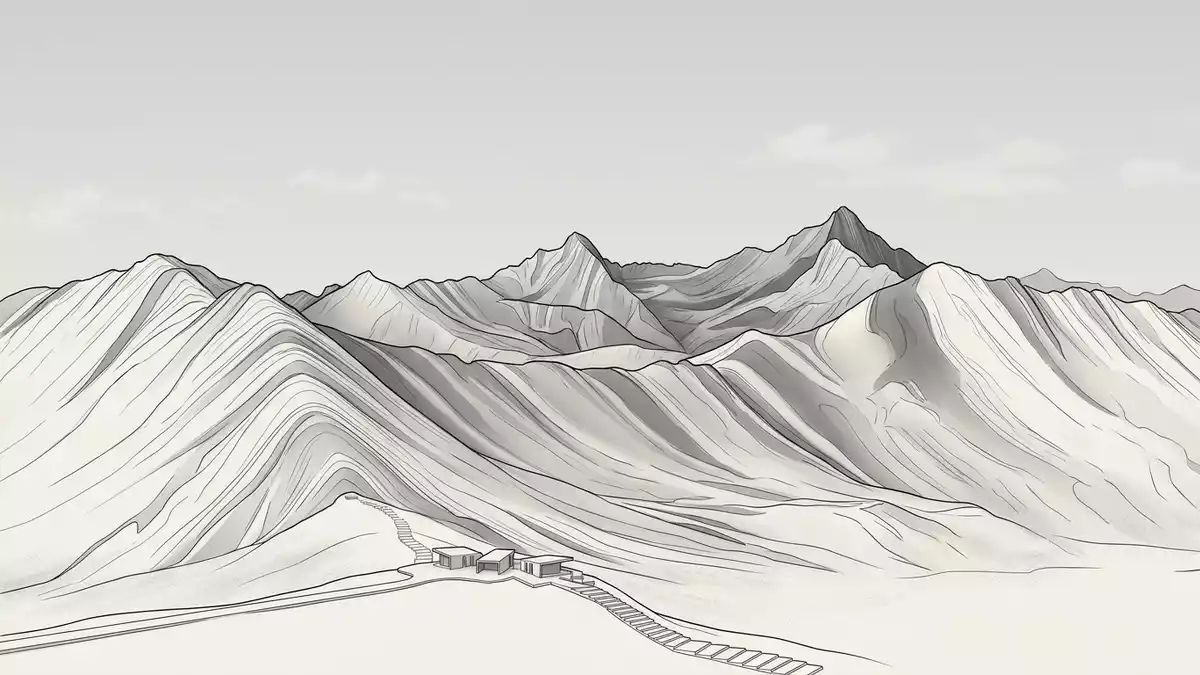
Vinicunca near Cusco in Peru is a high?Andean mountain ridge where coloured mineral bands run across the slopes at more than 5,000 m (around 16,500 ft) above sea level. The mountain is known in Spanish as Montaña de Siete Colores, Montaña de Colores and Montaña Arcoíris, names that all refer to the stripes of pink, red, green, yellow and brown that have made it a Rainbow Mountain in the literal geological sense rather than a painted landmark.Montaña de Siete Colores
Rainbow bands in the high Andes
Vinicunca rises in the Andes of southern Peru within the Cusco region, on a ridge associated with the Cordillera Vilcanota where glaciated peaks and high plateaus form a broad Andean landscape. Sources place the summit area at an elevation around 5,036 to 5,200 m (16,522 to 17,060 ft), which makes the viewpoint above the coloured slopes a high?altitude destination by any measure in the central Andes.summit area reaches around 5,036 m The ridge lies between districts such as Cusipata and Pitumarca, above valleys where grassland supports llamas and alpacas with villages further down the slopes.between Cusipata and Pitumarca
The lead characteristic of Vinicunca is the series of coloured bands that run across its flanks, formed by sedimentary strata lifted and tilted during Andean tectonic activity. These layers are geological formations rather than any surface treatment, and their hues correspond to differing mineral compositions in each band.series of coloured bands The pink and red tones are linked to iron?rich claystones and other rocks containing iron oxides, yellow shades to sulphur?bearing sandstone, and white areas to layers rich in calcium carbonate such as marl and quartzose sandstone.
Minerals behind the colours
Geological studies of Vinicunca describe the coloured slopes as a cross?section through sedimentary rocks that were laid down tens of millions of years ago and later uplifted as the Andes formed.layers of sedimentary rock The red and pink bands correspond to strata containing clays with iron compounds, which oxidise to those colours; green and turquoise bands are associated with minerals such as chlorite and other ferro?magnesian or copper?related components; earthy brown zones are linked to magnesium?rich rocks; and mustard yellow belts run through calcareous sandstones that carry sulphurous minerals.composición mineralógica
Seen from the viewpoint on the ridge, these mineral stripes form a sequence of contrasting tones set against pale highland grassland and distant snowfields of the Cordillera Vilcanota. The bands do not follow a simple pattern: some widen down the slope, others taper and disappear, reflecting the way different sedimentary layers have been eroded and exposed. In places the colours are cut by darker rock outcrops, while elsewhere they curve gently across the flank in wide arcs that underline Vinicunca’s character as an open?air geological section rather than a single peaked summit.
Vinicunca in its Andean setting
Vinicunca sits within a broader high?Andean environment east of the city of Cusco, where ridges, passes and valleys at similar elevations form part of the Vilcanota range. Nearby, snow?covered massifs such as Ausangate rise higher than the coloured ridge, anchoring the landscape and feeding streams that run through the valleys between grazing grounds and small settlements.near the snow?capped Ausangate glacier The Rainbow Mountain name connects Vinicunca to this Andean context, where peaks often carry their own local names alongside Spanish descriptive labels.
The mountain’s multiple names reflect this mix of languages and perceptions. Vinicunca and Winikunka are Quechua?derived names, while Montaña de Siete Colores, Montaña de Colores and Montaña Arcoíris describe the visible stripes in Spanish.Vinicunca or Winikunka Local usage also includes Cerro Colorado, a name that points to the prevalence of reddish tones among the bands. Together, these names anchor the mountain in both regional geography and Andean cultural language, marking it out as more than an anonymous ridge.
Visiting Vinicunca: what travellers from Western Europe should know
- Vinicunca lies in the Cusco region of Peru between districts such as Cusipata and Pitumarca, reached from roads that head towards the Vilcanota range and Ausangate.
- The viewpoint above the coloured slopes stands above 5,000 m (around 16,500 ft), so the approach involves thin?air terrain and paths that climb over high?altitude ground.
- The terrain around the mountain consists of open highland grassland, exposed ridges and Andean valleys, with weather conditions that can vary quickly at these elevations.
- The official language is Spanish and the currency is the Peruvian sol.
- Entry requirements depend on your nationality; UK travellers can check the FCDO travel advice at gov.uk/foreign-travel-advice, Irish travellers the Department of Foreign Affairs at ireland.ie.
Searching for Vinicunca on social platforms
These links open searches for Vinicunca on each platform.
Frequently asked questions about Vinicunca
Where is Vinicunca?
Vinicunca is a mountain ridge in the Andes of southern Peru, in the Cusco region, between districts such as Cusipata and Pitumarca in the Cordillera Vilcanota.
What should visitors expect on a visit to Vinicunca?
Visitors encounter a high?altitude environment above 5,000 m with paths over open grassland and ridges, leading to a viewpoint over the coloured mineral bands and surrounding Andean peaks.
What makes Vinicunca distinctive among Andean mountains?
Vinicunca is distinctive for its visible sequence of mineral?rich sedimentary bands in pink, red, green, yellow, white and brown, which form an open?air geological cross?section across the mountain’s slopes.


