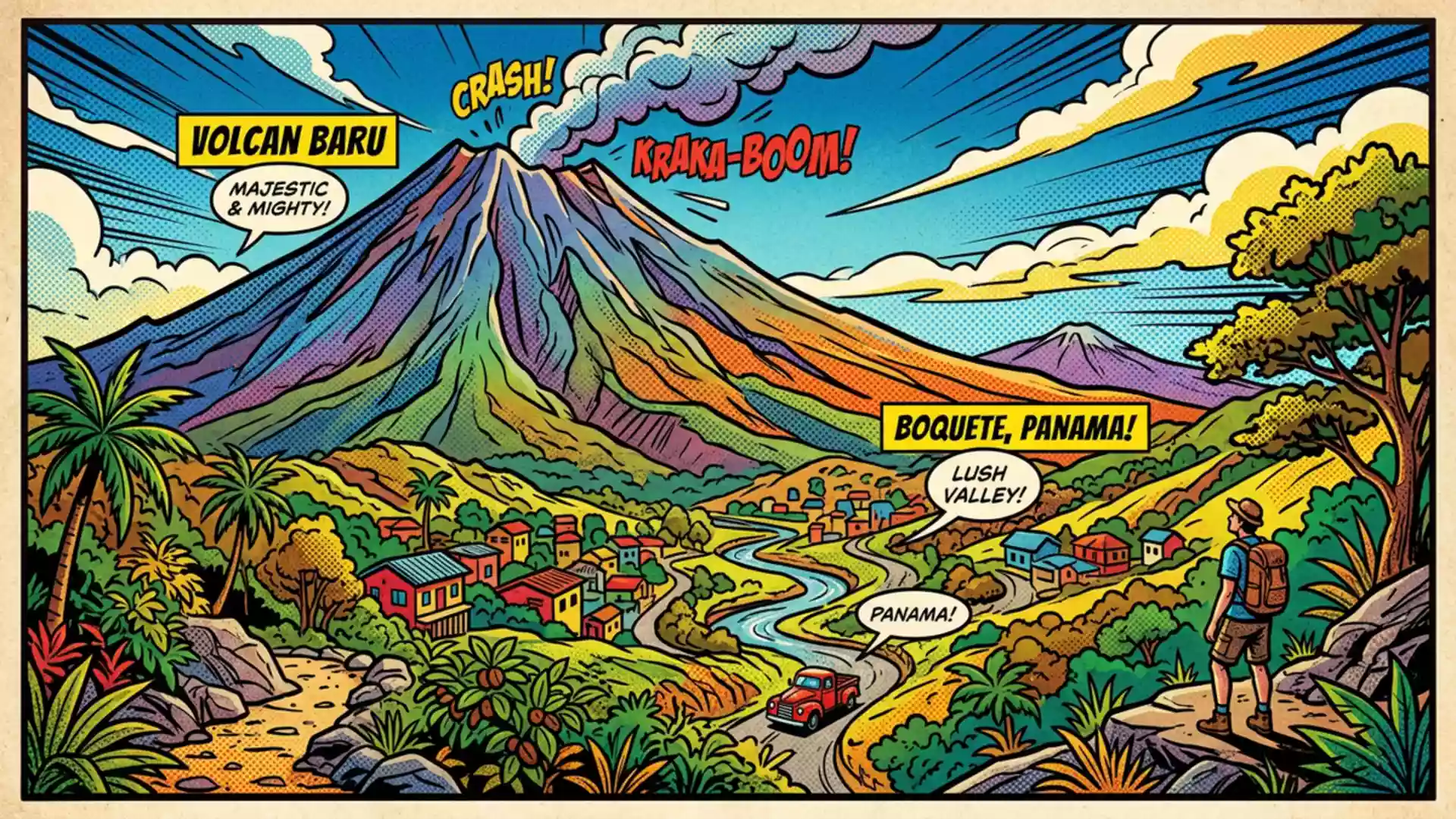
Volcan Baru rises as Panama’s highest volcano
Published on 08/29/2026 at 10:25 | Editorial responsibility: Rafael Müller, Editor-in-Chief AD HOC NEWS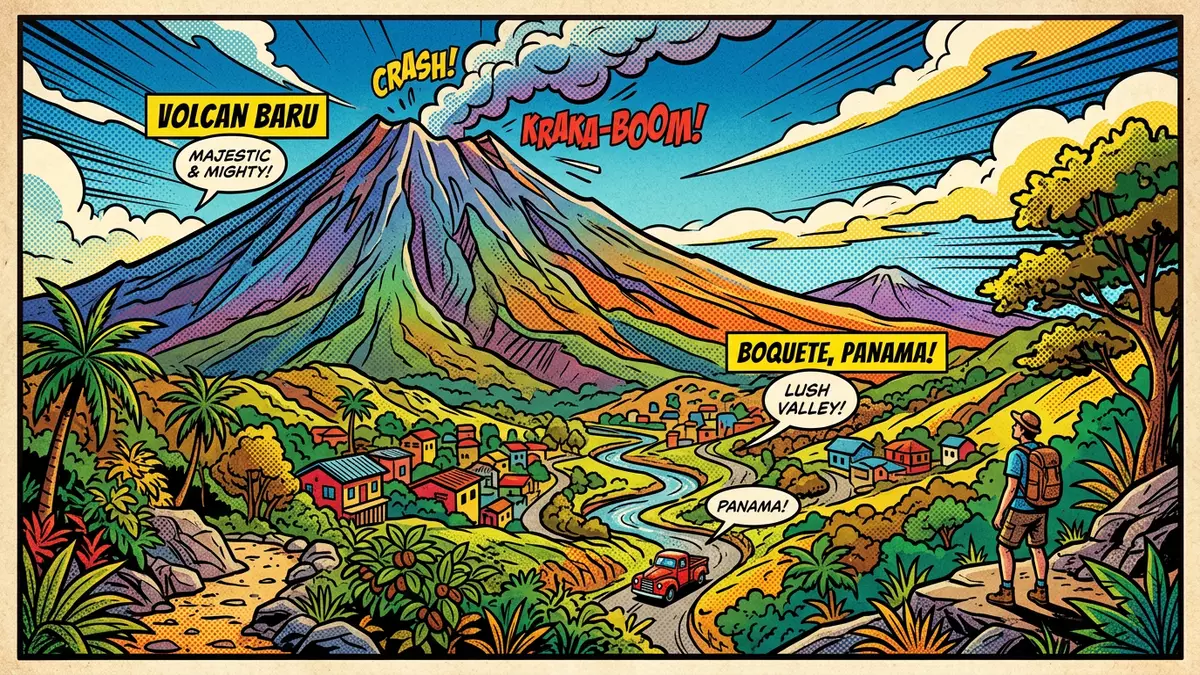
Volcan Baru rises above Boquete as Panama’s highest mountain, a stratovolcano that reaches 3,475 m (11,401 ft). Its summit and flanks form a high volcanic mass in the Talamanca Range, with the park edge running close to the town.
Panama’s highest peak above Boquete
The volcano is linked to Volcán Barú National Park, declared in 1976, and the mountain remains the country’s highest point. It is an active stratovolcano, a form that gives it steep upper slopes and a broad volcanic body rather than a single sharp cone.Volcán Barú National Park
Geologically, Barú belongs to the Central American Volcanic Arc and the Talamanca Range. The USGS describes it as a potentially active volcano in western Panama, about 35 km east of the Costa Rican border.Central American Volcanic Arc
A volcanic body shaped by eruption deposits
Barú is not a simple cone. Its edifice is built from overlapping lava flows, pyroclastic deposits and lahars, and the modern summit sits within a breached amphitheatre on the western side.
The summit area contains a lava dome and related deposits, while older volcanic rocks lie beneath them. The mountain’s profile records both construction and collapse, with a broad scar opening through part of the volcano.lava dome and related deposits
That layered history shows in the terrain around the mountain. Volcanic slopes descend towards Boquete on one side and towards broad lahar plains on others, so the place reads as a landscape of cones, fans and older flow deposits rather than a single summit alone.
Volcanic history written in rock and ash
Volcán Barú has had several eruptive episodes during the past 1,600 years, with the most recent eruption traditionally dated to the sixteenth century. Its rocks are chiefly andesite and basaltic andesite, with some dacite in the volcanic sequence.eruptive episodes
The USGS report links the modern summit dome with younger eruptive products and notes that much of the Holocene activity has come from that area. It also records a major prehistoric debris avalanche and later lava and pyroclastic deposits, which explain the mountain’s broken western amphitheatre and layered slopes.major prehistoric debris avalanche
Boquete lies on the eastern flank, where the volcano rises above settled ground and valleys cut into the mountain. That relationship makes Volcan Baru more than a distant backdrop: it is a high volcanic massif that dominates the region’s relief and its geologic memory.
Visiting Volcan Baru: what travellers from Western Europe should know
- Volcan Baru stands above Boquete in Chiriquí Province. It is reached from the town by road towards the park and summit routes.
- The mountain is high and exposed, with a summit at 3,475 m (11,401 ft). The upper slopes are steep and volcanic, with loose deposits in places.
- Boquete sits on the eastern flank, while Volcán town lies on the western side. The mountain is part of a protected national park landscape.
- The official language is Spanish and the currency is the Panamanian balboa, which is tied to the US dollar.
Searching for Volcan Baru on social platforms
These links open searches for Volcan Baru on each platform.
Frequently asked questions about Volcan Baru
Where is Volcan Baru?
Volcan Baru is in western Panama, above Boquete and within Volcán Barú National Park. It rises in the Talamanca Range near the Costa Rican border.
What does a visit involve?
The place means altitude, steep volcanic ground and a landscape shaped by lava flows, ash and collapse scars. Boquete gives the clearest access point on the eastern side.
What makes Volcan Baru distinctive?
It is Panama’s highest mountain and an active stratovolcano. Its broad volcanic form and summit dome distinguish it from the surrounding highland terrain.