
Volubilis and the mosaics of a Roman city near Meknes
Published on 09/23/2026 at 08:48 | Editorial responsibility: Rafael Müller, Editor-in-Chief AD HOC NEWS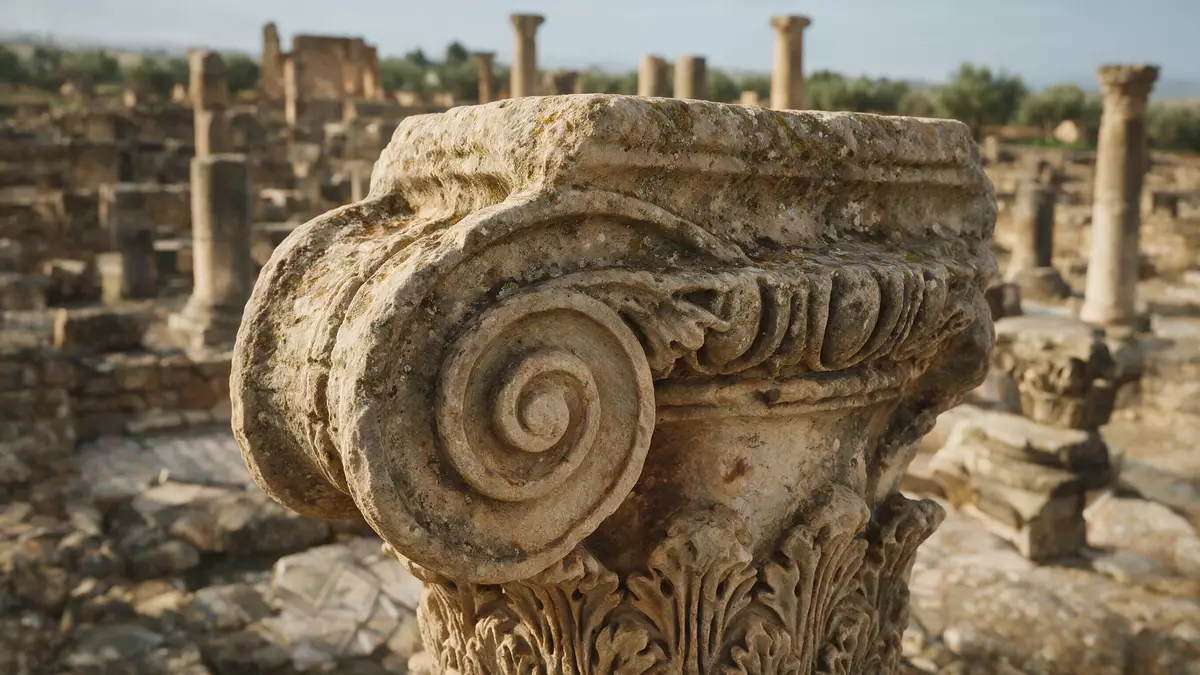
Volubilis spreads across a broad plain near Meknes, with Roman streets, stone arches and mosaic floors remaining visible across the archaeological site. The ruins belong to a city that grew from a Mauritanian centre into an important Roman settlement, and its buildings preserve that layered history in stone.
Volubilis: a city mapped in stone and mosaic
Volubilis began as a settlement in the third century BC and became associated with the Kingdom of Mauretania. King Juba II ruled Mauretania during the first century BC and first century AD, a period linked with the city’s development before Roman annexation.
Rome incorporated Mauretania in 40 AD, and Volubilis became part of the province of Mauretania Tingitana. The urban remains include a forum, basilica, Capitol, baths and a monumental arch associated with Emperor Caracalla. Volubilis entered the World Heritage List in 1997.
Roman streets, public buildings and domestic rooms
The city’s public architecture is concentrated around open civic spaces and substantial masonry. Columns, broken walls and surviving architectural blocks mark the forum and basilica, while the Capitol preserves the religious vocabulary of Roman urban planning.
The Decumanus Maximus forms a major route through the ruins. Houses along the streets retain decorated floors, with scenes from classical mythology set into polychrome mosaics. The mosaics belong to private interiors, yet they remain exposed within the wider urban fabric. The residential districts preserve mosaic floors beside streets and public monuments.
From Mauretania to Roman Africa and Islamic history
Volubilis was not simply a Roman foundation. Its earlier history connects the site with local Berber communities, Carthaginian trade and the Mauritanian kingdom. Roman rule added imperial institutions, monumental buildings and a formal street system.
Occupation continued after the Roman period, and the site also has a place in the history of the Idrisid dynasty. The ruins therefore bring together Mauritanian, Roman and Islamic associations within one archaeological landscape. The city’s monuments include baths and a basilica, alongside the arch and mosaic houses.
Its setting reinforces the connection between city and countryside. Volubilis lies near the foothills of Jebel Zerhoun, amid agricultural land associated with olives and the river valleys of northern Morocco. The open horizon, low masonry and scattered columns form a landscape in which urban remains and cultivated ground occupy the same view.
Visiting Volubilis: what travellers from Western Europe should know
- Volubilis lies in the Meknes Prefecture, north of Meknes, near Moulay Idriss Zerhoun. Road transport from Meknes is the practical way to reach the archaeological site.
- The site is spread across open, uneven ground. Walking involves exposed paths, archaeological surfaces and changes in level between streets, houses and public buildings.
- The official language is Arabic and the currency is the Moroccan dirham.
- Entry requirements depend on your nationality; UK travellers can check the FCDO travel advice at gov.uk/foreign-travel-advice, Irish travellers the Department of Foreign Affairs at ireland.ie.
Searching for Volubilis on social platforms
These links open searches for Volubilis on each platform.
Frequently asked questions about Volubilis
Where is Volubilis?
Volubilis is in northern Morocco, in the Meknes Prefecture near Meknes and Moulay Idriss Zerhoun. The ruins lie on an agricultural plain below Jebel Zerhoun.
What remains at Volubilis?
The archaeological site preserves Roman streets, a forum, basilica, Capitol, baths, monumental arch and houses with mosaic floors. Columns and stone walls remain across the open ruins.
What makes Volubilis distinctive?
Volubilis combines Mauritanian origins, Roman urban architecture and Islamic historical associations. Its mosaics remain in their original architectural setting among streets and civic buildings.


