
Wadi al-Muluk in Luxor and the rock-cut valley of royal tombs
Published on 09/18/2026 at 16:51 | Editorial responsibility: Rafael Müller, Editor-in-Chief AD HOC NEWS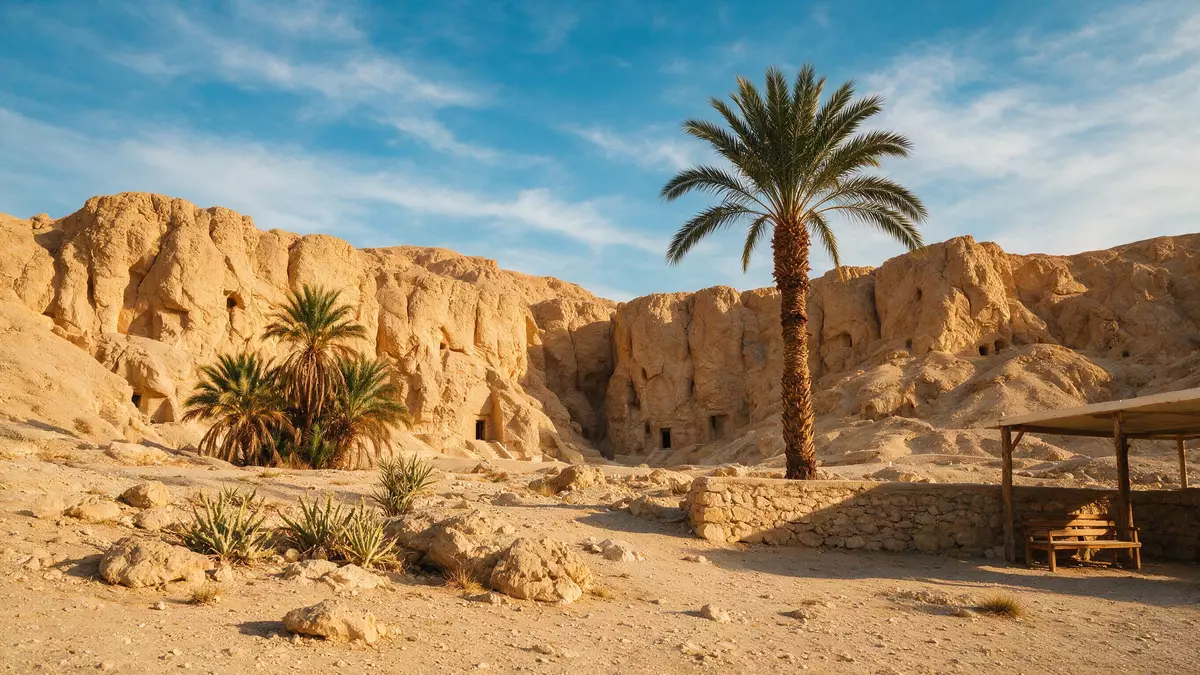
Wadi al-Muluk, known in English as the Valley of the Kings, is a dry desert valley in the Theban hills west of Luxor where the rulers of Egypt’s New Kingdom cut their tombs into the rock. The necropolis lies on the west bank of the Nile, opposite the ancient city of Thebes, and forms part of the World Heritage landscape inscribed for ancient Thebes and its monuments in 1979.
A desert wadi turned into a royal burial ground
Wadi al-Muluk is a natural wadi, a desiccated river valley running into the limestone hills that rise behind the Nile’s west bank at Luxor. In the New Kingdom, beginning with the reign of Thutmose I in the eighteenth dynasty, this secluded valley became the principal burial ground for Egypt’s pharaohs and some members of the royal family.burial site of almost all the kings of the eighteenth, nineteenth and twentieth dynasties The tombs here belong to a defined span of Egyptian history from around 1539 to 1075 BC, when Thebes was a political and religious centre of the empire.
The valley itself lies in the hills behind the cliffs of Dayr al-Bahri, in the wider Theban Necropolis on the Nile’s west bank.the dry river valley across the river from Thebes The landscape is defined by pale rock slopes, gravelly floors and the pyramidal outline of the peak known as el-Qurn rising above the tomb entrances. Against this compressed geology, the man-made elements are recessive: low structures at the valley floor, carved passages disappearing into the hillsides and discrete paths connecting the tomb mouths.
Tombs cut deep into the rock of the Theban hills
Instead of freestanding pyramids, Wadi al-Muluk is characterised by tombs carved directly into the rock of the valley. Survey work over generations has identified more than sixty tombs and shafts, ranging from small, simple chambers to elaborately stepped sequences of corridors and halls.over sixty known tombs in the valley Many follow a broadly linear plan that descends into the hillside, with corridors aligned along an axis that leads to a burial chamber at depth.
The decoration of these tombs is one of the defining characteristics of Wadi al-Muluk. Walls and ceilings in the larger tombs are covered with painted and carved scenes from funerary texts, including the Book of the Dead and other compositions that chart the journey of the sun god and the deceased through the afterlife.elaborate tomb walls with religious texts and imagery Figures of deities, protective symbols and bands of hieroglyphic text form dense programmes along the corridor walls, while ceilings in some chambers are painted deep blue and studded with stars, evoking a cosmic canopy over the sarcophagus below.
New Kingdom history written into a single valley
Wadi al-Muluk compresses the political and artistic history of the New Kingdom into one topographical amphitheatre. Dynastic rulers from Thutmose I through Ramesses X were buried here, their tombs spaced along the valley floor and side branches in patterns that reflect changing preferences over time.from Thutmose I to Ramesses X and the eighteenth to twentieth dynasties The site includes an eastern main valley and a more remote western branch, both under the umbrella of the Valley of the Kings designation.
The wider landscape of ancient Thebes, with Karnak and Luxor temples along the east bank and funerary temples such as Deir el-Bahri on the west, frames Wadi al-Muluk as part of a larger ritual geography.part of the Great and Majestic Necropolis in the West of Thebes In 1979 this constellation of sites, including the Valley of the Kings, the Valley of the Queens, Karnak and Luxor, was inscribed on the UNESCO World Heritage list under the collective name of ancient Thebes with its Necropolis, recognising both the archaeological richness of the tombs and their place in a long cultural tradition along the Nile.
Visiting Wadi al-Muluk: what travellers from Western Europe should know
- Wadi al-Muluk lies in the Theban hills on the west bank of the Nile opposite Luxor in southern Egypt, reached by crossing the river and following the road network that serves the West Bank monuments and the Valley of the Kings.
- The terrain in the valley consists of compacted desert surfaces and limestone slopes, with approaches on foot along gently rising paths and some stairways leading up to and down from tomb entrances inside the rock.
- Wadi al-Muluk sits within the wider Theban Necropolis, close to major sites such as the mortuary temples at Deir el-Bahri and the Colossi of Memnon, so tomb visits are often combined with other West Bank monuments.
- The official language is Arabic and the currency is the Egyptian pound.
- Entry requirements depend on your nationality; UK travellers can check the FCDO travel advice at gov.uk/foreign-travel-advice, Irish travellers the Department of Foreign Affairs at ireland.ie.
Searching for Wadi al-Muluk on social platforms
These links open searches for Wadi al-Muluk on each platform.
Frequently asked questions about Wadi al-Muluk
Where is Wadi al-Muluk in relation to Luxor?
Wadi al-Muluk is in the Theban hills on the west bank of the Nile, opposite Luxor in Upper Egypt, within the wider Theban Necropolis of ancient Thebes.
What can visitors expect when they enter the valley?
Visitors walk into a desert wadi lined with discreet infrastructure and tomb entrances in the rock, then descend through decorated corridors and chambers cut into the hillsides.
What makes Wadi al-Muluk distinctive among Egyptian sites?
Its concentration of New Kingdom royal tombs, the depth of rock-cut architecture and the dense programmes of funerary texts and imagery together give Wadi al-Muluk a character different from temple complexes along the Nile.


