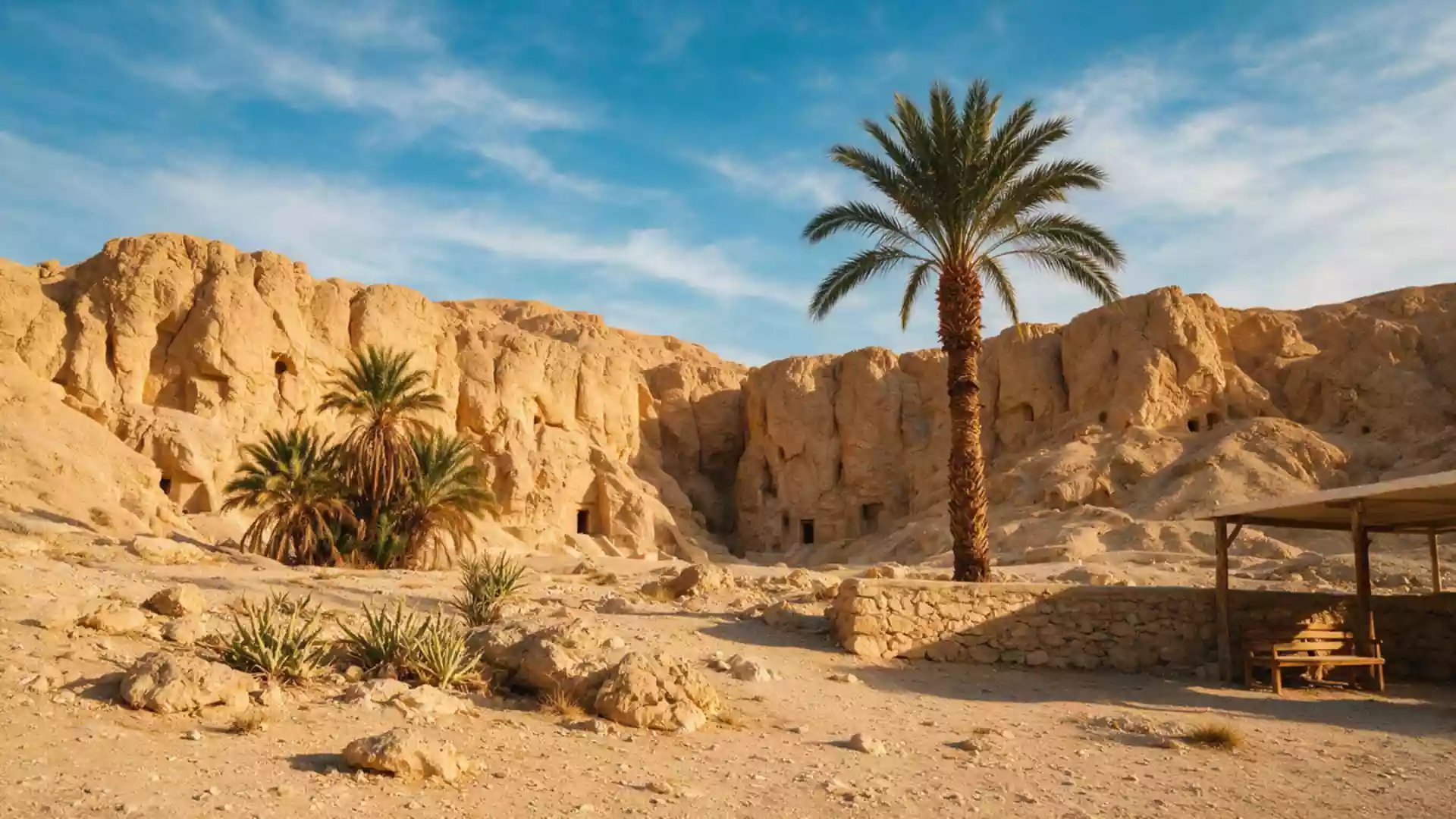
Wadi al-Muluk in Luxor, where pharaohs carved their resting place into the rock
Published on 08/15/2026 at 14:30 | Editorial responsibility: Rafael Müller, Editor-in-Chief AD HOC NEWS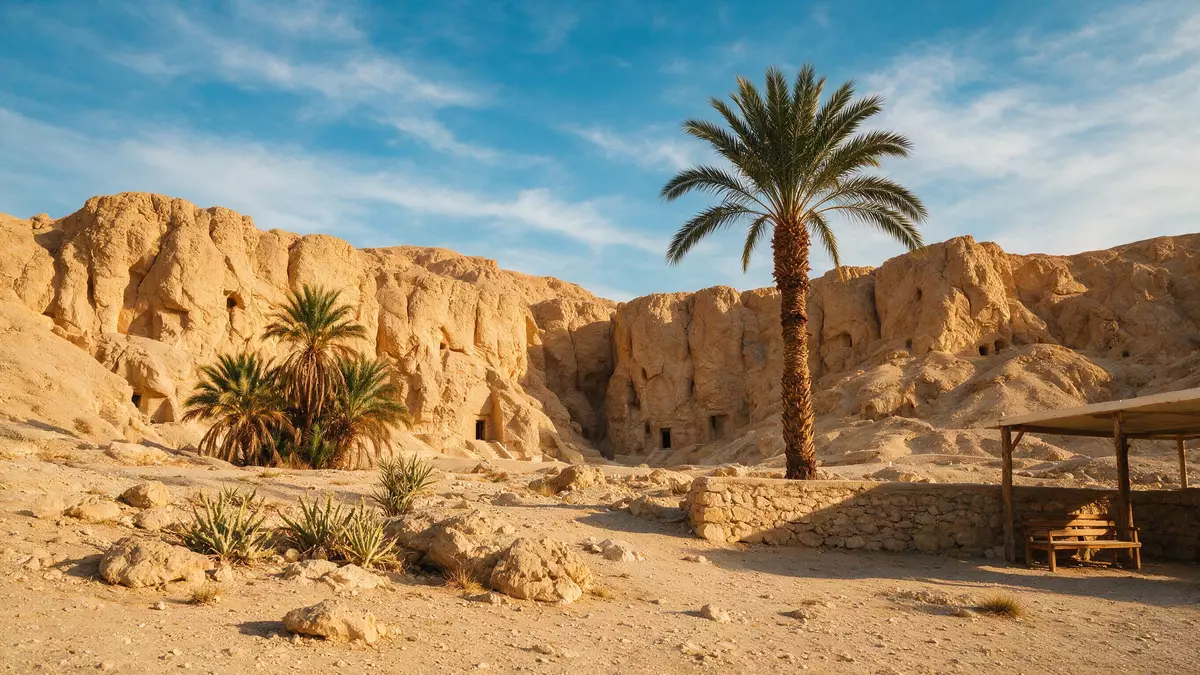
Wadi al-Muluk, known in English as the Valley of the Kings, is a dry desert valley west of Luxor where the rulers of Egypt’s New Kingdom cut their tombs deep into the rock. The necropolis lies within the Theban hills on the west bank of the Nile and forms part of the wider Theban burial landscape that was inscribed as a UNESCO World Heritage Site in 1979.
A rock-cut royal cemetery in the Theban hills
Wadi al-Muluk is a natural wadi incised into the limestone plateau behind Luxor’s West Bank villages, framed by cliffs and the prominent peak of el-Qurn above the tomb area.the limestone valley beneath el-Qurn From the sixteenth to the eleventh centuries BC, pharaohs of the Eighteenth, Nineteenth and Twentieth Dynasties chose this defile as their burial ground, concentrating their tombs in the main valley and in a smaller branch known as the West Valley.burial site of the 18th to 20th dynasties
Instead of building freestanding pyramids, the kings of this era had corridors and chambers carved directly into the rock faces and valley floor, creating an underground cemetery hidden within the desert landscape. Excavations have identified over sixty tombs and pits in Wadi al-Muluk, each designated by a “KV” number derived from “King’s Valley”, though only a selection are accessible to visitors at any one time.more than 60 royal tombs Above ground, the valley itself remains stark, with low visitor facilities near the entrance and the tomb portals scattered along the flanks of the wadi.
New Kingdom power and painted passages into the afterlife
The tombs of Wadi al-Muluk belong to the period when Thebes was Egypt’s political and religious centre and the cult of Amun at Karnak reached great influence. From Thutmose I in the early New Kingdom through rulers such as Ramses II and Ramses III, the valley became the principal burial place for kings and some members of their families.pharaohs from Thutmose I to Ramses X The choice of an out-of-the-way wadi on the west bank placed the royal tombs behind the terraces and temples of the memorial complexes, linking them to monumental structures such as Deir el-Bahari and the mortuary temple of Hatshepsut in the broader Theban necropolis.
Inside the tombs, long corridors descend through the rock towards the burial chambers, their walls covered with scenes and texts from funerary compositions including the Book of the Dead and other underworld guides. Paintings and reliefs show deities, stars, solar barks and the king himself passing through the hours of night, while massive sarcophagus pits once held stone coffins and nested gilded shrines. The discovery in 1922 of Tutankhamun’s tomb, KV62, within Wadi al-Muluk brought worldwide attention to the valley and its treasure chambers, anchoring its status as one of Egypt’s most studied archaeological sites.Tutankhamun’s tomb KV62 in the Valley of the Kings
Approaching Wadi al-Muluk from Luxor’s riverfront
For visitors based on Luxor’s East Bank, Wadi al-Muluk lies across the Nile on the western side of the city, in the hills behind the cultivated strip of fields and the line of memorial temples.in the hills immediately behind the West Bank of Luxor Crossing the river by bridge or ferry brings travellers into a landscape of village roads and desert tracks leading towards the Theban Necropolis, with signposted routes branching off to sites such as the Colossi of Memnon, the Ramesseum and the valley itself. The road into Wadi al-Muluk climbs gently into the wadi, ending at a visitor area with a ticket office, interpretation displays and a short paved approach towards the tomb entrances.
The terrain inside the valley is dry and exposed, with compacted paths underfoot and low slopes rising up to the cliff faces where many tombs are cut. Approaches to individual tombs involve short walks along these paths and, once inside, stairways and ramps that descend into the hillside. Corridors can be relatively narrow in places, particularly in tombs with long passages, and the air inside the rock-cut spaces may feel still compared with the open valley. The setting gives a clear sense of how the tomb builders worked with the geology of the Theban hills to create a hidden royal cemetery carved into the living rock.
Visiting Wadi al-Muluk: what travellers from Western Europe should know
- Wadi al-Muluk lies on the west bank of the Nile opposite Luxor, reached by crossing the river and following the road into the Theban Necropolis towards the Valley of the Kings.
- The valley floor and tomb approaches are dry and exposed, with compacted paths, low gradients and stairways leading down into rock-cut corridors, so time spent on foot is mainly on hard surfaces.
- The site forms part of the wider Luxor West Bank ensemble, with memorial temples such as Hatshepsut’s at Deir el-Bahari and the Colossi of Memnon located within driving distance along the same network of roads.
- The official language is Arabic and the currency is the Egyptian pound.
- Entry requirements depend on your nationality; UK travellers can check the FCDO travel advice at gov.uk/foreign-travel-advice, Irish travellers the Department of Foreign Affairs at ireland.ie.
Searching for Wadi al-Muluk on social platforms
These links open searches for Wadi al-Muluk on each platform.
Frequently asked questions about Wadi al-Muluk
Where is Wadi al-Muluk in relation to Luxor?
Wadi al-Muluk is in the Theban hills on the west bank of the Nile, opposite central Luxor and reached via the road network serving the West Bank monuments.
What should visitors expect on a visit to Wadi al-Muluk?
Visitors encounter a dry desert valley with a visitor area, exposed paths and access to a selection of rock-cut royal tombs with decorated corridors and chambers.
What makes Wadi al-Muluk distinctive among Egyptian sites?
It is the principal New Kingdom royal necropolis, with dozens of pharaonic tombs cut into the rock and famous discoveries such as Tutankhamun’s burial within a single compact valley.