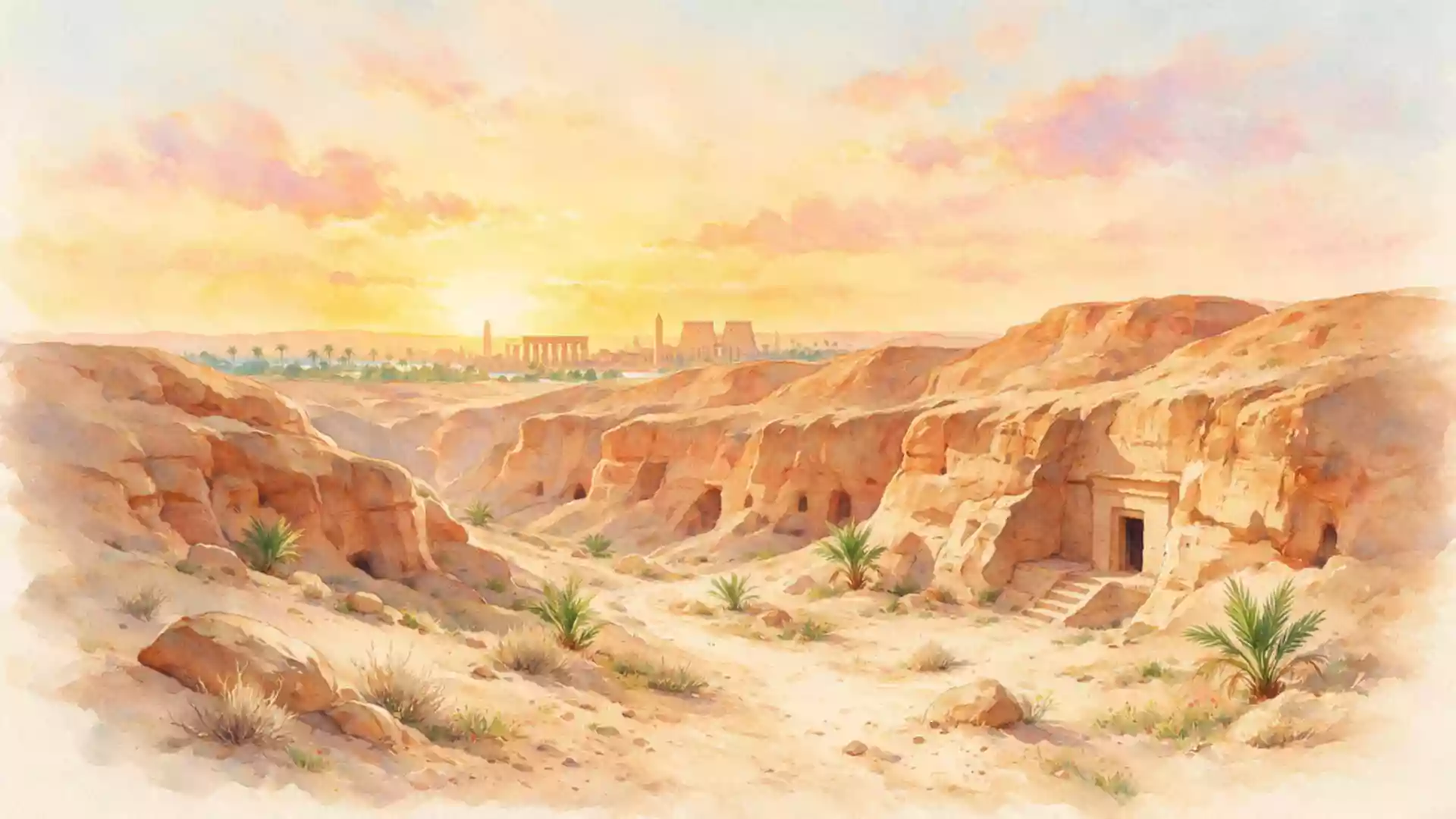
Wadi al-Muluk, the rock-cut necropolis of Luxor
Published on 08/16/2026 at 14:55 | Editorial responsibility: Rafael Müller, Editor-in-Chief AD HOC NEWS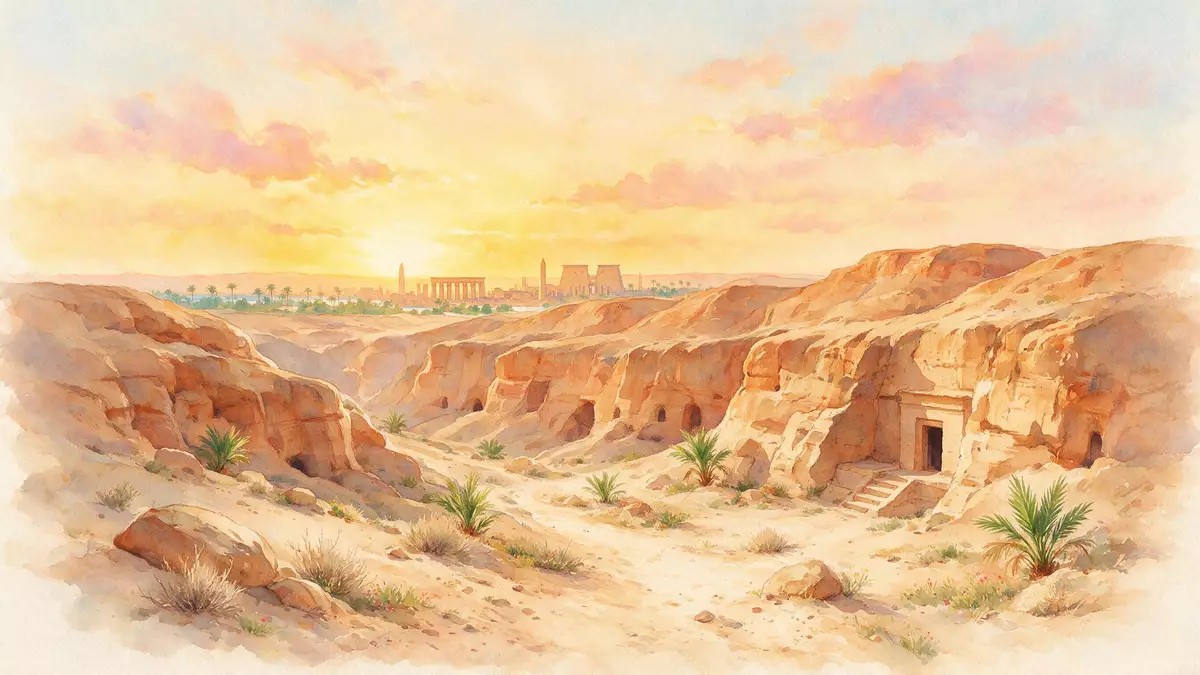
Wadi al-Muluk lies on the west bank of the Nile near Luxor, where limestone cliffs hold the royal tombs of ancient Egypt’s New Kingdom. The name is usually rendered in English as the Valley of the Kings, and the site has been part of the Theban Necropolis World Heritage area since 1979Theban Necropolis World Heritage area.
Its cut rock chambers belong to pharaohs, queens and high officials linked to the eighteenth, nineteenth and twentieth dynasties. The valley’s identity rests on that stark combination of desert hollow, cliff face and burial architectureeighteenth, nineteenth and twentieth dynasties.
The setting is a dry wadi rather than a built urban quarter, and the tomb entrances sit low in the rock. That combination of geology and funerary art gives Wadi al-Muluk its lasting character, with each doorway opening into a sequence of corridors and chambers carved into the hillsidedry wadi.
Wadi al-Muluk and the pharaonic burial landscape
Wadi al-Muluk belongs to the broad funerary landscape of ancient Thebes, now Luxor, where major temples and royal burial grounds stand on opposite sides of the river. The tombs are linked to the New Kingdom, the phase when royal burial shifted into the desert hills west of the cultivated stripNew Kingdom.
Ramesses II and Tutankhamun are among the names most closely tied to the valley, but the site is not a single monument. It is a landscape of separate tombs, cut one by one into the rock and spread through a desert basin beside the Theban hillsRamesses II and Tutankhamun.
Rock, corridor and chamber
The visual appeal of Wadi al-Muluk comes from its severe setting: pale stone, steep valley sides and sealed entrances set into the cliff. Inside, the tombs move from sloping passages into chambers covered with painted or carved decoration, although each tomb has its own arrangementsloping passages.
That contrast between exposed valley and enclosed burial spaces is central to the place. The rock gives the tombs their form, while the decoration turns the interior into a ceremonial setting rooted in the language of royal eternityceremonial setting.
Wadi al-Muluk in Luxor
Luxor frames the valley as part of a wider ancient cityscape that includes Karnak, the west bank necropolis and the river crossing between them. Wadi al-Muluk is therefore best read not as an isolated sight, but as part of the funerary geography of Upper Egyptwest bank necropolis.
The site’s formal recognition places it among the protected remains of Thebes, the city that stood at the centre of much of New Kingdom royal and religious life. That historical depth is visible in the surviving tombs, the valley walls and the long relationship between the site and Luxor’s western desert edgeprotected remains of Thebes.
Visiting Wadi al-Muluk: what travellers from Western Europe should know
- The valley lies on Luxor’s west bank, opposite the city across the Nile. Access is by crossing the river and continuing into the desert hills.
- The ground is rocky and exposed, with tomb entrances set into a dry slope. The approach is part of a necropolis landscape rather than a level urban promenade.
- English is not the official language. The official language is Arabic and the currency is the Egyptian pound.
- Entry requirements depend on your nationality; UK travellers can check the FCDO travel advice at gov.uk/foreign-travel-advice, Irish travellers the Department of Foreign Affairs at ireland.ie.
Searching for Wadi al-Muluk on social platforms
These links open searches for Wadi al-Muluk on each platform.
Frequently asked questions about Wadi al-Muluk
Where is Wadi al-Muluk?
Wadi al-Muluk lies on the west bank of the Nile opposite Luxor in Upper Egypt. It forms part of the wider Theban necropolis landscape.
What does a visit involve?
The site is a desert valley with cut tombs, uneven ground and entrances set into the rock. The experience is shaped by the walk through the valley and the descent into the tombs.
What makes Wadi al-Muluk distinctive?
Its combination of arid valley, limestone cliff and royal burial chambers defines the place. The tombs of New Kingdom rulers give that landscape its historical weight.