
Wadi Rum’s sandstone and granite desert
Published on 08/16/2026 at 13:08 | Editorial responsibility: Rafael Müller, Editor-in-Chief AD HOC NEWS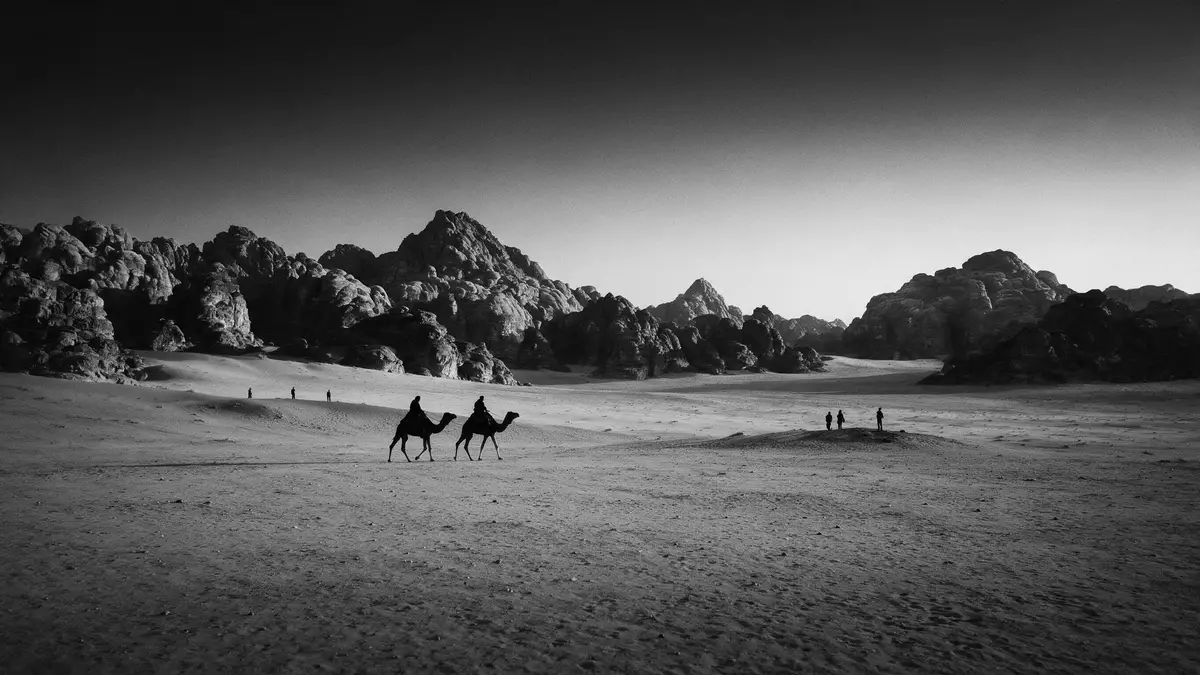
Wadi Rum in southern Jordan is a desert of sandstone cliffs, granite foundations and wide open rock faces near Aqaba. Its mixed natural and cultural status reflects both the landforms and the carvings, inscriptions and remains spread across the area.
Sandstone cliffs above granite foundations
The landscape combines narrow gorges, natural arches, towering cliffs, ramps, landslides and caverns. Desert surfaces alternate with steep rock walls, and the colour changes between darker granite and pale or red sandstone create a strong visual contrast.
The wider geology is layered and old. Precambrian granitoid rocks underlie Lower Cambrian to Middle Ordovician sandstones, with faulting and uplift shaping the terrain over a long span of time.
Rock art, inscriptions and long occupation
The area carries 12,000 years of human occupation in petroglyphs, inscriptions and archaeological remains. The record includes 25,000 petroglyphs and 20,000 inscriptions, many cut into boulders, stones and cliff faces.
These traces span the Neolithic to the Nabataean period and beyond. They show pastoral, agricultural and urban life in a desert setting where writing, image-making and settlement all left visible marks.
Jordanian desert scale and colour
The place lies east of the Jordan Rift Valley and south of the central Jordanian plateau escarpment. It sits in the Hisma desert, close to the border with Saudi Arabia, and the surrounding ground belongs to a broad regional desert system.
Its rock surfaces are part of the appeal: massive walls, broken slopes and pale sand under open sky. The visual language of Wadi Rum is one of vertical stone against flat desert floor, with carved surfaces adding a human layer to the terrain.
Visiting Wadi Rum: what travellers from Western Europe should know
- The protected area lies in southern Jordan, near Aqaba and close to the border with Saudi Arabia. The official language is Arabic and the currency is the Jordanian dinar.
- The terrain includes gorges, cliffs and caverns, with long stretches of exposed rock and sand. Footing changes between firm stone and softer desert ground.
- Rock art and inscriptions appear on boulders and cliff faces across the site. Their variety is part of the place’s cultural identity.
- The landscape includes granite, sandstone and open desert basins. Those contrasts are visible across a wide area rather than in a single monument.
Searching for Wadi Rum on social platforms
These links open searches for Wadi Rum on each platform.
Frequently asked questions about Wadi Rum
Where is Wadi Rum?
Wadi Rum is in southern Jordan, near Aqaba and close to the Saudi Arabian border. It forms part of the desert landscape east of the Jordan Rift Valley.
What appears on a visit?
Visitors encounter sandstone walls, granite outcrops, gorges, arches and rock art. The place reads as both desert terrain and a cultural landscape.
What makes Wadi Rum distinctive?
Its mixture of dramatic landforms and extensive inscriptions is the key feature. The site links geology, long habitation and carved evidence in one desert setting.


