
Wanli Changcheng near Peking and the Ming-era Great Wall
Published on 09/21/2026 at 16:37 | Editorial responsibility: Rafael Müller, Editor-in-Chief AD HOC NEWS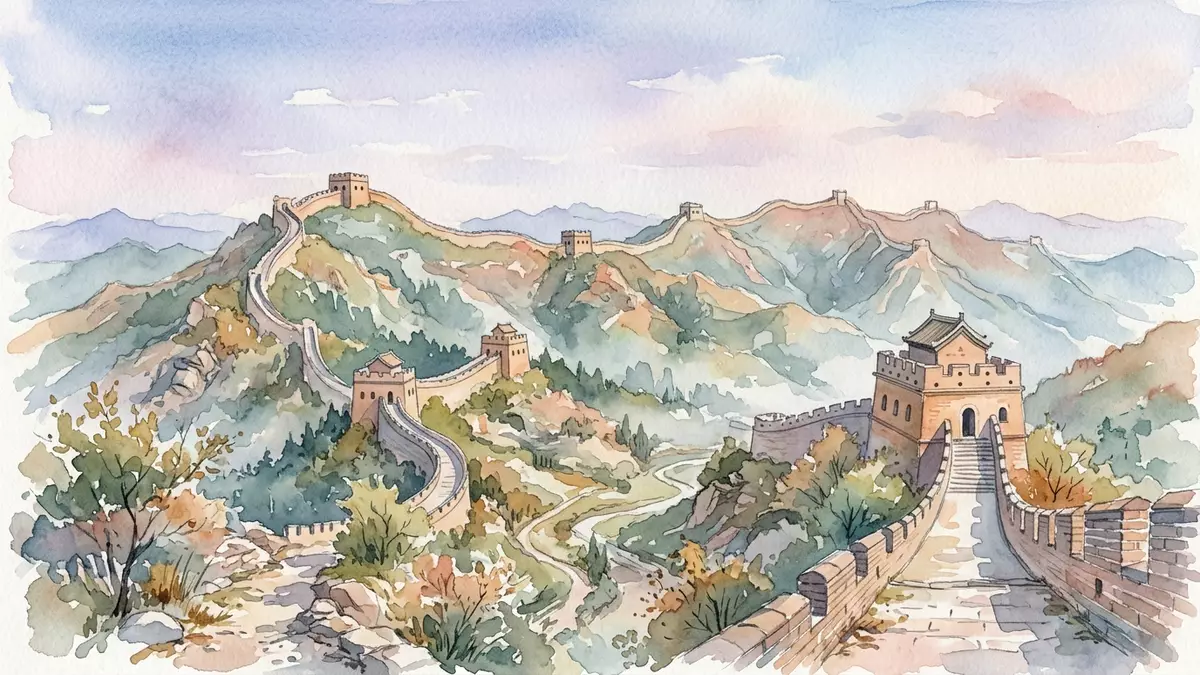
Wanli Changcheng, the Chinese name for the Great Wall of China, gathers centuries of fortifications into a visible line of stone and brick across the hills north of Peking. The name “Ten-Thousand-Li Long Wall” points to a defensive system that grew over dynasties, with much of what visitors see near Peking dating from the Ming period between 1368 and 1644.
Ming brickwork along Beijing’s northern hills
North of Peking, Wanli Changcheng appears as linked ramparts that step along ridges and mountain passes, making the terrain part of the wall’s character. The stretches most closely associated with the city belong largely to the Ming dynasty and combine brick-faced walls, stone foundations and closely spaced towers along the skyline.Beijing section of the Great Wall The fortifications in the Beijing area run through districts such as Pinggu, Miyun, Huairou, Changping, Yanqing and Mentougou, threading through valleys and over exposed ridges.
Sections like Badaling in Yanqing District show the Ming-era wall with restored parapets and towers on a broad crest, backed by higher hills that emphasise its position as a frontier line.Badaling near Peking Here the wall’s profile reveals a consistent height of several metres, with the basic rampart topped by battlements and interrupted at intervals by taller towers that mark watch points and gateways.basic wall height and towers Standing on these Ming stretches gives a direct sense of the wall as both architecture and landscape feature.
From early earthworks to a Ming stone frontier
Wanli Changcheng did not begin as a continuous wall but as scattered fortifications along the northern border of Chinese states in the first millennium BC. During the late third century BC, Qin Shi Huang, the first emperor of a unified China, linked and extended existing earthworks into a more connected defensive line to guard the northern frontier.Qin Shi Huang and early Great Wall Later dynasties, including the Han, extended fortifications westward to shield trade routes, turning the wall into part of the protection for traffic along the early Silk Road.Han and later dynasties
The Ming dynasty rebuilt large parts of Wanli Changcheng in stone and brick, especially near Peking, strengthening the frontier against northern neighbours and fixing the appearance recognised globally today. In this era the Beijing section of the wall became a dense network of ramparts, watchtowers and beacon platforms, crossing several northern districts and following a route of hundreds of kilometres across the municipality.Great Wall in Beijing The Ming-era restoration created a continuous presence in the hills that remains largely legible in the surviving masonry.
Scale, status and the idea of a “long wall”
Wanli Changcheng is often described through its sheer extent along northern China, and the accepted overall figure for all known sections of the Great Wall built across dynasties reaches more than 21,000 km (13,000 mi), including overlapping stretches.total length of all sections The phrase “Ten-Thousand-Li Long Wall” reflects this idea of vast reach, referring to li as a traditional Chinese unit of distance rather than a precise measurement.meaning of Wanli Changcheng What visitors encounter near Peking is therefore one visible part of a much larger system.
The basic cross-section of the wall gives a sense of that system’s physical scale. In many places the rampart stands roughly 7–8 m (23–26 ft) high, with a walkway between parapets and higher towers that rise above it at intervals.Great Wall height The Great Wall of China, including Wanli Changcheng as its Chinese name, was inscribed on the UNESCO World Heritage list in 1987 as one of the largest architectural projects undertaken by any civilisation.UNESCO World Heritage site since 1987 This formal recognition fixes the wall’s role as both historic frontier and cultural monument.
Visiting Wanli Changcheng: what travellers from Western Europe should know
- Wanli Changcheng near Peking is reached through the Beijing municipality in northern China, with restored wall sections lying in areas such as Yanqing, Huairou and Changping.
- Many Ming-era stretches in the hills north of Peking follow steep ridges and involve staircases on the wall itself, so visits typically entail prolonged climbing over uneven stone steps.
- The Great Wall sections near Peking stand among mountain and valley scenery, and viewpoints on the ramparts reveal long sequences of wall contouring along the surrounding hillsides.
- The official language is Chinese and the currency is the renminbi yuan; English signage appears at a number of established wall sections in the Beijing area.
- Entry requirements depend on your nationality; UK travellers can check the FCDO travel advice at gov.uk/foreign-travel-advice, Irish travellers the Department of Foreign Affairs at ireland.ie.
Searching for Wanli Changcheng on social platforms
These links open searches for Wanli Changcheng on each platform.Frequently asked questions about Wanli Changcheng
Where is Wanli Changcheng in relation to Peking?
Wanli Changcheng runs across northern China, and near Peking the Great Wall crosses several northern districts of the Beijing municipality, including Yanqing and Huairou.
What should visitors expect when walking the wall near Peking?
Visitors encounter steep staircases on the wall, uneven stone steps and stretches along exposed ridges, with long views of the wall tracking the surrounding hills.
What makes Wanli Changcheng distinctive among historic sites?
Wanli Changcheng combines a length of more than 21,000 km (13,000 mi) in all documented sections with Ming-era stone and brick ramparts and formal recognition as a UNESCO World Heritage site.


