
Wat Chalong and the golden chedi of Phuket
Published on 09/19/2026 at 13:02 | Editorial responsibility: Rafael Müller, Editor-in-Chief AD HOC NEWS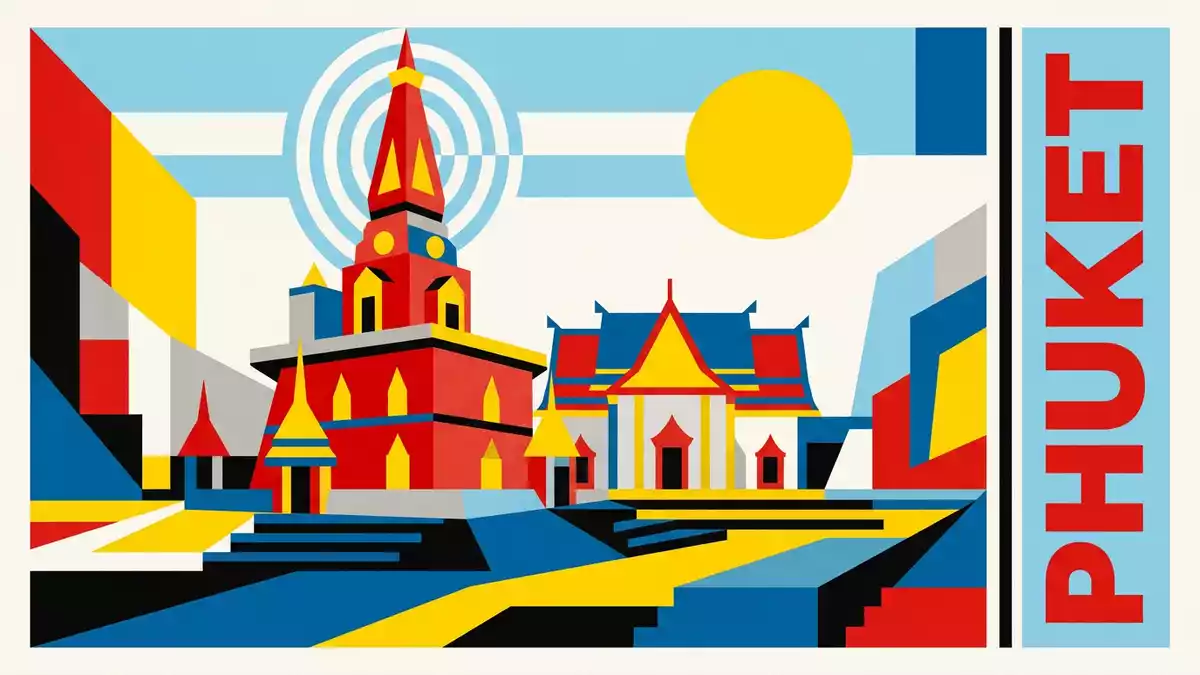
Wat Chalong in Phuket is a Buddhist temple complex with a tall gilded chedi and several prayer halls set around wide courtyards. Its most familiar name remains Wat Chalong, while the formal temple name is Wat Chaiyathararam.
Wat Chalong’s nineteenth-century temple core
The temple is linked with the early nineteenth century and is associated with around 1837, a date that places it among Phuket’s older religious sites. It also carries the name of Wat Chaiyathararam, the royal title granted under King Rama V. The temple’s history is closely tied to Luang Pho Cham and Luang Pho Chuang, monks whose names recur in the shrine rooms and statues across the grounds.
The complex sits in the Chalong subdistrict of Mueang Phuket District, south of Phuket Town, on Chao Fa West Road. That position places it on one of the island’s main corridors, with the temple buildings spread across an open compound rather than compressed into a single enclosed court.
The chedi, halls and statues inside the compound
The strongest visual marker is the Phra Mahathat Chedi, a 60-metre chedi covered in gold tones and ornament. Its stacked levels, terraces and muralled surfaces give the structure a vertical focus that dominates the rest of the temple.
Inside the compound, the chedi stands beside prayer halls, pavilions and smaller shrines. The main halls contain gilded monk statues, with Luang Pho Cham and Luang Pho Chuang among the best known, and these figures anchor the temple’s devotional atmosphere as much as its architecture does.
Memory, ritual and the temple’s living role
Wat Chalong is closely associated with the Ang Yee rebellion of 1876, a conflict remembered in Phuket’s local history. That link gives the temple a strong place in the island’s religious memory, beyond its architectural presence.
The temple remains a working Buddhist site, with monks, offerings and gold leaf visible in the halls. In its present form, it combines worship spaces, memorial statues and the relic-shrine chedi into a single compound that is read through both faith and history.
Visiting Wat Chalong: what travellers from Western Europe should know
- The temple stands in the Chalong subdistrict of Mueang Phuket District, south of Phuket Town, and is reached by road along Chao Fa West Road.
- The compound has open courtyards, prayer halls and the tall chedi, so the visit involves moving between several buildings rather than one enclosed room.
- The official language is Thai and the currency is the baht.
- Entry requirements depend on your nationality; UK travellers can check the FCDO travel advice at gov.uk/foreign-travel-advice, Irish travellers the Department of Foreign Affairs at ireland.ie.
Searching for Wat Chalong on social platforms
These links open searches for Wat Chalong on each platform.
Frequently asked questions about Wat Chalong
Where is Wat Chalong?
Wat Chalong is in the Chalong subdistrict of Mueang Phuket District, south of Phuket Town, on Phuket’s western side.
What does a visit involve?
A visit involves walking through courtyards, prayer halls and the chedi, with statues, shrines and devotional offerings throughout the compound.
What makes Wat Chalong distinctive?
Its combination of the royal name Wat Chaiyathararam, the 60-metre chedi and the association with Luang Pho Cham and Luang Pho Chuang gives it a clear identity in Phuket.


