
Wat Rong Khun, the white vision in northern Thailand
Published on 08/16/2026 at 13:41 | Editorial responsibility: Rafael Müller, Editor-in-Chief AD HOC NEWS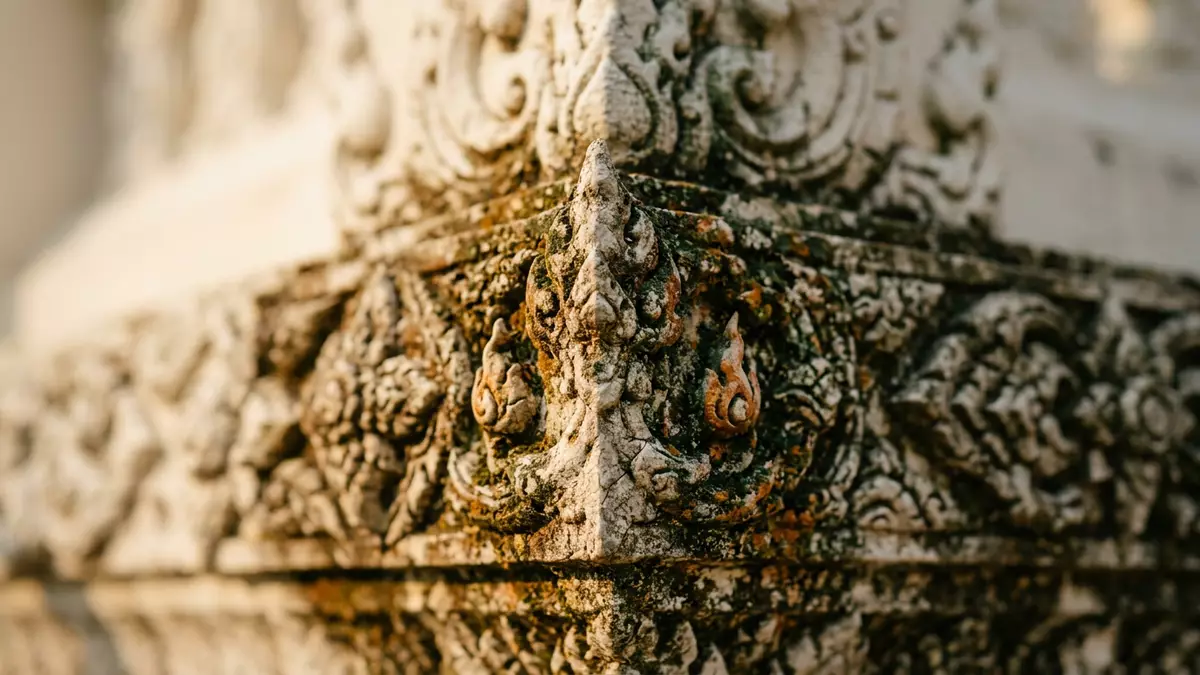
Wat Rong Khun in Chiang Rai is a Buddhist temple reimagined as a contemporary artwork, its surfaces covered in white plaster and mirrored glass that catch the strong northern Thai light. Conceived and designed by the Chiang Rai–born artist Chalermchai Kositpipat in the late twentieth century, the complex began taking its present form in 1997 and has grown into a landmark of modern Thai religious architecture.
A white temple as a work of contemporary art
Wat Rong Khun stands in Pa O Don Chai, a community in Mueang Chiang Rai district, south of the city centre, and is widely known in English as the White Temple.Pa O Don Chai, Mueang District The complex is laid out as a Buddhist temple ground, with an ordination hall, bridge, sculptures and auxiliary buildings, yet it is also presented as a single, evolving artwork. The project is closely associated with Chalermchai Kositpipat, a nationally recognised visual artist who grew up in Chiang Rai and turned to architecture late in his career.Thailand’s greatest modern artist
Construction of the reconstructed Wat Rong Khun began in 1997, when Chalermchai started building the main ordination hall as an offering connected with his Buddhist faith.Construction began in 1997 The work is framed as a long-term project and plans describe several buildings arranged around the central hall, including meditation spaces, galleries and facilities for monks.Ultimately, it will include nine buildings The temple thus occupies an unusual position between religious site and open-air art installation, sustained by the artist’s career and by visitors drawn to its distinctive appearance.
White plaster, mirrored glass and Lanna-inspired forms
The defining impression of Wat Rong Khun is its colour: the primary buildings are coated in bright white plaster, in place of the reds and golds seen at many Thai temples. Embedded into this plaster are countless small pieces of glass that glint and sparkle when the light strikes them, creating a shifting pattern across facades, balustrades and sculpted figures.white color and the use of glass pieces From a distance the complex resembles a low, crystalline mass surrounded by ornamental ponds.
The main ordination hall, or ubosot, takes its plan and roofline from temples of the former Lanna Kingdom, which once covered much of northern Thailand.Lanna Kingdom roof plan Its roof rises in stacked tiers edged with flame-like finials, while the entrance is guarded by sculpted nagas, the serpents that appear across Buddhist art in the region. Bridges, guardians and reliefs extend this language of curling forms across the complex, binding classical Thai and Lanna motifs to a striking monochrome palette.
Buddhist themes alongside pop culture imagery
While the exterior of Wat Rong Khun appears almost entirely white, the interior of the main hall introduces a different layer of detail. Murals inside the ubosot combine traditional Buddhist imagery with scenes and figures taken from global popular culture, including recognisable characters from films and music alongside contemporary cityscapes and scenes of conflict.murals mixing pop culture Visitors move from white plaster and mirror outside into walls covered with colour and narrative inside, a contrast that has helped fix the temple’s reputation among travellers.
Wat Rong Khun also includes an art gallery where works by Chalermchai Kositpipat are exhibited, underscoring the site’s role as both temple and showcase for a particular strand of Thai contemporary art.an art gallery Around the central buildings, landscaped areas, additional structures and sculptural installations extend the themes of the main hall, and work on the wider complex has continued beyond the initial opening in 1997.Wat Rong Khun began construction in 1997
Visiting Wat Rong Khun: what travellers from Western Europe should know
- Wat Rong Khun stands south of central Chiang Rai in northern Thailand, in Pa O Don Chai along a main highway that links the city with outlying districts.
- The approach from the roadside leads across level paving and bridges, but the complex includes steps, raised platforms and interior stairways around the main hall.
- The surrounding region forms part of a relatively lowland basin ringed by hills, so the temple complex itself lies on gentle terrain rather than a steep slope.
- English is widely used for signage at the site, while the official language of Thailand is Thai and the currency is the Thai baht.
- Entry requirements depend on your nationality; UK travellers can check the FCDO travel advice at gov.uk/foreign-travel-advice, Irish travellers the Department of Foreign Affairs at ireland.ie.
Searching for Wat Rong Khun on social platforms
These links open searches for Wat Rong Khun on each platform.
Frequently asked questions about Wat Rong Khun
Where is Wat Rong Khun?
Wat Rong Khun is in Pa O Don Chai in Mueang Chiang Rai district, a short distance south of Chiang Rai city in northern Thailand.
What can visitors expect at Wat Rong Khun?
Visitors encounter a contemporary Buddhist temple complex with bright white plaster, mirrored glass decoration, sculpted guardians, bridges and an ordination hall with striking interior murals.
What makes Wat Rong Khun distinctive among Thai temples?
Wat Rong Khun is distinctive for its all-white palette, mirror inlays, Lanna-inspired forms and the way Chalermchai Kositpipat combines Buddhist themes with pop culture imagery inside the ubosot.


