
Wat Rong Suea Ten and Chiang Rai’s blue temple hall
Published on 09/23/2026 at 01:14 | Editorial responsibility: Rafael Müller, Editor-in-Chief AD HOC NEWS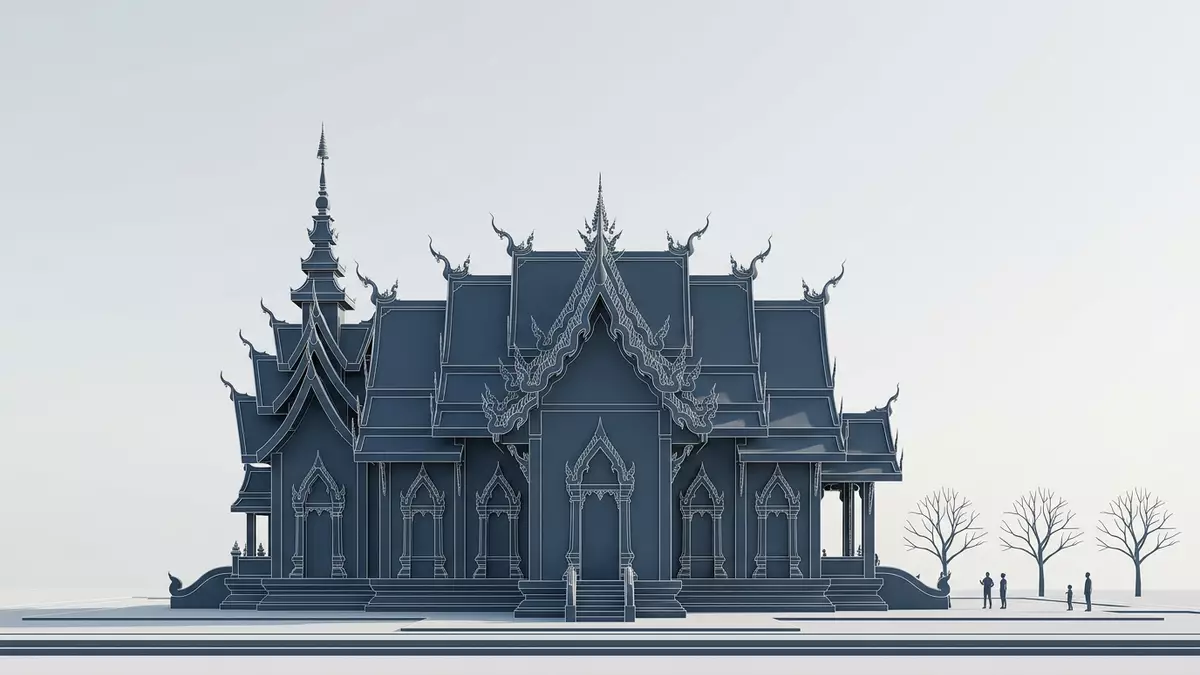
Wat Rong Suea Ten is a contemporary Buddhist temple in Chiang Rai, Thailand, recognised by its deep-blue main hall and gold ornament. The building’s saturated exterior surrounds a large white Buddha, creating a strong contrast between colour, sculpture and space.
Wat Rong Suea Ten’s blue and gold northern Thai form
The main hall follows the long rectangular outline of a northern Thai temple building. It measures about 13 metres wide and 48 metres long, with blue surfaces extending across the walls, roof details and decorative edges. Gold trim marks architectural lines, sculptural figures and ornamental elements around the entrance.
Two large N?ga figures stand before the hall. In Buddhist and South-East Asian art, N?gas are serpent beings associated with sacred places and water. Their elaborate bodies and expressive heads form part of the temple’s sculptural threshold, alongside further guardian figures across the forecourt.
Phuttha Kabkaew and the temple completed in 2016
Wat Rong Suea Ten was designed by Chiang Rai artist Phuttha Kabkaew, also known as Sala Nok. His artistic training included work with Chalermchai Kositpipat, whose Wat Rong Khun is another major contemporary temple near Chiang Rai.
The present building was completed on 22 January 2016. Construction began on 27 October 2005, placing the temple firmly within the early twenty-first-century development of Thai religious architecture. Its style combines recognisable Thai temple forms with vivid colour, extensive ornament and imagery associated with contemporary northern Thai art.
A white Buddha inside a saturated blue hall
The strongest interior contrast is between the blue architectural envelope and the large white seated Buddha named Phra Buddha Ratchamongkol Bodi Trilokanat. The statue measures about 6.5 metres in height, with a lap width of about 5 metres.
Blue and patterned surfaces continue across the hall’s interior walls and ceiling. Columns, smaller figures and additional decorative details surround the central image, while the grounds contain shrines, sculptural features and a large stupa behind the main hall. The stupa introduces another vertical element to the complex, with pale surfaces set against the dominant blue of the vih?ra.
Visiting Wat Rong Suea Ten: what travellers from Western Europe should know
- Wat Rong Suea Ten stands in Rim Kok Subdistrict, north of Chiang Rai and near the Mae Kok River. Road transport from Chiang Rai reaches the temple along Maekok Road.
- The main approach leads across a forecourt towards the hall. A short staircase enters the building, while the surrounding ground-level areas have paved approaches.
- The official language is Thai and the currency is the baht.
- Entry requirements depend on your nationality; UK travellers can check the FCDO travel advice at gov.uk/foreign-travel-advice, Irish travellers the Department of Foreign Affairs at ireland.ie.
Searching for Wat Rong Suea Ten on social platforms
These links open searches for Wat Rong Suea Ten on each platform.
Frequently asked questions about Wat Rong Suea Ten
Where is Wat Rong Suea Ten?
Wat Rong Suea Ten is in Rim Kok Subdistrict, Mueang Chiang Rai District, on the north side of the Mae Kok River in northern Thailand.
What can visitors see inside the temple?
The main hall contains a large white seated Buddha, surrounded by blue patterned surfaces, columns, smaller figures and layered ornament.
What makes the temple distinctive?
Its deep-blue and gold exterior, tiger-linked name, large white Buddha and contemporary Thai artistic style give Wat Rong Suea Ten its distinctive character.


