
Wat Si Saket in Vientiane, a cloister of thousands of Buddhas
Published on 08/17/2026 at 15:00 | Editorial responsibility: Rafael Müller, Editor-in-Chief AD HOC NEWS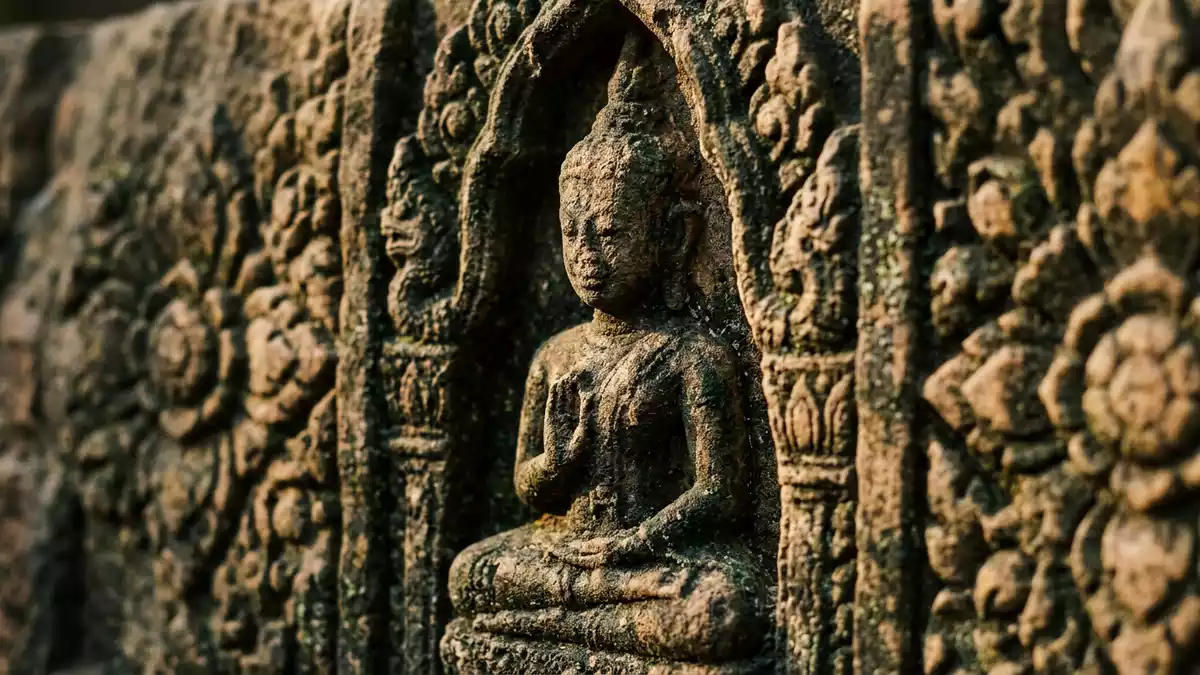
Wat Si Saket in Vientiane is widely described as the city’s oldest surviving Buddhist temple, a walled cloister whose early nineteenth?century galleries are lined with thousands of Buddha images. Built under King Anouvong of the Lao kingdom of Vientiane, the complex fuses Lao and Siamese architectural elements in a way that makes its long perimeter of colonnades and niches as striking as the main ordination hall at its centre.
Wat Si Saket and the early nineteenth century in Vientiane
Wat Si Saket stands close to the Presidential Palace in central Vientiane, in what was once the royal quarter of the Lao kingdom. The temple is consistently dated to the early nineteenth century, with several sources giving construction dates from 1818 into the early 1820s under King Anouvong, also known as Chao Anou, the last monarch of the Kingdom of Vientiane.built between 1819 and 1824 His reign, from 1805 to 1828, unfolded at a time when Vientiane was closely entangled with neighbouring Siam, present?day Thailand, and that relationship left clear marks on the architecture of the temple.
The temple’s name links it to Wat Saket in Bangkok and carries the honorific “Si”, derived from the Sanskrit “Sri”, reflecting the cultural exchanges between the Lao royal court and Siamese power during Anouvong’s lifetime.built in 1818 on the order of King Anouvong In 1827–1828, conflict between Vientiane and Siam led to the sack of the city and the destruction of many religious buildings, a turning point after which Wat Si Saket emerged as one of the few major temple structures that remained standing.Vientiane was largely destroyed in 1827 Later, under French colonial administration, the temple was restored in the 1920s and 1930s, reinforcing its role as a historic monument as well as a place of worship.
Architecture: a cloistered courtyard and multi?tiered roofs
The principal structure at Wat Si Saket is the sim, the main ordination hall, which stands within a rectangular courtyard framed by colonnaded galleries. These surrounding galleries, sometimes described as cloisters, create a continuous circuit around the sim and turn the interior of the courtyard into a layered space of pillars, walls and recessed niches.central ordination hall surrounded by cloisters The sim itself rises beneath a multi?tiered roof, an element associated with Siamese Buddhist architecture, and the whole composition is bounded by an outer wall that encloses the temple grounds.
Descriptions of the complex emphasise that the roofline of the sim is organised in several tiers, often referred to as a five?tiered roof, with broad eaves and ornate decorative details along the ridges and gables.five?storey roof and terrace in Siamese style Around it, the galleries carry their own roofs and form sheltered walkways that open on to the courtyard through regularly spaced columns. The overall layout, with a central hall encircled by cloistered galleries and an enclosing wall, is frequently compared to Thai temple compounds of the same period, yet it sits firmly within the urban fabric of Vientiane and reflects Lao religious practice.
Buddha images and the temple as a historical collection
One of the defining features of Wat Si Saket is the density and variety of Buddha images housed in its cloistered galleries. Along the walls of the courtyard, rows of small niches hold seated Buddha figures, while larger statues stand on pedestals in front of the walls. Travel and heritage descriptions speak of thousands of Buddhas within the complex, ranging from small clay and silver figures to larger wooden and bronze sculptures, many of them bearing traces of lacquer and gold.
Some of these images originated in other temples in Laos and were brought to Wat Si Saket after the destruction of Vientiane in the late 1820s, when damaged Buddhas and fragments of religious art were gathered and stored within the compound.pile of Buddhas damaged during the 1828 rebellion The result is not only a functioning temple but also a kind of open?air museum of Lao Buddhist sculpture, with the cloister walls forming an extended display of images that span several centuries of regional craftsmanship. French restorations in 1924 and around 1930 helped stabilise the buildings and contributed to the preservation of this remarkable assembly of figures and niches.French restorations in 1924 and around 1930
Visiting Wat Si Saket: what travellers from Western Europe should know
- Wat Si Saket stands on Lane Xang Avenue opposite the Presidential Palace in central Vientiane, and is reached along city streets used by local traffic.
- The temple compound is enclosed by walls and includes cloistered galleries around the courtyard, so a visit involves walking on stone or tiled surfaces and using steps between levels.
- The official language is Lao and the national currency is the Lao kip, though some signage at major sites in Vientiane includes English.
- Entry requirements depend on your nationality; UK travellers can check the FCDO travel advice at gov.uk/foreign-travel-advice, Irish travellers the Department of Foreign Affairs at ireland.ie.
Searching for Wat Si Saket on social platforms
These links open searches for Wat Si Saket on each platform.
Frequently asked questions about Wat Si Saket
Where is Wat Si Saket located?
Wat Si Saket is in central Vientiane, the capital of Laos, on Lane Xang Avenue opposite the Presidential Palace and near other major civic buildings.
What should visitors expect at Wat Si Saket?
Visitors encounter a walled temple compound with a central ordination hall, cloistered galleries, and walls lined with niches holding Buddha images in various materials and sizes.
What makes Wat Si Saket distinctive among temples in Vientiane?
Wat Si Saket is regarded as the city’s oldest surviving temple and is distinctive for its early nineteenth?century layout of cloistered galleries and its dense collection of Buddha images.


