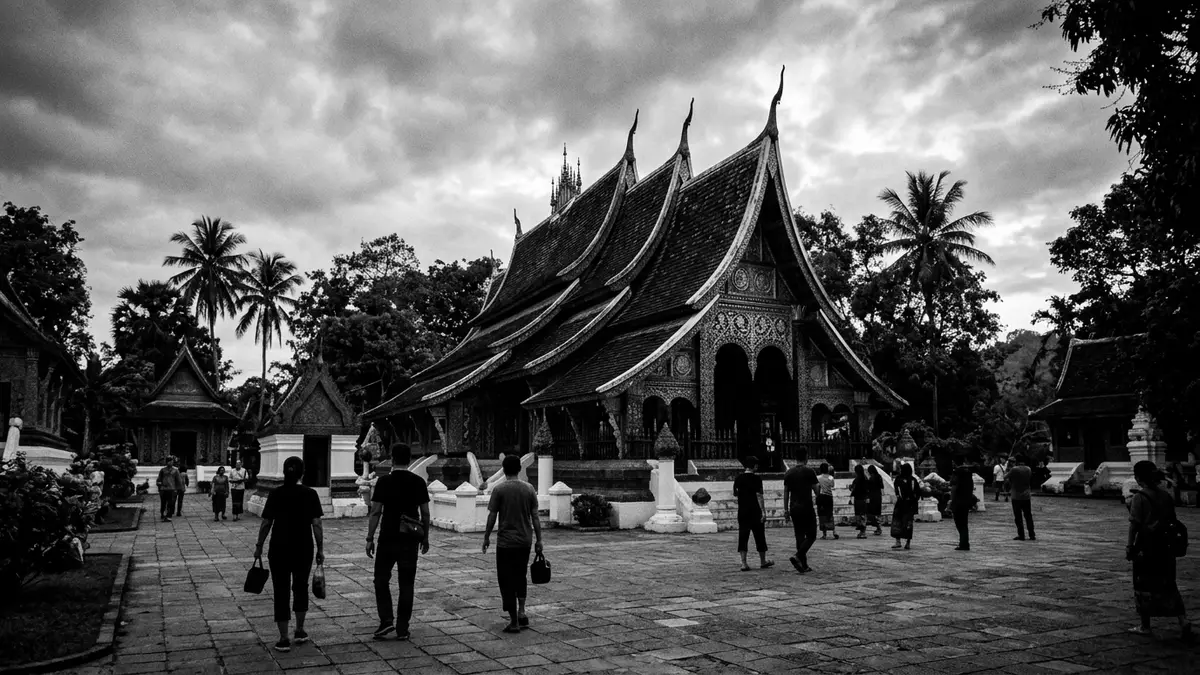
Wat Xieng Thong’s sweeping roofs in Luang Prabang
Published on 08/09/2026 at 15:19 | Editorial responsibility: Rafael Müller, Editor-in-Chief AD HOC NEWS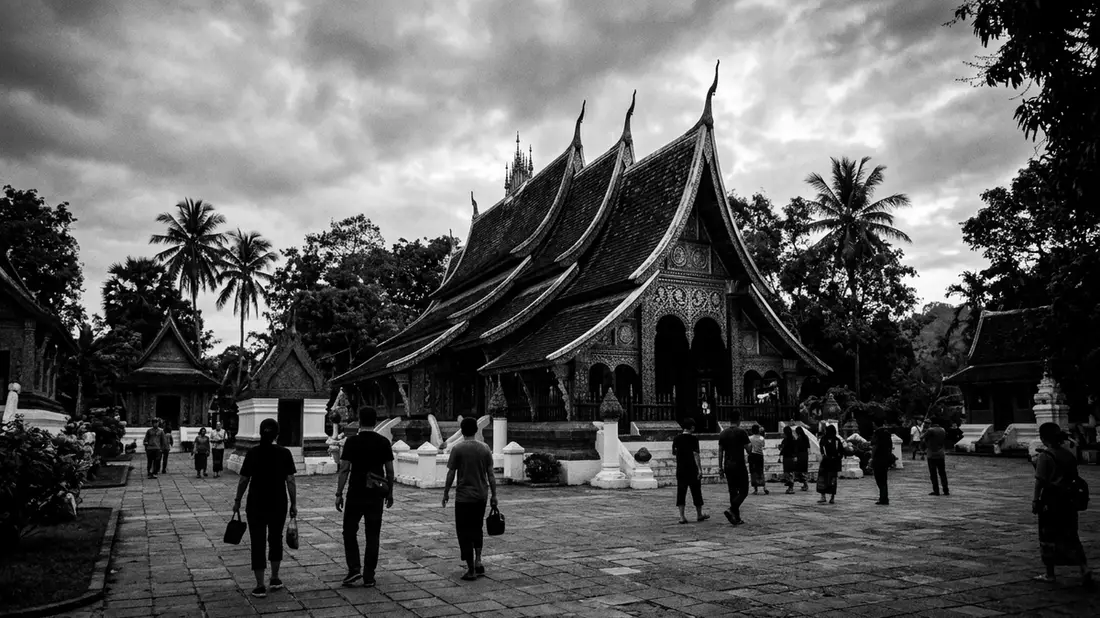
Wat Xieng Thong is one of Luang Prabang’s most recognisable temples, with low, sweeping roofs and richly decorated façades that make the ensemble feel compact and elaborate at once. The temple dates from the sixteenth century and belongs to the Lan Xang tradition, which gives it a firm place in Lao religious architecture.
Lan Xang temple design in close detail
The main ordination hall, or sim, is framed by layered roofs that descend in broad tiers. Dark timber, gold ornament and painted surfaces create a dense surface pattern, while the long roofline keeps the silhouette close to the ground.
Carved detail appears across the temple buildings, and the exterior treatment is more intricate than a quick glance suggests. Motifs from Buddhist and royal art run through the decoration, giving the complex a ceremonial character without losing its scale.
Murals, glasswork and ceremonial spaces
Inside the sim, the decoration continues with murals and gilded surfaces. The building keeps a clear hierarchy between the main prayer space and the surrounding pavilions, and the arrangement reads as a working temple rather than a sealed monument.
Wat Xieng Thong is also known for its auxiliary structures, including chapels and a funerary carriage house. These elements add depth to the complex and show how temple grounds in Luang Prabang could combine worship, display and ritual use.
The temple in the city’s historic setting
The temple stands near the meeting of the Mekong and Nam Khan rivers, within Luang Prabang’s historic fabric. Its scale is modest compared with major palace complexes, yet the low roofs and layered ornament give it a strong presence among the surrounding streets.
Wat Xieng Thong is closely associated with the royal past of Luang Prabang, and its survival through changes in power has made it a key reference point for Lao art. The temple remains valuable as an example of local craftsmanship, with wood, gilding and mosaic work carrying the place’s identity.
Visiting Wat Xieng Thong: what travellers from Western Europe should know
- The temple is in Luang Prabang and is reached on foot, by bicycle or by tuk-tuk from the old town.
- Admission arrangements and opening hours are set by the site's operator and change with the season; the official website is the only binding source.
- The best light for the façades is often in the morning or late afternoon.
- The grounds are level, but some thresholds and steps call for care.
- Dress should be modest, with shoulders and knees covered, and quiet behaviour suits the site.
- Entry requirements depend on your nationality. UK travellers should check the FCDO travel advice at gov.uk/foreign-travel-advice; Irish travellers the Department of Foreign Affairs at ireland.ie; EU and EEA citizens their own national foreign ministry.
Searching for Wat Xieng Thong on social platforms
These links open searches for Wat Xieng Thong on each platform.
Frequently asked questions about Wat Xieng Thong
Where is Wat Xieng Thong?
It stands in Luang Prabang, close to the historic riverfront area. The temple is part of the city’s religious core and is easy to combine with other nearby sights.
What should visitors expect?
Expect a compact temple complex with decorated roofs, carved surfaces and a calm ritual atmosphere. The site rewards slow viewing, especially if you spend time on the exterior details.
What makes it distinctive?
The low, cascading roofline and the rich decorative treatment give the temple a clear visual identity. Its sixteenth-century roots and Lan Xang setting add historical weight to that appearance.