
Waza National Park’s wide Sahelian plains in Cameroon’s far north
Published on 09/19/2026 at 17:12 | Editorial responsibility: Rafael Müller, Editor-in-Chief AD HOC NEWS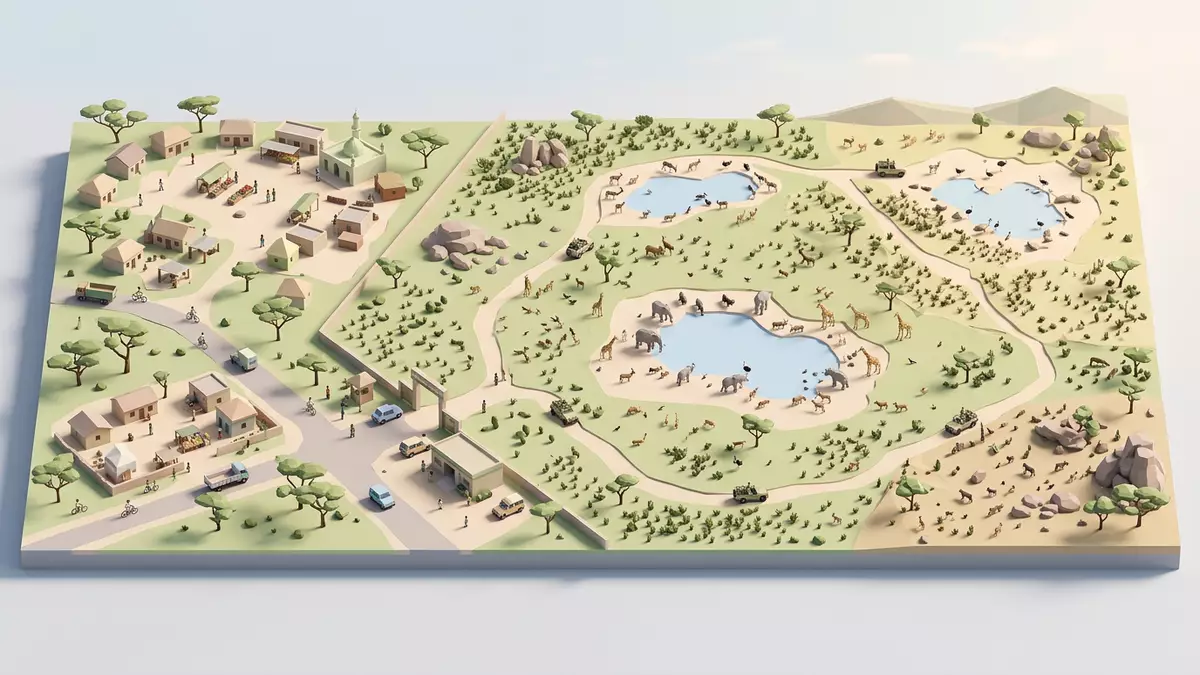
Waza National Park in northern Cameroon is a broad Sahelian landscape where savanna, floodplain and woodland spread across the Chad depression east of the town of Waza, with open horizons and low relief defining the experience of the place. Founded as a protected area in the 1930s and redesignated as a national park in 1968, it later gained recognition as a UNESCO biosphere reserve in 1979, linking the core park to a wider buffer zone where people and wildlife share the semi-arid plain.
A Sahel–Sudan transition zone shaped by light and space
Waza National Park lies in Cameroon’s Far North Region in the Department of Logone-et-Chari, immediately east of Waza and less than 10 km from the borders with both Nigeria and Chad, in a lowland associated with the wider Chad basin.Situated east of the town of Waza The terrain stands at elevations around 300 m (984 ft), giving the park gently undulating ground rather than high relief, with long sightlines over grassland and scattered trees.Elevations around 300 m
The park covers about 1,700 km² (656 sq mi), forming the core of the larger Waza Biosphere Reserve recognised under UNESCO’s Man and the Biosphere Programme.An area of about 1,700 km² Within this wider biosphere, a mosaic of semi-arid grassland, acacia woodland and seasonal wetlands marks the transition between the Sahel and Sudan savanna, with the Logone floodplain bordering the park to the east and north-east.Waza Biosphere Reserve in the Chad depression
From hunting reserve to protected biosphere
The origins of Waza National Park lie in a hunting reserve created in 1934 under colonial administration, which later evolved into a national park in the late 1960s as conservation objectives took formal shape.Founded as a reserve in 1934 The designation as a national park in 1968 set stricter protection for the savanna and floodplain ecosystems, anchoring a protected area in Cameroon’s Extreme North Region that would become central to wildlife conservation in the Sahel zone.National park status in 1968
The recognition of Waza as a UNESCO biosphere reserve in 1979 placed the park within a framework that combines conservation with research and sustainable use by surrounding communities.UNESCO biosphere status in 1979 In this structure, the national park serves as a core zone of strict protection, surrounded by a buffer where grazing and agriculture are managed to maintain ecological functions while supporting local livelihoods.A biosphere reserve with a core and buffer
Wildlife on floodplains and savanna
Waza National Park is known for large mammals adapted to semi-arid savanna, including elephants that move in family herds between grassland and floodplain, Kordofan giraffes browsing among acacias, and lions associated with one of the more significant remaining populations in this part of Central Africa.Elephants and lions in Waza Antelope species such as roan antelopes inhabit the open plains, while a wide range of smaller mammals and reptiles occupy niches in scrub and wetland.
The park’s seasonal wetlands, including well-known water bodies where animals congregate during the dry months, support concentrations of wildlife and birdlife on the open Sahelian plain.Watering places on the savanna Bird diversity is high, with hundreds of species recorded, from raptors circling above the plains to waterbirds making use of pools and flood channels as water levels fluctuate across the year.Rich birdlife in the far north
Visiting Waza National Park: what travellers from Western Europe should know
- Waza National Park lies in Cameroon’s Far North Region east of the town of Waza, reached overland from centres such as Maroua along the road towards Kousséri.
- The terrain consists of flat to gently undulating Sahelian plains with savanna and floodplains, so travel within the park follows tracks over sandy and sometimes uneven ground.
- In the wider Waza Biosphere Reserve the climate is semi-arid with a distinct dry season and a shorter rainy period, and conditions on unpaved roads reflect these seasonal patterns.
- The official language is French and the currency is the Central African CFA franc.
- Entry requirements depend on your nationality; UK travellers can check the FCDO travel advice at gov.uk/foreign-travel-advice, Irish travellers the Department of Foreign Affairs at ireland.ie.
Searching for Waza National Park on social platforms
These links open searches for Waza National Park on each platform.
Frequently asked questions about Waza National Park
Where is Waza National Park and what landscape does it cover?
Waza National Park is in Cameroon’s Far North Region east of the town of Waza, covering about 1,700 km² of Sahelian savanna, floodplain and woodland in the Chad depression.
What can visitors expect to see on a visit to Waza National Park?
Visitors encounter broad, open plains, scattered acacias and seasonal wetlands, with wildlife such as elephants, Kordofan giraffes, lions, antelopes and varied birdlife adapted to the semi-arid environment.
What makes Waza National Park distinctive among African protected areas?
Waza National Park stands out for its position in the transition between Sahel and Sudan savanna, its role as a UNESCO biosphere reserve since 1979, and its large mammals surviving on a wide Sahelian plain close to international borders.


