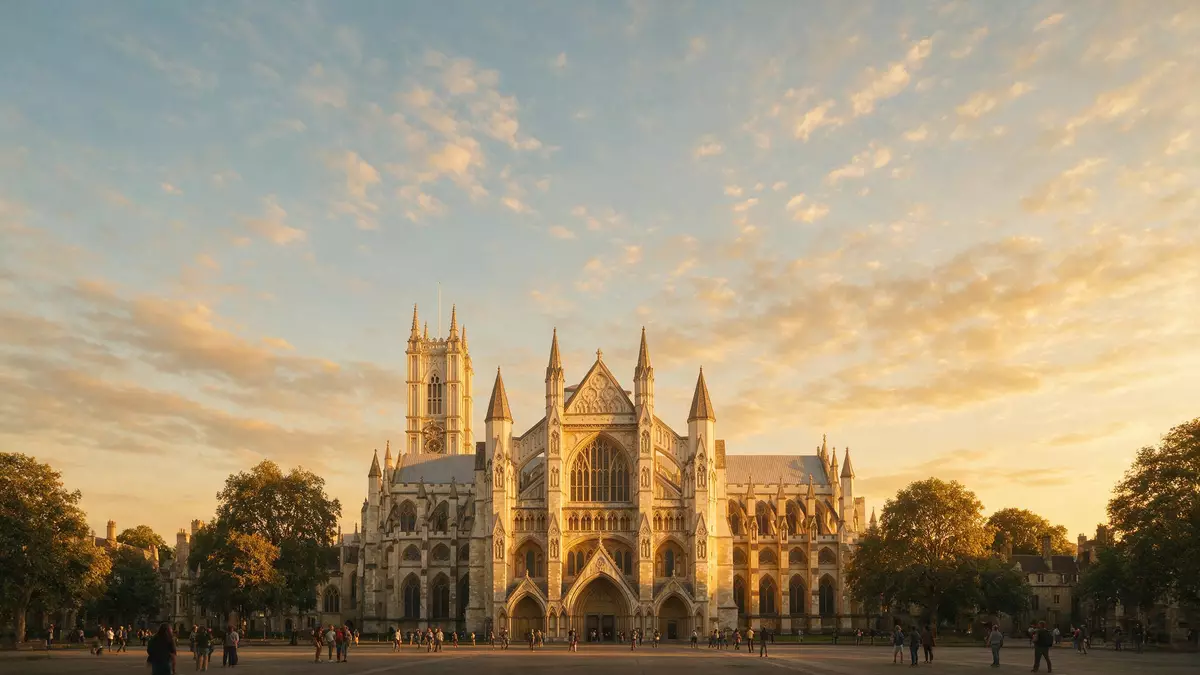
Westminster Abbey and the layered face of London
Published on 08/09/2026 at 15:13 | Editorial responsibility: Rafael Müller, Editor-in-Chief AD HOC NEWS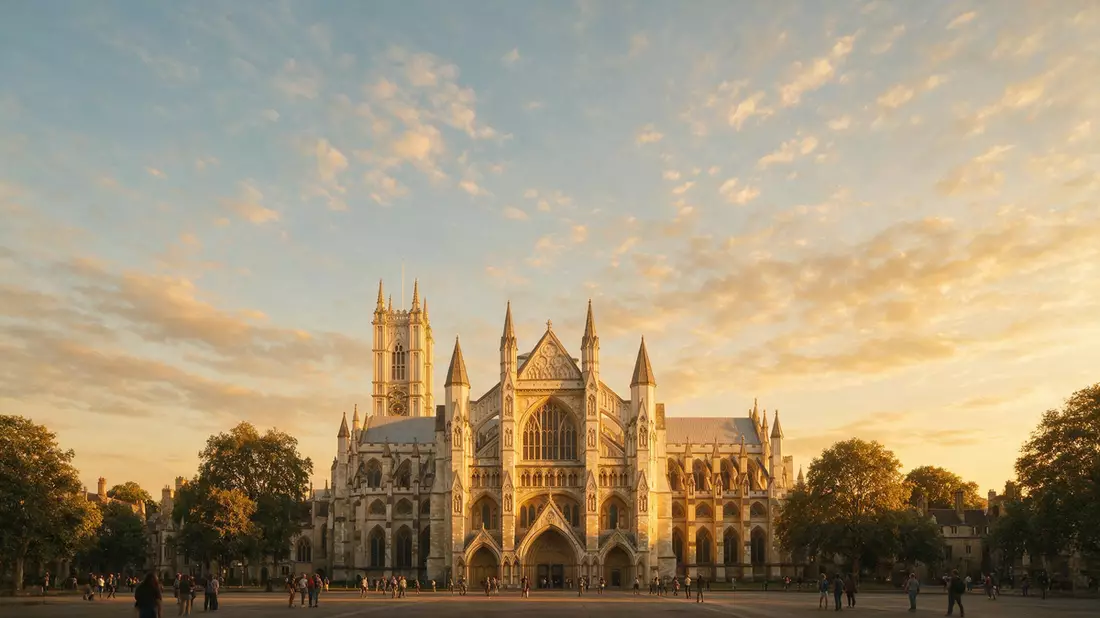
Westminster Abbey in London is a Gothic church whose stone interior holds royal tombs, memorials and ceremonial space beneath a tall vaulted nave. Its present form reflects work begun under Henry III in 1245, and the building remains one of the clearest medieval monuments in the city.
Henry III’s Gothic church in Westminster
The abbey’s core dates from the thirteenth century, when Henry III replaced an earlier church with a new building in the French Gothic style. The long nave, pointed arches and stone vaulting give the interior a sharply vertical character.
The building has long been tied to English coronation ritual, and the Coronation Chair is among its best-known furnishings. It also preserves the abbey’s older monastic identity in the name, even though the building serves a broader national role.
Tombs, memorials and royal memory
Westminster Abbey contains the burial places and memorials of many figures from English history, including monarchs, poets and scientists. The floor and walls carry names from different centuries, so the building reads as both church and record of public memory.
Poets’ Corner gives one part of the abbey a literary focus, with memorials linked to Chaucer, Shakespeare and later writers. The contrast between devotional space and commemorative stone is one of the abbey’s strongest features.
Stone, height and ceremonial use
The interior is divided by piers, screens and chapels, with a ribbed vault above the main body of the church. The result is a dense architectural sequence of stone surfaces, coloured glass and carved memorials.
Westminster Abbey also functions as a working church for services and state occasions. That combination of worship, burial and ceremony gives the building a layered character that is visible in its rooms, fittings and inscriptions.
Visiting Westminster Abbey: what travellers from Western Europe should know
- The site is in Westminster, central London, and is reached by Underground, bus and on foot from nearby Westminster and St James’s Park stations.
- Admission arrangements and opening hours are set by the site's operator and change with the season; the official website is the only binding source.
- Late morning and early afternoon can be busier in a qualitative sense, while quieter periods are more likely at the edges of the day.
- The building involves steps, uneven stone and a long interior route through a large church.
- English is the main language used on site, and card payment is widely accepted in London.
- Entry requirements depend on your nationality. UK travellers should check the FCDO travel advice at gov.uk/foreign-travel-advice; Irish travellers the Department of Foreign Affairs at ireland.ie; EU and EEA citizens their own national foreign ministry.
Searching for Westminster Abbey on social platforms
These links open searches for Westminster Abbey on each platform.
Frequently asked questions about Westminster Abbey
Where is Westminster Abbey?
It stands in Westminster, beside the political centre of London and within easy reach of the Thames. The building sits in one of the city’s most recognisable historic districts.
What should a visitor expect?
Expect a large Gothic church with a long nave, side chapels, royal tombs and memorials across the floor and walls. The visit involves stone steps, enclosed spaces and a route that rewards slow looking.
What makes Westminster Abbey distinctive?
Its combination of coronation church, burial place and memorial landscape makes the building unusually layered. Henry III’s thirteenth-century rebuilding and the later additions give it a strong historical depth.