
White Desert near Farafra, a landscape carved in chalk
Published on 08/29/2026 at 12:30 | Editorial responsibility: Rafael Müller, Editor-in-Chief AD HOC NEWS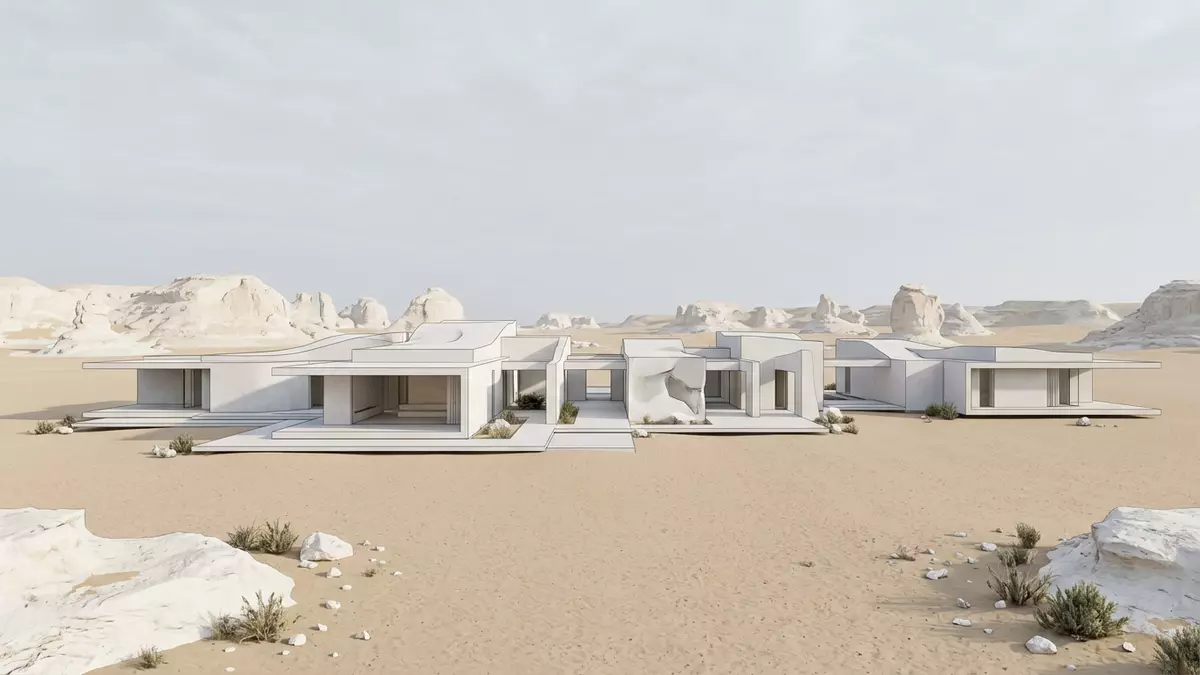
White Desert near Farafra in Egypt’s Western Desert is a protected landscape where pale chalk rock rises from the sand in sculpted forms that seem almost otherworldly. Within the Farafra depression, the national park lies north of the town of Qasr Al Farafra, its snow?white ground and wind?carved towers creating one of Egypt’s most distinctive desert scenes.
Chalk landscapes in the Farafra depression
White Desert sits within the Farafra depression in the Western Desert of Egypt, part of a wider sweep of Sahara terrain stretching between the oases of Bahariya and Farafra.Farafra depression The ground here is made of pale chalk and limestone, laid out across a broad desert floor and lifted into cliffs and isolated towers by erosion.snow?white chalk Instead of dunes alone, the visitor encounters a plateau of cream and white where harder layers stand proud and softer material has been worn away.
The protected area is formally recognised as White Desert National Park and as a natural reserve under Egyptian law, with classification as a national park type reserve within international conservation systems.White Desert National Park The park extends over an area of around 300 km² (120 mi²), giving the chalk landscape room to unfold between low basins and higher ridges.area of 300 km² Within this space lie pockets of vegetation, shallow hollows and occasional springs associated with the Farafra Oasis.
Wind?sculpted rock forms and desert colours
The rock formations are the defining feature of White Desert, rising several metres above the surrounding ground in shapes that resemble cones, columns and figures. Many are textbook examples of ventifacts, rocks sculpted by sand?laden winds that strike the surface over extended periods.ventifact formations Their surfaces are smoothed and undercut, giving some pillars and masses a narrowed “stem” beneath a broader cap of harder material.
The colour palette shifts gently through the day, as the white and cream chalk catches slanting light. Accounts of the area describe how dawn and dusk light wash the formations in soft orange and pink tones before they return to pale hues under higher sun.chalk?white sand punctuated by sculpted rock Against the surrounding brown desert and distant escarpments, the whiteness stands out, emphasising every ridge and hollow.
Wildlife, oases and protected status
Within the national park, the chalk desert is interspersed with elements of the Farafra Oasis, including areas where underground water reaches the surface and supports patches of vegetation. These spots form important staging points for desert wildlife, drawing animals to water and sustenance in an otherwise arid environment.Farafra Oasis Surveys of the reserve list sand gazelles, dorcas gazelles, Barbary sheep, foxes and fennec foxes among the mammals recorded, alongside desert cats and various smaller species adapted to sparse cover and wide ranges.sand and dorcas gazelles
The reserve was declared in 2002 by Egyptian government decree, aligning formal protection with long?standing recognition of the area’s scientific and scenic value.Prime Minister's Decree No. 1220 of 2002 This status limits permanent settlement and sets conditions on access, supporting conservation of the chalk formations and the desert ecology around them.recognised as a Natural Protectorate in 2002 Within the park, elevation ranges between around 32 m (105 ft) and 353 m (1,158 ft) above sea level, adding subtle variation to the views as tracks and routes cross low plains and rise towards modest heights.elevation between 32 m and 353 m
Visiting White Desert: what travellers from Western Europe should know
- White Desert lies in Egypt’s Western Desert, about 45 km (28 mi) north of Qasr Al Farafra and roughly 500 km (311 mi) southwest of Cairo, linked by the road between Bahariya and Farafra.
Access is commonly arranged by guided 4x4 tours that travel out from Cairo or the Bahariya Oasis across desert roads towards the national park. - The terrain within the park is predominantly flat desert floor punctuated by chalk formations several metres high, with areas of soft sand underfoot and occasional low rises and basins.
Visitors travel in vehicles along established tracks, with walking around formations involving short stretches over uneven, sandy ground. - White Desert experiences a hot desert climate with high daytime temperatures in summer and cooler conditions in winter, and nights in the cooler months can feel markedly cold compared with the daytime.
Travellers need to be prepared for strong sun exposure in the daytime and a notable drop in temperature after dark. - The official language is Arabic and the currency is the Egyptian pound.
Entry requirements depend on your nationality; UK travellers can check the FCDO travel advice at gov.uk/foreign-travel-advice, Irish travellers the Department of Foreign Affairs at ireland.ie.
Searching for White Desert on social platforms
These links open searches for White Desert on each platform.Frequently asked questions about White Desert
Where is White Desert in relation to Farafra?
White Desert lies within the Farafra depression in Egypt’s Western Desert, about 45 km (28 mi) north of the town of Qasr Al Farafra and around 500 km (311 mi) southwest of Cairo.
What can travellers expect on a visit to White Desert?
A visit brings extended views over pale chalk ground broken by sculpted rock formations several metres high, with travel mainly by 4x4 vehicle along tracks and short walks on sandy terrain around individual clusters of rock.
What makes White Desert distinctive among Egypt’s desert landscapes?
Its snow?white chalk floor and concentration of wind?carved ventifact formations, recognised in 2002 as a national park and natural reserve, give White Desert a character quite different from dune?dominated areas elsewhere in the Western Desert.


