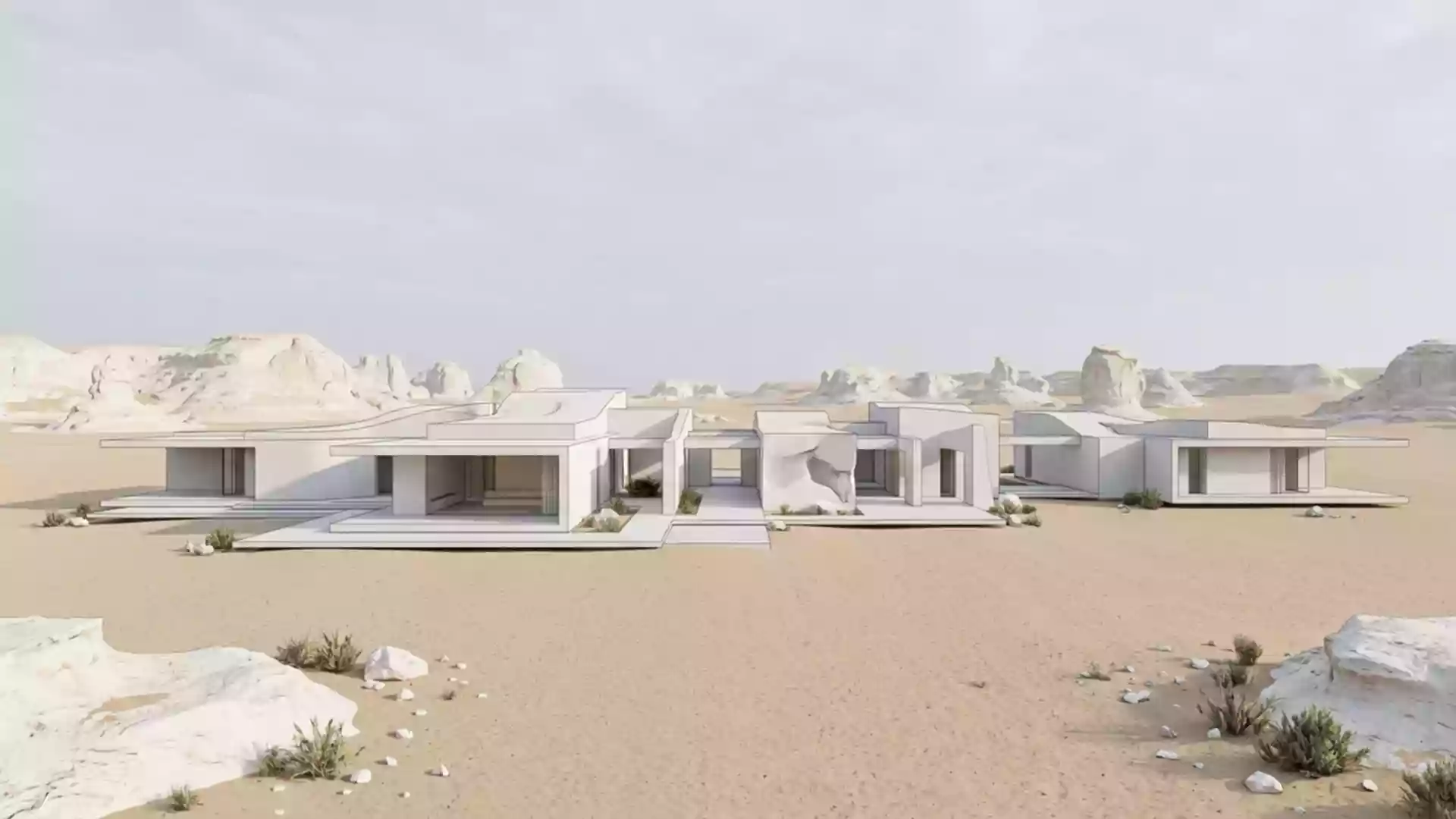
White Desert’s chalk sculptures in Egypt’s Western Desert
Published on 08/14/2026 at 14:45 | Editorial responsibility: Rafael Müller, Editor-in-Chief AD HOC NEWS
White Desert, in Egypt’s Western Desert near Farafra, is a protected chalk landscape where wind-shaped rock forms rise from pale desert sands in a wide open basin. Set within the Farafra depression and safeguarded as a national park since 2002, it has become a key example of how geology and desert ecology intertwine in the country’s interior.
A national park of chalk and sand
White Desert lies in the Farafra depression in Egypt’s Western Desert, north of the town of Qasr Al Farafra, in the New Valley Governorate. The protected area extends across desert terrain on both sides of the highway through Farafra, with the core zone of the park covering around 300 square kilometres (116 square miles) of distinctive pale rock and sand formations.White Desert National Park It is recognised in Egyptian law as a natural reserve under a decree issued in 2002, and classified as a national park reserve in international conservation systems.natural reserve in 2002
The protected area forms part of a wider cultural landscape that includes the Farafra Oasis and nearby smaller oases such as Ain el Maqfi and Ain el Wadi.Farafra depression and oases Within Egypt’s Western Desert, White Desert sits between other oases and desert features, roughly mid-way between Dakhla and Bahariya along the desert road.Farafra depression location This combination of chalk formations, sandy plains and scattered green pockets of cultivation gives the area a layered character that differs from more uniform dune fields elsewhere in the Sahara.
Chalk formations shaped by desert wind
The defining feature of White Desert is the chalk bedrock, weathered into freestanding rock forms that stand above the surrounding desert surface. The chalk ranges in colour from bright white to cream, making the formations visually distinct against the darker sand and rock beyond the park.chalk rock coloured from snow-white to cream Over time, wind-blown sand has carved these chalk masses into shapes that geologists describe as classic ventifacts, sculpted by abrasion rather than flowing water.massive chalk rock formations
Across parts of the park, the chalk forms stand in clusters on a relatively flat desert floor, interrupted only by isolated conical hills and low plateaus marking variations in the underlying geology.flat valley and conical hills Elsewhere, the rock structures appear more widely spaced, giving long sightlines over the basin and towards distant desert ridges. Many formations have distinctive outlines that resemble everyday forms or animals, and over generations these have collected informal names among guides and travellers, even though they remain natural products of erosion rather than human carving.
Protected desert ecology and cultural landscape
White Desert is more than a visually striking chalk landscape; it also serves as a protected habitat for desert wildlife adapted to arid conditions. Within the park and its buffer zones, mammal species such as Dorcas gazelle and Barbary sheep have been recorded, along with foxes including Rüppell’s fox, red fox and fennec fox, and the sand cat.refuge for desert fauna These species move across a mosaic of rocky outcrops, gravelly plains and patches of vegetation that benefit from occasional rainfall and underground water near the oases.
The wider Farafra Oasis around White Desert has long supported human settlement and agriculture, with traditional architecture and cultivated plots drawing on underground water resources.cultural landscape of Farafra oasis In assessments of desert landscapes and oasis systems in the Arab region, Farafra and White Desert have been grouped together as a single cultural landscape, where natural and human-made elements are closely linked. Alongside its national protection, the Western Desert of Egypt, which includes White Desert, has been considered within UNESCO’s tentative frameworks for desert and oasis heritage, highlighting its broader significance beyond the national park boundaries.Western Desert tentative heritage context
Visiting White Desert: what travellers from Western Europe should know
- White Desert lies north of Qasr Al Farafra in Egypt’s Western Desert, reached by road through the Farafra depression from other oases such as Bahariya and Dakhla.
- The terrain within the park is largely open desert with patches of soft sand and areas of exposed chalk and rock, and approaches into the formations use desert tracks rather than paved paths.
- The wider area forms part of Egypt’s Western Desert, with Farafra Oasis providing a settled centre of low-rise buildings and cultivated land surrounded by open desert plains.
- The official language is Arabic and the currency is the Egyptian pound. Entry requirements depend on your nationality; UK travellers can check the FCDO travel advice at gov.uk/foreign-travel-advice, Irish travellers the Department of Foreign Affairs at ireland.ie.
Searching for White Desert on social platforms
These links open searches for White Desert on each platform.Frequently asked questions about White Desert
Where is White Desert located in Egypt?
White Desert is in the Farafra depression of Egypt’s Western Desert, north of Qasr Al Farafra in the New Valley Governorate and within the wider Farafra Oasis region.
What can visitors expect to see at White Desert?
Visitors encounter pale chalk formations rising from desert sands, conical hills and low plateaus, along with open desert plains and the cultivated areas of the nearby Farafra Oasis.
What makes White Desert distinctive among Egypt’s desert landscapes?
The combination of white and cream-coloured chalk ventifacts, protected desert wildlife and the close relationship between the national park and the traditional oasis settlement of Farafra gives White Desert a character that differs from more uniform dune fields in other parts of the Sahara.