
White Sands National Park and its sea of gypsum dunes
Published on 09/18/2026 at 11:18 | Editorial responsibility: Rafael Müller, Editor-in-Chief AD HOC NEWS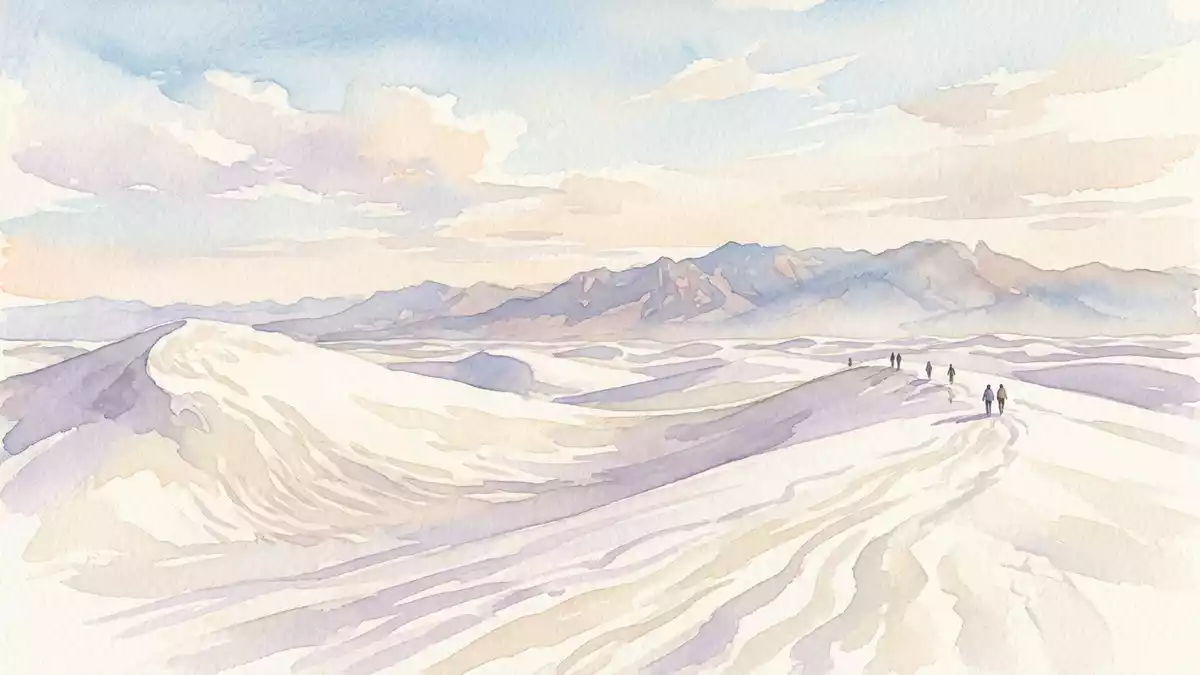
White Sands National Park in southern New Mexico spreads across part of the Tularosa Basin and is defined by a vast field of white gypsum sand dunes that form a bright, shifting landscape unlike the darker deserts that surround it.White Sands National Park The area near Alamogordo has become known for these dunes, which cover a large portion of the basin floor and give the park its name.
Gypsum dunes in the Tularosa Basin
The defining feature of White Sands National Park is its field of dunes made from gypsum crystals rather than the quartz grains found in many other deserts.field of dunes made from gypsum crystals The protected area covers 145,762 acres, or about 589.9 km², and includes a substantial portion of a gypsum dunefield that extends across roughly 275 square miles of the basin.protected area covers 145,762 acres Within this dunefield, the dunes reach heights of up to around 18 m (about 60 ft), forming ridges and slopes that move gradually as the prevailing winds push sand across the basin.
The dunes are composed of gypsum sand that appears white against the surrounding landscape and reflect sunlight in a way that can make the area resemble an expanse of snow under certain conditions.white sand dunes composed of gypsum crystals Beneath the dunes lies a layer of gypsum sand with a depth of about 9 m, while the surface dunes rise above this base and create a varied terrain of slopes, interdunal flats and ridges that visitors encounter along the park roads and paths.depth of gypsum sand
From an ancient sea to a national park
The story of the gypsum at White Sands reaches back to the Permian period more than 250 million years ago, when a shallow inland sea covered parts of what is now southern New Mexico.Permian period more than 250 million years ago As the sea advanced and retreated, minerals accumulated in the water and settled on the sea floor as thick layers of gypsum, which later rose with the surrounding mountains and provided the material that now forms the dunes.
White Sands was first protected as a national monument on 18 January 1933, when President Herbert Hoover issued a proclamation to preserve part of the gypsum dunefield.proclamation on 18 January 1933 The designation reflected the significance of the dunes as a large gypsum field and aimed to conserve a major portion of this unusual landscape within the Chihuahuan Desert.preservation of the world’s largest gypsum dunefield The area later became White Sands National Park, maintaining its focus on the protection of the dune system and the geological record embedded in the basin.
Landscape, access and surroundings
White Sands National Park lies within the Tularosa Basin, between ranges including the Sacramento Mountains and the San Andres Mountains, and is reached along U.S. Highway 70 between Las Cruces and Alamogordo.Tularosa Basin between the mountain ranges The park entrance and visitor centre sit near this highway, with the dunes spreading out beyond the road into the basin floor.White Sands National Park physical address
Within the park, the gypsum dunes form patterns that range from gentle wave-like surfaces to steeper faces, and the bright sand contrasts with the sky and the surrounding desert vegetation that adapts to the shifting ground.brilliant white dunes that rise up to 60 feet The wider dunefield extends beyond the park boundary into areas managed for other purposes, but the national park preserves a major portion of the gypsum sands along with the plants and animals that live in this environment.preserves a major portion of this unique dunefield
Visiting White Sands National Park: what travellers from Western Europe should know
- White Sands National Park lies in southern New Mexico between Las Cruces and Alamogordo, and the entrance is reached along U.S. Highway 70 across the Tularosa Basin.
- The terrain within the park consists of gypsum sand dunes with slopes and interdunal flats, so walking away from roads involves moving over soft sand that can make progress more demanding.
- The surrounding landscape includes desert vegetation and distant mountain ranges, and conditions on exposed dune surfaces reflect the high-altitude desert environment of southern New Mexico.
- The official language in New Mexico is English and the currency is the United States dollar.
- Entry requirements depend on your nationality; UK travellers can check the FCDO travel advice at gov.uk/foreign-travel-advice, Irish travellers the Department of Foreign Affairs at ireland.ie.
Searching for White Sands National Park on social platforms
These links open searches for White Sands National Park on each platform.
Frequently asked questions about White Sands National Park
Where is White Sands National Park located?
White Sands National Park is in southern New Mexico within the Tularosa Basin, reached along U.S. Highway 70 between Alamogordo and Las Cruces.U.S. 70 between Alamogordo and Las Cruces
What can visitors expect on a visit?
Visitors encounter extensive white gypsum sand dunes with slopes, ridges and interdunal flats, along with desert vegetation adapted to the shifting sands and the high-altitude environment.brilliant white dunes in the dunefield
What makes White Sands National Park distinctive?
White Sands National Park preserves a major portion of the world’s largest gypsum dunefield, creating a broad landscape of white sand formed from gypsum rather than the darker quartz sands of many other deserts.world’s largest gypsum dunefield


