
Wudang Shan’s Taoist peaks and temple complexes above Shiyan
Published on 09/18/2026 at 21:53 | Editorial responsibility: Rafael Müller, Editor-in-Chief AD HOC NEWS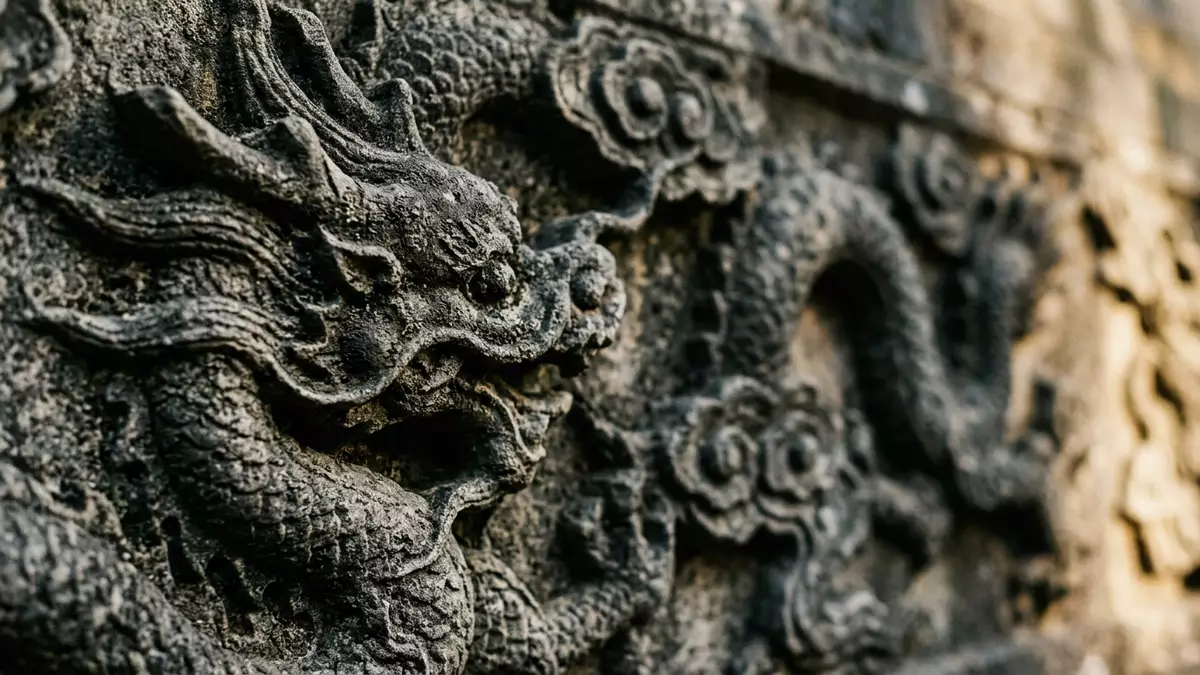
Wudang Shan in Shiyan, Hubei, is a mountain range where steep ridges and dense forest meet an extensive Taoist temple complex recognised as a cultural World Heritage Site by UNESCO in 1994.Ancient Building Complex in the Wudang Mountains The site gathers palaces, halls and monasteries along the slopes, making the relationship between landscape and architecture the defining experience of a visit.
Wudang Shan as a Taoist mountain landscape
Wudang Shan forms a narrow mountain range in the north-west of Hubei province, lying close to Shiyan and running broadly east–west along the southern edge of the Han River.mountain range in Hubei Peaks, ravines and cliffs rise above forested slopes, and the temple complexes sit on terraces, ridges and summit platforms rather than in a single enclosed compound.
The mountain has been associated with Taoism for many centuries, and Wudang Shan is counted among the major sacred mountains of that tradition.major Taoist mountain Across the slopes, palaces, halls, nunneries and temples occupy different elevations, linked by stone paths and stairways that follow the terrain. The ensemble is officially designated as the “Ancient Building Complex in the Wudang Mountains”, reflecting the way architecture and mountain landscape are treated as one cultural whole.Ancient Architectural Complex on Wudang Mountain
Temple complexes and the Golden Hall on Tianzhu Peak
Among the many buildings on Wudang Shan, the Golden Hall on Tianzhu Peak stands out as a compact palace-like hall cast entirely in gilt bronze during the Ming dynasty.Golden Hall on Tianzhu Peak Completed in 1416, in the fourteenth year of the Yongle reign, it was assembled from components cast in Beijing and brought to the summit, and forms part of Taihe Palace within the walled Purple Gold City at the highest point of the complex.copper palace-style structure from the Ming Dynasty
Other significant sites on Wudang Shan include Nanyan Palace built against a cliff, Zixiao Palace on its own terrace and a series of cliff temples, bridges and pavilions distributed across the ridges.palaces, temples and nunneries Together they represent architectural activity from at least the Tang dynasty onwards, with major expansions under Yuan, Ming and Qing rulers, and are linked conceptually by Taoist practice and ritual rather than by a single courtyard or axis.
UNESCO World Heritage status and cultural significance
UNESCO inscribed the Ancient Building Complex in the Wudang Mountains on the World Heritage List in 1994 as a cultural site, highlighting its religious significance and architectural achievement.World Heritage inscription in 1994 The designation covers a scatter of structures on the mountain rather than a single monument, and emphasises the way Taoist architecture, ritual spaces and mountain scenery form a continuous cultural landscape.UNESCO cultural heritage site
Wudang Shan is also associated with Wudang martial arts, including Wudang boxing, which have been recognised within China as elements of intangible cultural heritage.Wudang-Wushu from Shiyan This adds a living practice to the historic architecture, with training halls and practice platforms occupying some of the terraces among the temples and palaces, and connects the mountain’s built fabric to contemporary Taoist and martial traditions.
Visiting Wudang Shan: what travellers from Western Europe should know
- Wudang Shan lies in Shiyan City in north-western Hubei province in central China, with access routes converging on the Wudangshan area from the surrounding valleys.
- Temple complexes and viewing platforms are linked by stone paths and stairways, many of them steep and extended, and visiting the higher sites involves sustained climbing on steps.
- Summit areas such as Tianzhu Peak stand at higher altitude than Shiyan itself, with exposed ridges where weather can be more pronounced than in the lowlands.
- The official language is Chinese and the currency is the renminbi (yuan).
- Entry requirements depend on your nationality; UK travellers can check the FCDO travel advice at gov.uk/foreign-travel-advice, Irish travellers the Department of Foreign Affairs at ireland.ie.
Searching for Wudang Shan on social platforms
These links open searches for Wudang Shan on each platform.
Frequently asked questions about Wudang Shan
Where is Wudang Shan located?
Wudang Shan is a mountain range and temple complex in Shiyan City, in the north-west of Hubei province in central China.near the city of Shiyan
What should visitors expect during a visit?
Visitors encounter forested slopes, stairways and terraces with Taoist palaces, halls and temples distributed across different elevations, rather than a single level campus.
What makes Wudang Shan distinctive among Chinese mountain sites?
Wudang Shan combines a large, historically layered Taoist temple complex with a rugged mountain landscape and holds a UNESCO cultural World Heritage inscription dating from 1994.


