
Yokohama Chukagai and its ring of Chinese gates
Published on 09/14/2026 at 12:02 | Editorial responsibility: Rafael Müller, Editor-in-Chief AD HOC NEWS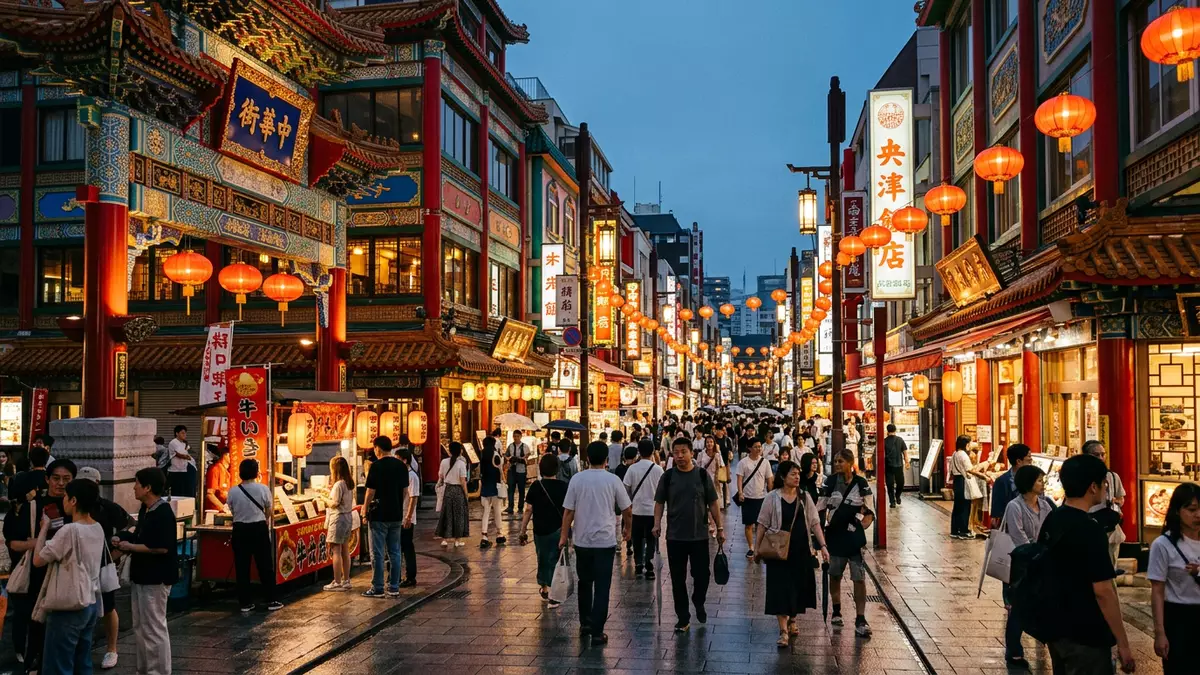
Yokohama Chukagai, known in English as Yokohama Chinatown, is a compact Chinese quarter in Yokohama whose streets trace their origins to the opening of Yokohama Port to foreign trade in 1859. Chinese traders from coastal cities such as Hong Kong, Shanghai and Guangdong settled here in the later nineteenth century, turning a designated foreign settlement into a dense district of shops, temples and eateries framed by gateways.
From treaty port settlement to recognised Chinatown
Yokohama emerged as one of Japan’s treaty ports when the Tokugawa shogunate opened the harbour to international commerce in 1859, ending centuries of tightly controlled contact with the outside world.Yokohama's seaport opened in 1859 Foreign residents, including Chinese merchants and interpreters, were assigned to a specific area close to the docks, where the community took root and Yokohama Chukagai would later take shape.Chinese immigrants arrived from Canton and Hong Kong
Through the Meiji period, the Chinese settlement grew into a recognisable quarter with its own institutions. A temple dedicated to Guan Yu, known locally as Kanteibyo, was established in the early 1870s, followed by a Chinese school and an assembly hall which underlined the district’s role as a self?contained community.Kanteibyo temple dates to 1873 The Great Kanto Earthquake of 1923 destroyed much of Yokohama, including many buildings in the Chinese quarter, and much of what visitors see in Yokohama Chukagai today reflects reconstruction and post?war development rather than its earliest fabric.the Great Kanto Earthquake struck in 1923
Gates, streets and temples in a compact grid
The most striking feature of Yokohama Chukagai is the concentration of decorated gates that mark its entrances and frame key junctions within the district. These structures follow the paifang, or pailou, tradition familiar from Chinese cities, with tiered roofs, coloured tilework and painted panels inscribed with auspicious characters.the gates use the paifang style They create a sense of entering a distinct urban pocket, even though Yokohama Chukagai lies only a short walk from the waterfront and mainstream shopping streets.
Behind the gates, a tight grid of streets is lined with restaurant fronts, bakeries, grocers and souvenir stalls displaying Chinese characters alongside Japanese signage. Kanteibyo temple stands as one of the central landmarks, its hall and courtyard decorated with carvings, lanterns and incense burners that signal the district’s religious dimension.a Chinese temple and community centre were built Nearby, the subtle remains of earlier community buildings, including former schools and meeting halls, sit among newer commercial blocks, illustrating how Yokohama Chukagai has combined everyday trade with cultural continuity across different political eras.
Official recognition and a Sino?Japanese cityscape
A milestone in the formal identity of the quarter came in the mid?twentieth century, when Yokohama’s Chinese district was officially designated under the name Yokohama Chukagai. In 1955 a prominent goodwill gate carrying characters for “Chinatown” was constructed and the area’s recognised status under that name was established.recognised officially as Yokohama Chukagai in 1955 Later decades saw diplomatic ties between Japan and the People’s Republic of China help consolidate the area as a site of cultural exchange, anchoring its mixed architecture and food culture within the wider story of Yokohama’s port city identity.post-war the area grew as a tourist attraction
Walking through Yokohama Chukagai reveals how Chinese architectural motifs and Japanese urban infrastructure coexist in close quarters. Overhead, balconies and roofs carry dragons, cloud patterns and gold?coloured detailing, while below, pavements, street furniture and utility poles follow the conventions of a Japanese city. The district’s compact size makes this contrast easy to grasp: from certain corners, gates and temple roofs dominate the immediate view, yet the taller commercial buildings and harbour?side structures of Yokohama remain visible beyond, reminding visitors that this long?standing Chinese enclave forms part of a larger metropolis shaped by maritime trade.
Visiting Yokohama Chukagai: what travellers from Western Europe should know
- Yokohama Chukagai lies in Naka ward on the eastern side of Yokohama, a short distance inland from the city’s waterfront. It is reached on urban rail lines that stop at stations such as Motomachi?Chukagai and Ishikawacho, and also sits within reach of road routes from central Yokohama.
- The streets of the district are level but busy, with narrow carriageways and pavements that require care when moving between shopfronts, temple entrances and side alleys.
- Yokohama Chukagai stands within the city of Yokohama in Japan, where the official language is Japanese and the currency is the yen.
- Entry requirements depend on your nationality; UK travellers can check the FCDO travel advice at gov.uk/foreign-travel-advice, Irish travellers the Department of Foreign Affairs at ireland.ie.
Searching for Yokohama Chukagai on social platforms
These links open searches for Yokohama Chukagai on each platform.
Frequently asked questions about Yokohama Chukagai
Where is Yokohama Chukagai located?
Yokohama Chukagai is in Naka ward in the city of Yokohama in Japan, close to the port area and within walking distance of the waterfront districts.
What should visitors expect on a visit?
Visitors encounter streets lined with Chinese restaurants, shops and bakeries, framed by decorated gates and centred on Kanteibyo temple and other community buildings.
What makes Yokohama Chukagai distinctive among Japanese city districts?
It combines long?standing Chinese religious and commercial architecture with Japanese urban infrastructure, all within a compact area that grew from nineteenth?century treaty port settlement.


