
Yosemite National Park’s granite walls and wild valley
Published on 08/28/2026 at 19:47 | Editorial responsibility: Rafael Müller, Editor-in-Chief AD HOC NEWS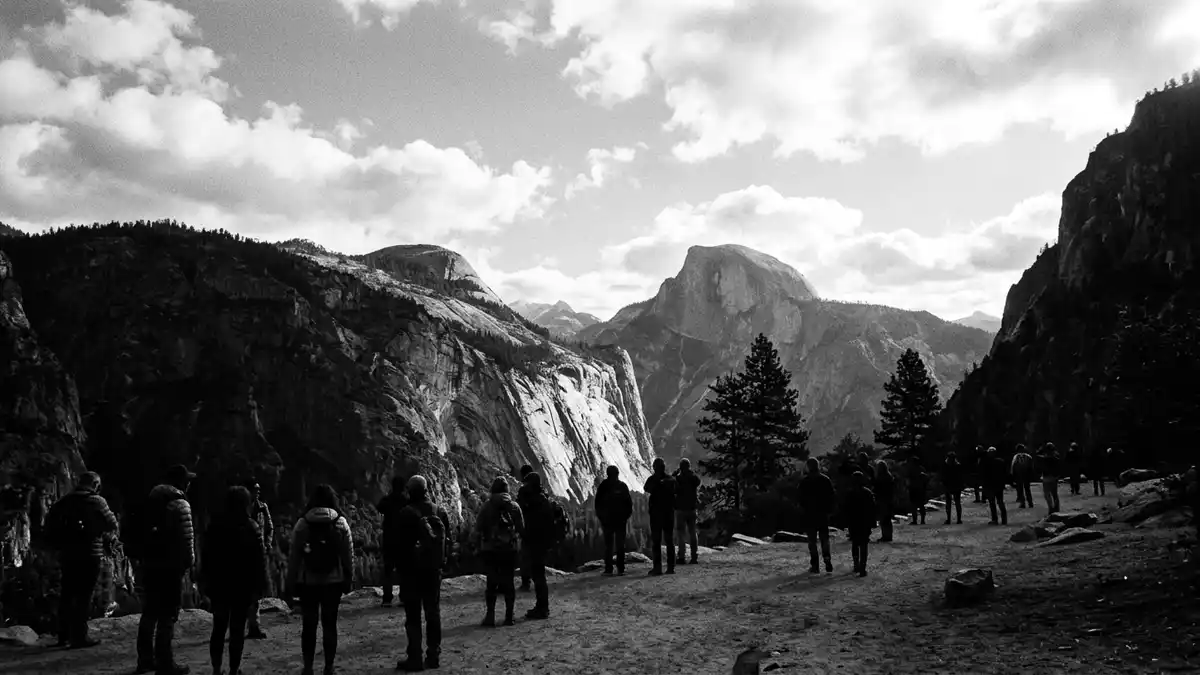
Yosemite National Park, in California’s Sierra Nevada, is defined by the way Yosemite Valley cuts a narrow corridor of meadow, forest and river between immense granite walls. The valley sits within a protected park landscape that was established as a United States national park in 1890, and later recognised as a UNESCO World Heritage site, anchoring both its geological drama and its long-term protection.
Granite, glaciers and the making of Yosemite Valley
Yosemite National Park occupies a mountainous area in east-central California on the western slopes of the Sierra Nevada range. The protected area covers more than 3,000 km² and lies in several counties, including Mariposa and Tuolumne, with Yosemite Valley forming a relatively small, central part of this wider highland landscape.east-central California Within the valley, the Merced River traces a sinuous line along the floor, with open meadow and mixed conifer forest spreading out on either side before the ground rises almost sheer into pale rock.
The geology that makes Yosemite Valley so distinctive is rooted in granite and shaped by ice. Bedrock here includes a variety of granitic types, and the steep valley walls reveal near-vertical jointing and broad, clean faces that have resisted erosion.granite, metamorphic and volcanic bedrock Over several geological periods, rivers cut an initial canyon which was then deepened and widened by Ice Age glaciers, leaving the classic U-shaped profile seen from viewpoints along the rim. Standing on the valley floor, those glacially carved walls rise in pale grey and buff, often with dark streaks marking seasonal waterfalls.
Cliffs, domes and waterfalls above the valley floor
Yosemite Valley is framed by a series of named rock formations whose outlines are visible from many points along the main road and walking routes. El Capitan stands near the valley’s western end as a huge granite monolith, its broad cliff face rising near-vertically above the forest and river, and it has become a central focus for technical rock climbing in the park.El Capitan granite monolith Further east, Half Dome lifts a distinct summit where one side drops steeply towards the valley and the opposite side curves back in a smoother, rounded slope, giving the formation its name.
Waterfalls punctuate the valley walls, with snowmelt feeding high cascades in the main thaw season. Yosemite Falls drops in several stages from the northern rim into the valley, its height making it one of the tallest waterfalls in North America.Yosemite Falls plunges 2,425 feet Bridalveil Fall, near the valley’s western approach, spills from a hanging valley into a boulder field, and various smaller streams descend from side gullies along both walls. From many viewpoints, these cliffs, domes and falls line up in a single panorama: pale granite rising above dark conifers, with the Merced River reflecting the sky between them.
Forest, sequoias and protected wilderness
Beyond the immediate corridor of Yosemite Valley, the national park extends across high ridges, deep canyons and broad upland plateaux, much of it left without roads. A very high proportion of the total acreage is designated wilderness, meaning that trails and backcountry routes cross largely undeveloped terrain of forest, alpine meadow and bare rock.747,956 acres classified as wilderness This contrast between the valley’s concentrated infrastructure and the surrounding roadless area is central to the character of a visit: the canyon feels like a hub with high country radiating outwards.
Vegetation reflects the change in elevation from valley floor to high ridge. On the lower slopes and around the Merced River, mixed conifer forest includes species such as ponderosa pine, incense-cedar and fir, interspersed with oak in drier spots. Higher up, the trees thin into subalpine stands and then give way to open granite, talus and seasonal patches of snow. Elsewhere in the park, away from Yosemite Valley, groves of giant sequoia include trees that have stood for several millennia, adding another layer of scale to the experience of walking among the Sierra Nevada forests.Giant Sequoia trees over 3,000 years old
Visiting Yosemite National Park: what travellers from Western Europe should know
- Yosemite National Park lies in central California in the United States, with Yosemite Valley reached by road from communities such as Mariposa along routes that follow the Merced River into the park.
- The valley floor is relatively level, but approaches to viewpoints and certain trails involve noticeable gradients and stairways on rock and earth, with some paths gaining substantial elevation above the river.
- Outside the immediate corridor of Yosemite Valley, much of the park consists of high mountain terrain where weather, snow cover and daylight can change markedly with altitude and season.
- The official language is English and the currency is the US dollar.
- Entry requirements depend on your nationality; UK travellers can check the FCDO travel advice at gov.uk/foreign-travel-advice, Irish travellers the Department of Foreign Affairs at ireland.ie.
Searching for Yosemite National Park on social platforms
These links open searches for Yosemite National Park on each platform.
Frequently asked questions about Yosemite National Park
Where is Yosemite National Park and Yosemite Valley?
Yosemite National Park lies in central California on the western slopes of the Sierra Nevada, with Yosemite Valley forming a central canyon around the Merced River.
What should visitors expect on a first visit to Yosemite Valley?
Visitors encounter a relatively narrow valley floor with meadow, forest and a river, enclosed by steep granite walls, waterfalls, named cliffs and domes visible from roads and trails.
What makes Yosemite National Park distinctive among mountain landscapes?
The combination of glacially carved granite cliffs, high waterfalls such as Yosemite Falls, extensive designated wilderness and ancient giant sequoia groves gives the park a particularly strong sense of scale.


