
Yungang Shiku and the Buddhist art carved into stone
Published on 09/22/2026 at 22:22 | Editorial responsibility: Rafael Müller, Editor-in-Chief AD HOC NEWS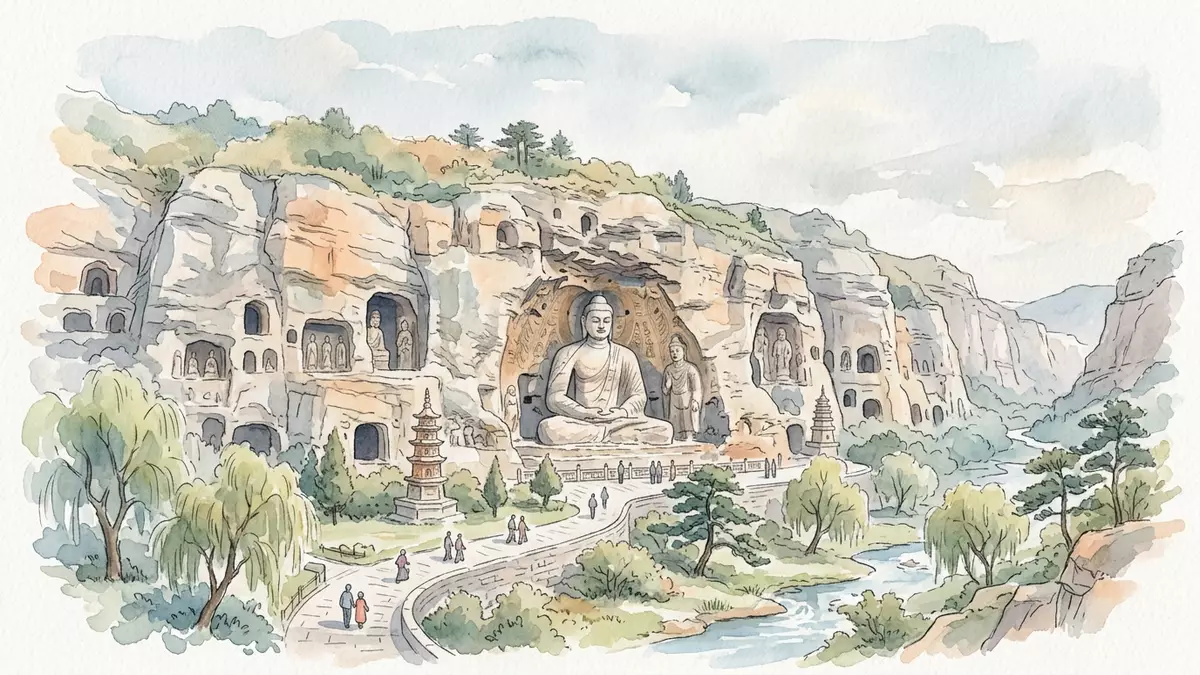
Yungang Shiku stretches along sandstone cliffs west of Datong, with Buddhist caves and sculptures cut directly into the rock. Begun in 460 during the Northern Wei dynasty, the complex brings architecture, painting and monumental carving into a single visible surface.
Yungang Shiku: a cliff face shaped into Buddhist chambers
The grottoes lie at the southern foot of the Wuzhou Mountains, about 16 km west of Datong in Shanxi Province. The carved zone extends for roughly one kilometre from east to west, forming a long sequence of chambers, niches and façades within the sandstone.
UNESCO records 252 caves and 51,000 statues at Yungang Shiku, figures that describe the scale of the surviving complex without reducing it to a single monument. UNESCO’s Yungang record places the principal artistic achievement in China’s fifth and sixth centuries.
From Northern Wei imperial patronage to stone sculpture
Work began under Northern Wei imperial patronage during the reign of Emperor Wencheng, when Datong was known as Pingcheng. The monk Tan Yao is associated with the earliest major phase, including the group of caves numbered 16 to 20.
The Northern Wei dynasty ruled northern China from 386 to 534. Its art combined Buddhist imagery connected with India and Central Asia with forms that developed within Chinese court culture. Northern Wei cave art belongs to a period of political change, religious patronage and artistic exchange.
The sculptures include Buddhas, bodhisattvas, guardians and other sacred figures. Some occupy the walls as reliefs, while others rise as large images within the chambers. Traces of pigment remain associated with the sandstone surfaces, adding colour to an art form frequently encountered today through its exposed stone.
Named caves, monumental figures and changing styles
Cave 20 contains a large seated Buddha whose face and shoulders remain visible within the open front of the chamber. The figure has become a visual reference for Yungang Shiku because the rock-cut architecture frames the sculpture as part of the cliff itself.
Cave 17 is associated with a colossal seated Maitreya. Other chambers contain rows of figures, ornamental patterns, musicians, attendants and architectural details carved across ceilings, walls and entrances. Their arrangement varies from cave to cave, creating distinct interiors within the longer cliff complex.
The sculptures preserve a change in artistic language across the Northern Wei period. Earlier figures show elongated bodies and strong linear treatment, while later works display forms linked with evolving Chinese dress, facial modelling and courtly style. Cave 17’s Maitreya illustrates the relationship between a named chamber and its principal image.
Yungang Shiku became a UNESCO World Heritage Site in 2001. The designation recognises the caves as an important achievement of early Chinese Buddhist cave art and records the fusion of Buddhist traditions from south and central Asia with Chinese culture. The UNESCO archive description identifies the complex through its caves, statues and fifth- and sixth-century setting.
Visiting Yungang Shiku: what travellers from Western Europe should know
- Yungang Shiku is west of Datong, at the southern foot of the Wuzhou Mountains. The site is reached from Datong by road.
- The complex occupies a long sandstone cliff rather than a single enclosed building. Walking between caves involves outdoor paths, changes in level and entrances cut into rock.
- The official language is Mandarin Chinese and the currency is the renminbi.
- Yungang Shiku lies in Shanxi Province, where winter temperatures can be low and the exposed cliff landscape is subject to seasonal weather.
Searching for Yungang Shiku on social platforms
These links open searches for Yungang Shiku on each platform.
Frequently asked questions about Yungang Shiku
Where is Yungang Shiku?
Yungang Shiku is in Shanxi Province, China, about 16 km west of Datong. It occupies the southern foot of the Wuzhou Mountains.
What can visitors expect to see?
The complex contains rock-cut Buddhist caves, sandstone sculptures, painted details and carved architectural decoration. Named chambers include Cave 17 and Cave 20.
What makes Yungang Shiku distinctive?
Its caves and statues form a continuous relationship between cliff, chamber and image. The Northern Wei date and the scale of the surviving Buddhist art define the site.


