
Zamek w Malborku and the scale of Teutonic brick Gothic
Published on 09/18/2026 at 09:07 | Editorial responsibility: Rafael Müller, Editor-in-Chief AD HOC NEWS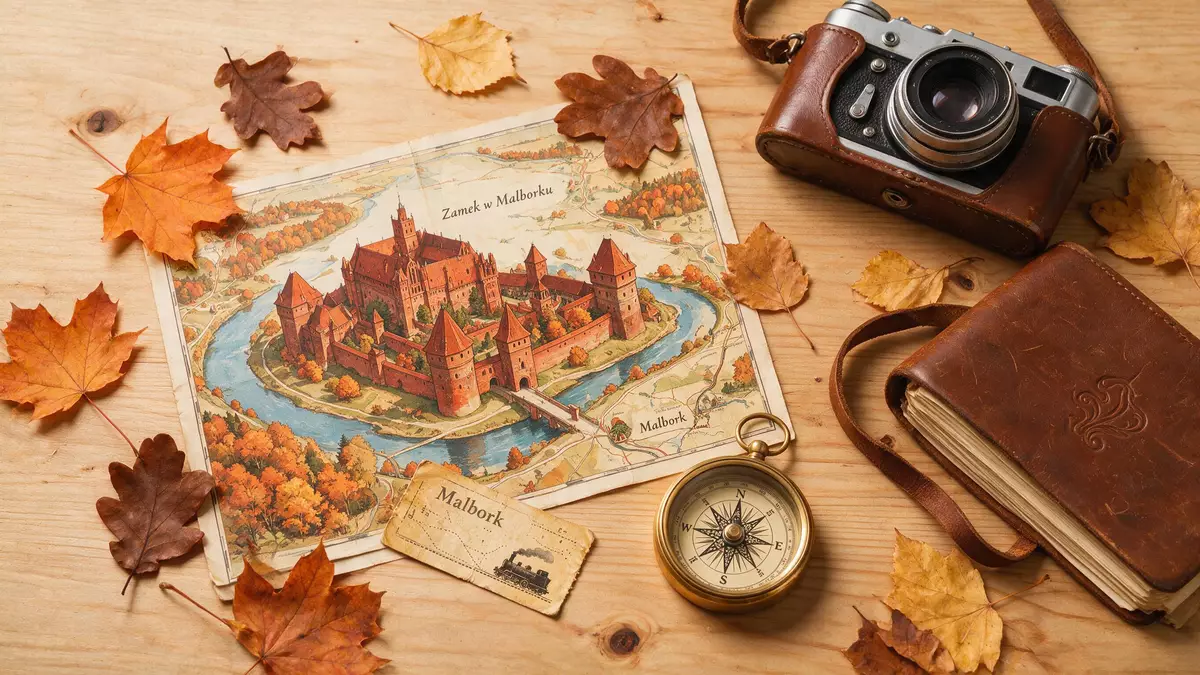
Zamek w Malborku, known in English as Malbork Castle, is a vast Brick Gothic fortress complex on the right bank of the Nogat river in northern Poland. Built by the Teutonic Order from the late thirteenth century and significantly enlarged through the fourteenth century, it formed the seat of the Order’s Grand Master and later a residence of the kings of Poland.
A brick fortress built on a monastic scale
The Castle of the Teutonic Order in Malbork is laid out as an enclosed brick fortress enclosing a sequence of castles and service courts, rather than a single keep with a surrounding wall.massive brick fortress The Teutonic Knights began building the complex in the 1270s, on land beside the Nogat where they were consolidating their power over former Prussian territories.began building the castle about 1274 Brick, rather than stone, defines almost every visible wall and tower, giving Zamek w Malborku a strong visual coherence across its large footprint.
Medieval documents and subsequent research tie the naming of the castle to a dedication to Mary, mother of Jesus, reflected in the German name Marienburg used for the Teutonic stronghold.named Marienburg in honour of Mary From early on, the castle’s conventual character was central: it was conceived as a fortified monastery where members of the Order lived under religious rule while also organising military campaigns and the administration of Teutonic Prussia.fortified monastery belonging to the Teutonic Order
High Castle, Middle Castle and Fore Castle
The scale of Zamek w Malborku becomes clear in its three-part composition. The complex is usually described as comprising the High Castle, the Middle Castle and the Fore Castle, together with extensive outer works, enclosed within two main rings of defensive walls.High Castle, Middle Castle, and the Fore Castle In total, the fortified area covers around 21 hectares, large enough to accommodate residential ranges, chapels, halls, service buildings and extensive courtyards.complex of buildings and fortifications covers 21ha
The High Castle, originally the main conventual building, rises above the river on the inner line of fortifications and housed the religious life of the Teutonic community, with its chapel and cloister ranges.initially, the conventual seat of the commander The Middle Castle contains grand halls and representative spaces linked to the Order’s governance, added as Malbork took on the role of capital of Teutonic Prussia after the Grand Master Siegfried von Feuchtwangen moved the seat there in 1309.moved the capital of the order to Malbork The Fore Castle, closest to the town, incorporates service areas, storage and additional fortifications, tying the complex physically to the urban fabric of Malbork.
From Teutonic stronghold to Polish royal residence and museum
Construction at Zamek w Malborku ran through several phases from the late thirteenth century into the fifteenth century, with work continuing until the castle reached a mature form around 1406.completion in 1406 In 1309, when the headquarters of the Order’s Grand Master were transferred from Venice to Malbork, the fortress became the administrative and spiritual centre of the Teutonic state.headquarters moved there from Venice in 1309 Over the following century and a half it served as the stage for political assemblies and reflected the strength of the Order in the Baltic region.
After the defeat of the Teutonic Knights at the Battle of Grunwald in 1410 and subsequent treaties, Malbork Castle entered a different phase. By 1466 it had become a royal residence for the kings of Poland and remained associated with Polish political authority until the eighteenth century, alongside its role as seat of the authorities of Royal Prussia.residence of the kings of Poland From the late eighteenth century the complex came under Prussian administration and suffered neglect, followed by major restoration campaigns in the nineteenth and early twentieth centuries.reconstructed in 1817–1842 and 1882–1944 Reconstruction after wartime destruction in the mid-twentieth century led to its recognition as a monument of history in Poland and to the establishment of the Castle Museum in Malbork in 1961.since 1961 the seat of the Castle Museum in Malbork
World Heritage status and Brick Gothic detail
Zamek w Malborku holds a place on the UNESCO World Heritage List as the Castle of the Teutonic Order in Malbork, inscribed in 1997.inscribed on the UNESCO World Heritage List UNESCO’s documentation describes it as a supreme example of a medieval brick castle and highlights the role it played in shaping conservation practice, because many restoration techniques were refined there and later influenced work elsewhere.supreme example of the medieval brick castle
The castle’s Brick Gothic character can be read in its pointed vaults, tall gables and sculpted portals, where shaped brickwork is combined with architectural sculpture. Documents prepared for World Heritage status emphasise how the builders developed sophisticated solutions for vaulting, entrances and figurative decoration that influenced later Teutonic castles and Gothic buildings in northern and eastern Europe.methods used by its builders Within the vast area enclosed by its walls, the visitor encounters chapels, refectories, domestic rooms and service spaces arranged around brick courtyards, all bearing the rhythm of red and brown masonry.
Visiting Zamek w Malborku: what travellers from Western Europe should know
- Zamek w Malborku stands in Malbork in northern Poland, on the east bank of the Nogat river; regional rail services link Malbork with Gda?sk and other cities.
- The castle complex extends over a large enclosed area with multiple courtyards, staircases and long interior routes, and exploring it involves significant walking over uneven historic surfaces.
- Malbork lies in the lowlands of northern Poland; the castle sits close to the river and remains at modest elevation, though its towers and upper levels rise significantly above the surrounding townscape.
- Nearby, the Nogat river and the historic urban core of Malbork form part of the wider setting, with views between the castle and the town across the water.
- The official language is Polish and the currency is the Polish z?oty; entry requirements depend on your nationality, UK travellers can check the FCDO travel advice at gov.uk/foreign-travel-advice, Irish travellers the Department of Foreign Affairs at ireland.ie.
Searching for Zamek w Malborku on social platforms
These links open searches for Zamek w Malborku on each platform.
Frequently asked questions about Zamek w Malborku
Where is Zamek w Malborku?
Zamek w Malborku stands in the town of Malbork in northern Poland, on the east bank of the Nogat river in the Vistula delta region.
What can visitors expect at the castle?
Visitors encounter a large Brick Gothic fortress divided into High, Middle and Fore Castles, with chapels, halls, domestic ranges and service courts enclosed within extensive defensive walls.
What makes Zamek w Malborku distinctive among European castles?
Its vast brick construction, monastic origins with the Teutonic Order, three-part layout and recognised World Heritage status together make it a notable example of medieval defensive and residential architecture.


