
Ziggurat of Ur rises above the plain near Nasiriya
Published on 09/18/2026 at 19:26 | Editorial responsibility: Rafael Müller, Editor-in-Chief AD HOC NEWS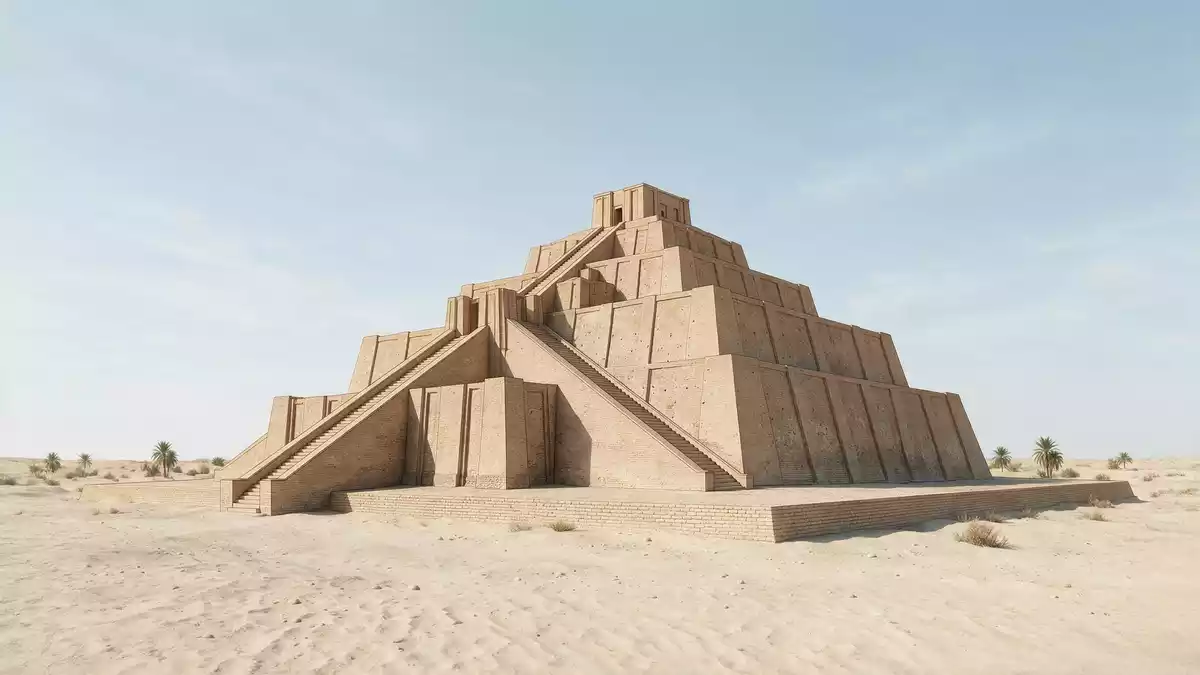
Ziggurat of Ur rises above the flat plain near Nasiriya as a stepped mass of mud brick. Neo-Sumerian ziggurat and ancient Ur near Nasiriyyah place it firmly in southern Iraq’s Mesopotamian landscape, where its tiered form is easy to read from the ground.
A stepped temple over the plain
The monument belongs to the sacred core of ancient Ur and remains one of the clearest surviving examples of Mesopotamian ziggurat architecture. Its broad terraces, straight edges and compact mass make the structure legible as a stack of receding levels rather than a single block of masonry.
The ziggurat was associated with Ur-Nammu and the Third Dynasty of Ur, which gives the site its historical weight as well as its architectural force. In the present ruin, the surviving brickwork still reads as a formal ascent in layers, with the overall geometry dominating the low archaeological mounds around it.
Brick, terraces and sacred precinct
Ur’s ziggurat is made from mud brick, the most characteristic building material of southern Mesopotamia. The visible shell gives the structure a dense, earthen texture, while the stacked platforms preserve the outline of a monument that once formed the centre of temple activity.
The association with the moon god Nanna belongs to the site’s identity and helps explain the formal importance of the building within the wider ruins of Ur. A stepped sanctuary of this kind was part of a city in which religion, royal power and urban layout were closely linked in the Bronze Age.
Ur in the landscape of southern Iraq
Tell el-Muqayyar, the mound identified with ancient Ur, lies west of Nasiriya in Dhi Qar Governorate. The ziggurat stands within that archaeological landscape, where the horizontal plain gives the monument a clear profile and makes its mass read from afar.
The site also belongs to the 2016 UNESCO World Heritage landscape of the Ahwar of Southern Iraq, which places it within a broader historical and environmental context. That status connects the ruin with the marshland and cityscape traditions of southern Mesopotamia.
Visiting Ziggurat of Ur: what travellers from Western Europe should know
- The ziggurat stands west of Nasiriya in Dhi Qar Governorate, reached by road from the city and the surrounding archaeological area of Tell el-Muqayyar.
- The monument is a stepped brick mass on open ground. There is little vertical cover around it, so the full profile is visible across the plain.
- The site sits in southern Iraq, where the wider archaeological landscape includes the ruins of ancient Ur and the low mounds around the ziggurat.
- The official language is Arabic and the currency is the Iraqi dinar.
Searching for Ziggurat of Ur on social platforms
These links open searches for Ziggurat of Ur on each platform.
Frequently asked questions about Ziggurat of Ur
Where is Ziggurat of Ur?
It stands at Tell el-Muqayyar near Nasiriya in Dhi Qar Governorate, southern Iraq. The mound is identified with ancient Ur.
What should a visit to Ziggurat of Ur involve?
The site is an archaeological ruin with a strong stepped profile and broad open surroundings. Its brick terraces and low mounds shape the experience more than any interior space.
What makes Ziggurat of Ur distinctive?
The monument is a Neo-Sumerian ziggurat linked with Ur-Nammu and the Third Dynasty of Ur. Its layered mud-brick form remains one of the defining images of ancient Mesopotamian temple architecture.


