
Zion National Park and its carved sandstone canyons
Published on 09/23/2026 at 07:09 | Editorial responsibility: Rafael Müller, Editor-in-Chief AD HOC NEWS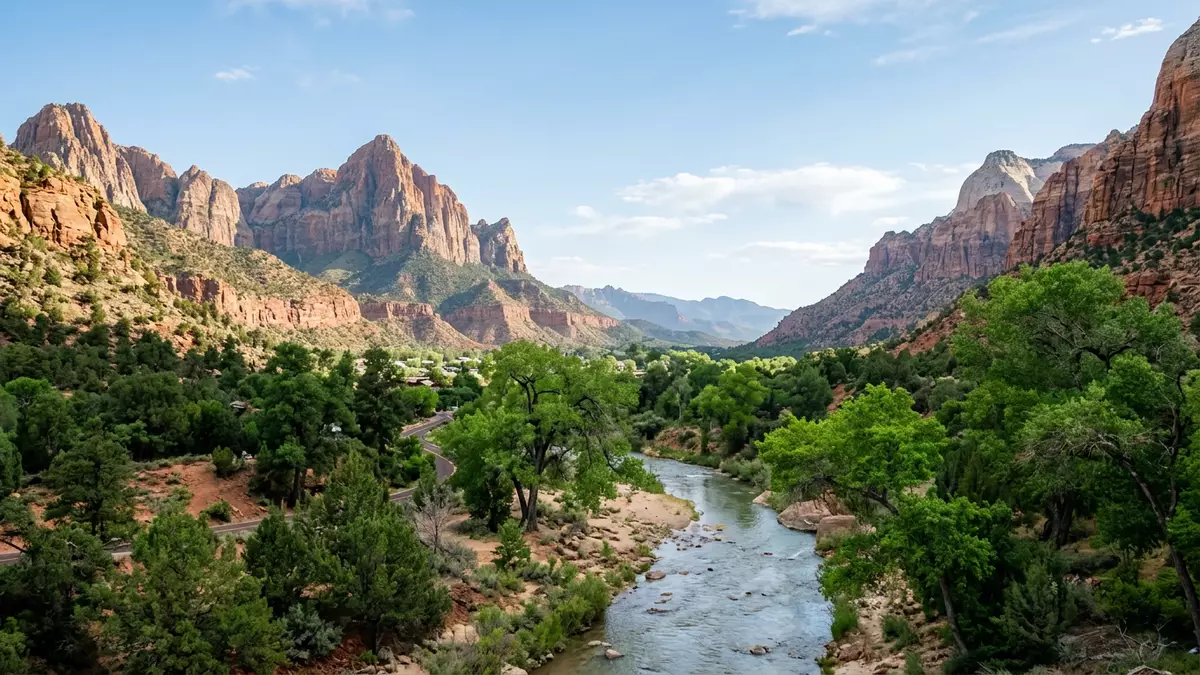
Zion National Park is a landscape of high plateaus, deep canyons and towering sandstone walls in south-western Utah. Its central feature is Zion Canyon, where the Virgin River runs between cream, pink and red cliffs shaped from layered sedimentary rock.
The park combines a visible geological record with a history of changing names and protected status. William Howard Taft established Mukuntuweap National Monument in 1909, and Zion National Park received its national park status in 1919.
Zion National Park: a canyon cut through coloured rock
Zion Canyon is formed largely from Navajo Sandstone, a thick sedimentary unit deposited when extensive sand dunes covered the region. Its exposed layers belong to a wider sequence of rocks that records changing environments across approximately 275 million years.
The Zion geodiversity atlas identifies formations ranging from Permian to Quaternary age. The landscape includes plateaus, terraces, benches, shelves, monoliths and narrow canyon corridors.
From Navajo Sandstone to the Virgin River
The Virgin River is the park’s most recognisable flowing feature. Its channel passes through the canyon floor, beneath cliffs whose surfaces display horizontal beds, vertical faces and broad sections of exposed sandstone.
Zion’s rock layers include the Moenkopi, Chinle, Moenave, Kayenta, Navajo Sandstone, Temple Cap, Carmel and Cedar Mountain formations. The named rock formations provide a sequence of contrasting colours, textures and erosion patterns.
The park lies along the edge of the Colorado Plateau. Its position also brings together ecological influences associated with the Mojave Desert, the Great Basin and the plateau country farther north.
Names, monuments and national park status
The name Zion comes from an ancient Hebrew word associated with a sanctuary or refuge. The protected area first carried the name Mukuntuweap National Monument after Taft’s proclamation on 31 July 1909.
In 1918, the monument became Zion National Monument. Congress granted national park status on 19 November 1919, establishing the legal identity associated with Zion National Park.
A separate Zion National Monument was established in 1937 for the northern Kolob Canyons area. The monument and park were combined in 1956, bringing Kolob Canyons into the larger protected landscape. This history of Zion’s names connects the canyon scenery with a distinct sequence of federal designations.
The park covers parts of Washington, Iron and Kane counties in Utah. Its scenery changes from broad upland surfaces to narrow ravines, rock towers, mesas and canyon walls.
Visiting Zion National Park: what travellers from Western Europe should know
- Zion National Park lies in south-western Utah, with Springdale beside the park’s southern entrance. Road access connects the area with St George, Las Vegas and Salt Lake City.
- The terrain includes steep canyon walls, exposed rock, narrow river corridors and high plateaus. Routes range from developed paths near the canyon floor to demanding mountain terrain.
- Kolob Canyons occupies the park’s northern section. Its red cliffs and canyons form a separate landscape from the main Zion Canyon area.
- The official language is English and the currency is the US dollar.
- Entry requirements depend on your nationality; UK travellers can check the FCDO travel advice at gov.uk/foreign-travel-advice, Irish travellers the Department of Foreign Affairs at ireland.ie.
Searching for Zion National Park on social platforms
These links open searches for Zion National Park on each platform.
Frequently asked questions about Zion National Park
Where is Zion National Park?
Zion National Park is in south-western Utah, in Washington, Iron and Kane counties. Springdale lies beside the park’s southern entrance.
What does a visit to Zion National Park involve?
The landscape includes canyon-floor paths, river corridors, steep rock walls and upland terrain. Conditions and physical demands vary between developed areas and mountain routes.
What makes Zion National Park distinctive?
Zion combines deep canyons with thick Navajo Sandstone and a geological record spanning approximately 275 million years. The Virgin River runs through the principal canyon landscape.


