
Zona Arqueologica de Tulum, the Maya walled city above the Caribbean
Published on 09/18/2026 at 17:35 | Editorial responsibility: Rafael Müller, Editor-in-Chief AD HOC NEWS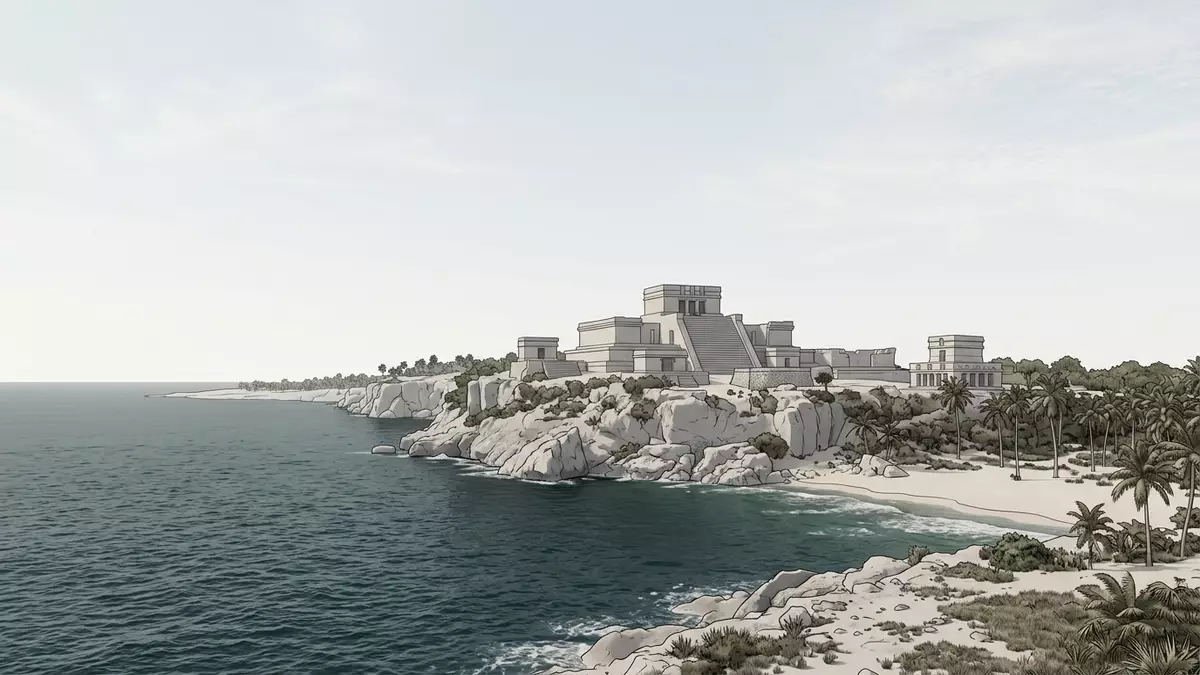
Zona Arqueologica de Tulum is a pre-Columbian Maya walled city on the Caribbean coast near Tulum in Mexico, where stone temples rise directly above the sea. Built in the late Postclassic period of the Maya civilisation, the ruins combine fortifications, ceremonial structures and coastal views in a single compact site on limestone cliffs.
A fortified Maya port on limestone cliffs
Tulum stands on the eastern coast of the Yucatán Peninsula in the state of Quintana Roo, facing the Caribbean Sea along a stretch of low, pale limestone cliffs.eastern coast of the Yucatán Peninsula The city formed a major port for Cobá, an inland Maya centre, and its coastal position linked sea routes with inland paths across the peninsula.trading port for the Maya The archaeological zone occupies a band of cliff top above a narrow beach where Caribbean waves break against the rock and sand.
The walled city reached prominence between the thirteenth and fifteenth centuries, in the late Postclassic period, and remained occupied into the sixteenth century before being abandoned.greatest prominence between the 13th and 15th centuries A massive defensive wall of stone encloses the settlement on its landward sides, with the sea forming the fourth boundary, and narrow gateways pierce the fortifications to give access to the interior.defensive stone wall with gateways Within this enclosure stand temples, platforms and smaller buildings arranged around open spaces and aligned with the cliff edge.
El Castillo and the temples facing the sea
The most recognisable structure at Zona Arqueologica de Tulum is El Castillo, “The Castle”, a temple complex set on a stepped platform at the cliff edge, directly overlooking the Caribbean.El Castillo structure visible from the sea Its masonry rises above a rocky slope down to the beach, and from the upper terrace the view runs along the line of cliffs and out across the open water.
Alongside El Castillo stand other named temples and buildings, each with its own architectural character. The Temple of the Frescoes is a compact structure bearing mural decoration inside, while the Temple of the Descending God and the Temple of the God of the Wind occupy positions closer to the shoreline and a small cove.Temple of the Frescoes and Temple of the Wind God Together these structures illustrate the late flowering of Maya architecture along the coast, with thick walls, narrow openings and rooflines that respond to the compact city plan.
Walls, gateways and the legacy of a coastal city
The fortification system at Tulum is one of its defining features: a stone wall several metres thick runs around the inland sides of the site, punctuated by gateways that once controlled movement in and out of the city.defensive barrier on three sides These fortifications mark Tulum out among coastal Maya sites, combining military architecture with its role as a port.
Archaeological evidence shows that the site belongs to the late Postclassic Maya period, with building activity in the centuries around 1200 AD and continued occupation into the era of Spanish contact.late Postclassic occupation Sixteenth-century chronicles mention El Castillo and the towers seen from the sea, and nineteenth-century explorers such as John Lloyd Stephens and Frederick Catherwood produced early drawings and descriptions of the ruins.Stephens and Catherwood documented the site Today the archaeological zone preserves this layout of walls, temples and platforms, with paths guiding visitors between the structures and down towards viewpoints above the beach.
Visiting Zona Arqueologica de Tulum: what travellers from Western Europe should know
- Zona Arqueologica de Tulum lies on the Caribbean coast of Quintana Roo, just north of the town of Tulum, beside Highway 307 between Cancún and Chetumal.
- The archaeological zone occupies limestone cliffs above a beach, and the interior of the site is reached on foot along level paths with some sections exposed to sun.
- The ruins are in Mexico, where the official language is Spanish and the currency is the Mexican peso.
- Entry requirements depend on your nationality; UK travellers can check the FCDO travel advice at gov.uk/foreign-travel-advice, Irish travellers the Department of Foreign Affairs at ireland.ie.
Searching for Zona Arqueologica de Tulum on social platforms
These links open searches for Zona Arqueologica de Tulum on each platform.
Frequently asked questions about Zona Arqueologica de Tulum
Where is Zona Arqueologica de Tulum located?
It is on the Caribbean coast of Quintana Roo in Mexico, just north of Tulum, on cliffs above the sea along the Yucatán Peninsula.
What can visitors expect when exploring the ruins?
Visitors walk through a walled Maya city with stone temples, platforms and open spaces, and can view El Castillo and other structures facing the Caribbean.
What makes Zona Arqueologica de Tulum distinctive among Maya sites?
Its combination of defensive walls, late Postclassic temples and a clifftop position directly above the Caribbean gives Tulum a distinctive coastal character.


