
DJI FPV Combo Racing Drone 4K - 150 Degree FOV For Immersive Flight
Published on 09/09/2026 at 07:16 | Editorial responsibility: Rafael Müller, Editor-in-Chief AD HOC NEWS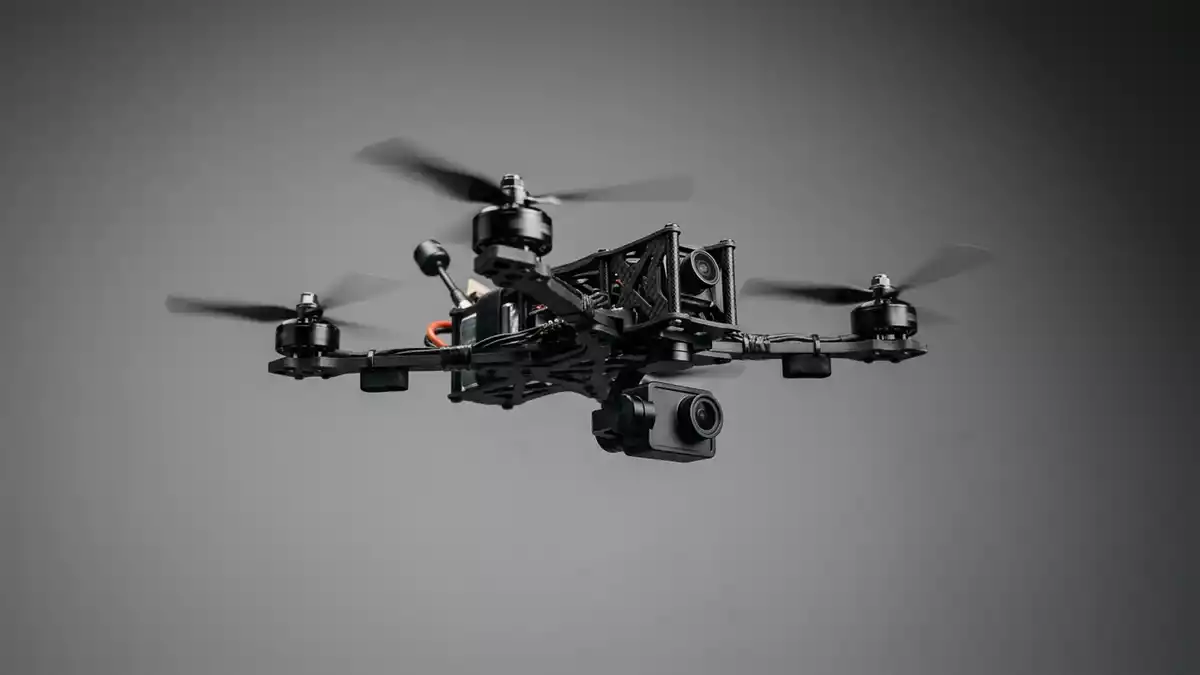
DJI FPV Combo is DJI's all-in-one first-person-view racing drone package, combining a 4K camera, FPV Goggles V2 and Remote Controller 2 into a single kit that is ready to fly out of the box once activated. The aircraft uses a 1/2.3 inch CMOS sensor with 12 million effective pixels and records 4K video at up to 60 fps with a super-wide 150 degree field of view for a deeply immersive perspective on fast low-level flights. Detailed combo specifications from a US retailer confirm that this package includes the drone, intelligent flight battery, FPV goggles, remote controller and the essential cables and accessories needed to start flying.
Specs And Flight Performance
The DJI FPV drone in this combo has a listed takeoff weight of approximately 795 g, with dimensions of 255 x 312 x 127 mm with propellers mounted and 178 x 232 x 127 mm without propellers, giving it a compact yet substantial footprint compared with typical camera drones in the same price band. The same retailer specification also notes a diagonal distance of 245 mm across the frame, which aligns with a mid-size quadcopter optimized for stability at high speed.
Flight performance figures place the DJI FPV Combo firmly in the high-speed FPV segment. In its fully manual M mode the aircraft can reach a maximum speed of 140 kph and accelerate from 0 to 100 kph in about 2 seconds under ideal conditions, with a maximum service ceiling above sea level of 6,000 m, allowing flights well above typical recreational altitudes when local regulations permit. Performance data from the US combo listing indicate a maximum flight time of approximately 20 minutes when flying at 40 kph in windless conditions and a maximum hover time of about 16 minutes, while maximum wind resistance is stated at 39-49 kph (25-31 mph), reflecting a design that can cope with moderate wind without excessive drift.
Camera, Imaging And Field Of View
The imaging section of the DJI FPV Combo is built around a gimbal-mounted camera using a 1/2.3 inch CMOS sensor with 12 million effective pixels, paired with a fixed-focus lens offering a 150 degree field of view and a 35 mm-format equivalent focal length of 14.66 mm, with an aperture of f/2.8. The retailer specification sheet lists ISO sensitivity from 100 to 12800, shutter speeds from 1/50 to 1/8000 s and a maximum still image size of 3840 x 2160 pixels saved as JPEG, mirroring the drone's video resolution for frame grabs.
For video, DJI FPV can record 4K footage at 3840 x 2160 resolution at 50 or 60 fps, as well as Full HD at 1920 x 1080 at 50, 60, 100 or 120 fps, providing flexibility between high resolution and higher frame rates. The detailed specifications note that the camera supports single-shot still photography and records video in MP4 format, with the broader DJI FPV ecosystem supporting both H.264 and H.265 codecs for smoother post-production workflows. Multiple technical references emphasize that the 150 degree field of view is available when shooting at 50 or 100 fps, with the field of view narrowing to 142 degrees at other frame rates, an important detail for pilots planning shots at specific frame speeds. A hands-on review of the DJI FPV drone combo underscores this behavior in practice.
Transmission, Goggles And Remote Controller
DJI's O3 (OcuSync 3.0) transmission system is adapted for the FPV platform and forms a core part of the combo experience. Video transmission latency can be below 28 ms in the goggles' low-latency 810p/120 fps mode and below 40 ms in high-quality 810p/60 fps mode, with a rated video transmission bitrate up to 50 Mbps and an advertised transmission range of up to 10 km under FCC conditions, subject to line-of-sight, interference and regulatory constraints. The O3 transmission parameters in the combo listing describe auto-switching between 2.4 GHz and 5.8 GHz bands and high-gain antennas with three transmitters and four receivers in the aircraft to maintain link reliability.
The DJI FPV Goggles V2 included in the combo weigh approximately 420 g with headband and antennas, with physical dimensions of 184 x 122 x 110 mm without antennas and 202 x 126 x 110 mm with antennas attached, and contain two 2 inch displays that refresh at up to 144 Hz. The goggles specification table further lists a field-of-view range of 30 to 54 degrees with image size adjustable from 50 to 100 percent, interpupillary distance from 58 to 70 mm and microSD support up to 256 GB for onboard recording. The included remote controller operates in the same 2.4 GHz and 5.8 GHz bands with a maximum transmission distance matching the goggles' 10 km FCC figure, weighs 346 g, has approximate battery life of nine hours and a charging time of about 2.5 hours, giving pilots extended sessions before needing to recharge. The remote controller specifications highlight these endurance values.
Intelligent Flight Battery And Kit Contents
Power for the DJI FPV aircraft is supplied by the BWX170-2000-22.2 intelligent flight battery, a 6 cell LiPo pack with a rated capacity of 2,000 mAh and a standard voltage of 22.2 V, giving an energy figure of 44.4 Wh at nominal conditions. The battery specification section lists a maximum charging power of 90 W, a charge temperature range from 5 to 40 degrees Celsius, a charging voltage limit of 25.2 V and a typical discharge rate of 10C, with approximate battery weight given as 295 g. These parameters align with the flight time estimates and the power demands of high-speed FPV maneuvers.
The combo is positioned as a ready-to-fly kit that removes the typical wiring and assembly work associated with custom FPV builds. In the standard box, a documented US retailer lists one DJI FPV drone, one intelligent flight battery, one pair of FPV propellers, a gimbal protector, a top shell, the DJI FPV Remote Controller 2, DJI FPV Goggles V2 with their dual-band antennas, a dedicated goggles battery and power cable, a headband and foam padding for comfort, an AC power adapter and cable, USB-C data and OTG cables and a pair of spare control sticks. The documented contents list underscores that buyers receive all primary components needed to activate and fly the system, rather than only the airframe and camera.
Flight Modes, Safety Features And Use Cases
The DJI FPV Combo introduces three distinct flight modes termed S, N and M to bridge the gap between traditional GPS-stabilized camera drones and fully manual FPV racers. In S mode, the drone offers dynamic FPV-style movement with simplified controls inherited from earlier DJI aircraft, while N mode provides traditional drone flight behavior with obstacle sensing and other safety features enabled, targeted at newer pilots stepping into FPV. The feature overview describes M mode as the full manual configuration where pilots gain unrestricted control for racing-style maneuvers after proper practice, with the notable addition of an emergency brake and hover function that can be triggered in any mode and at any speed, bringing the aircraft to a stable hover within a few seconds.
Safety features are stacked on top of these modes to help mitigate risks at high speed. Forward and downward obstacle sensing is integrated into the drone and is active particularly in N mode, where the aircraft can automatically decelerate when obstacles are detected in the flight path. The same feature list notes additional safety elements, including an auxiliary bottom light for orientation and Smart Return to Home and Low Battery Return to Home functions, plus a built-in Automatic Dependent Surveillance-Broadcast receiver that can show warnings in the goggles when manned aircraft with ADS-B signals are nearby. These layers position the combo not only for thrill-seeking FPV pilots but also for users who want additional guardrails compared with purist race builds without sensors.
Comparison With Typical Camera Drones And FPV Alternatives
Compared with mainstream GPS-stabilized camera drones from DJI that emphasize stable hovering and cinema-style shots, the FPV Combo trades some automated flight assistance for top speed and immediacy. The 140 kph maximum speed in M mode and approximately 2 second sprint from 0 to 100 kph are significantly above the speeds quoted for camera-focused drones in the same brand portfolio, where typical maximum speeds often sit closer to 50 to 70 kph. Technical characteristics compiled by a specialist retailer reinforce that the FPV drone is tuned expressly for aggressive flight envelopes. At the same time, the approximately 20 minute flight time at moderate speed sits below some camera drones that advertise longer endurance in loitering scenarios, reflecting the higher power draw at racing speeds.
Against custom-built FPV race quads, DJI FPV Combo offers convenience and integrated safety at the expense of open customization. The roughly 795 g takeoff weight and integrated camera and transmission system deliver a cohesive package optimized for DJI's O3 link and Goggles V2, while typical bespoke builds may weigh less and allow more granular component selection but require manual assembly, tuning and often lack obstacle sensing or emergency braking features. An independent specification listing underscores that the combo occupies a distinct niche: faster and more immersive than camera drones, more structured and safety-oriented than many home-built race quads. For US pilots who want to move into FPV with minimal soldering or configuration, this balance may be appealing, while experienced racers may still prefer lighter custom frames and analog or alternative digital links tuned for competition.
Manufacturer Information
DJI FPV System Official Specs And Support
DJI publishes detailed specifications, tutorials and support resources for the FPV ecosystem, including goggles, air unit and remote controller, on its dedicated FPV system page.
Pricing And Positioning In The US Market
In the US market, DJI FPV Combo has typically been listed around the high midrange to premium segment for consumer drones, with one online listing for the combo showing a bundle price of $1,296.00 for the aircraft with goggles and accessories, reflecting the inclusion of the FPV Goggles V2 and controller alongside the drone rather than just an airframe and camera. A documented price reference for the combo illustrates the level at which the package competes with advanced camera drones and high-end FPV systems. For US buyers, this pricing level frames the combo as an investment for serious hobbyists, semi-professional content creators or training environments rather than an entry-level toy.
Given its specifications and the breadth of included hardware, DJI FPV Combo is likely to appeal to pilots who want both speed and cinematic immersion without building or tuning a custom rig, particularly those who already have experience with DJI camera drones and wish to transition into FPV with familiar software and support channels. At the same time, its weight, speed and manual flight mode demand careful adherence to FAA regulations, line-of-sight requirements where applicable and appropriate open-field environments, meaning it is best suited for users who are prepared to invest time in learning FPV techniques and safety, rather than casual backyard flyers.
Verdict: Who The DJI FPV Combo Suits Best
Overall, DJI FPV Combo stands out as a hybrid racing and imaging platform that merges a 4K/60 fps camera and 150 degree field of view with up to 140 kph speed, a roughly 20 minute flight window and integrated safety features more commonly found on consumer camera drones. Compared with standard GPS camera models in the same brand, it brings markedly higher speed and a first-person view experience through the Goggles V2 at the cost of shorter endurance and a steeper learning curve in M mode. A broader technical overview situates it as an immersive flight tool rather than a pure aerial tripod.
For US readers, the combo is a compelling option if the goal is to experience high-speed FPV flight with an integrated digital link, emergency brake, obstacle sensing and a familiar DJI ecosystem, without entering the component-level complexity of custom racers. Those primarily interested in slow, stable photography or long-range mapping flights might still gravitate toward other DJI camera drones that emphasize endurance and hovering stability, while dedicated FPV racers who prioritize minimum weight and full customization may continue to favor bespoke builds. Within its niche, however, DJI FPV Combo offers a distinctive package that combines quantified performance, integrated safety and a complete kit structure, positioning it as a strong choice for pilots and creators who want immersive footage and are prepared to respect the speed and regulatory responsibilities that come with this class of drone.
DJI FPV Combo Key Facts
- Product: DJI FPV Combo with FPV Drone, Goggles V2 and Remote Controller 2
- Manufacturer: SZ DJI Technology Co., Ltd., DJI Sky City, No.55 Xianyuan Road, Nanshan District, Shenzhen, China (North America office L.A., California)
- Category: FPV racing drone kit with 4K camera
- Model designation: DJI FPV drone with BWX170-2000-22.2 intelligent flight battery, FPV Goggles V2 and Remote Controller 2
- Flight specs: Approx. 795 g takeoff weight, max speed 140 kph, max flight time about 20 minutes at 40 kph
- Camera specs: 1/2.3 inch CMOS sensor, 12 MP, 4K 3840 x 2160 at 50/60 fps, 150 degree FOV lens (14.66 mm equivalent, f/2.8)
- Transmission: DJI O3 digital link up to 10 km (FCC), video bitrate up to 50 Mbps, latency down to 28 ms in goggles low-latency mode
- Price: $1,296.00 for full combo bundle (as of 09/09/2026)
- Target audience: Experienced drone pilots and FPV enthusiasts seeking an integrated high-speed 4K FPV system with safety features and ready-to-fly hardware


