
Google Nest Thermostat E Smart Home Thermostat - Frosted Display And Energy Star Control
Published on 09/09/2026 at 07:44 | Editorial responsibility: Rafael Müller, Editor-in-Chief AD HOC NEWS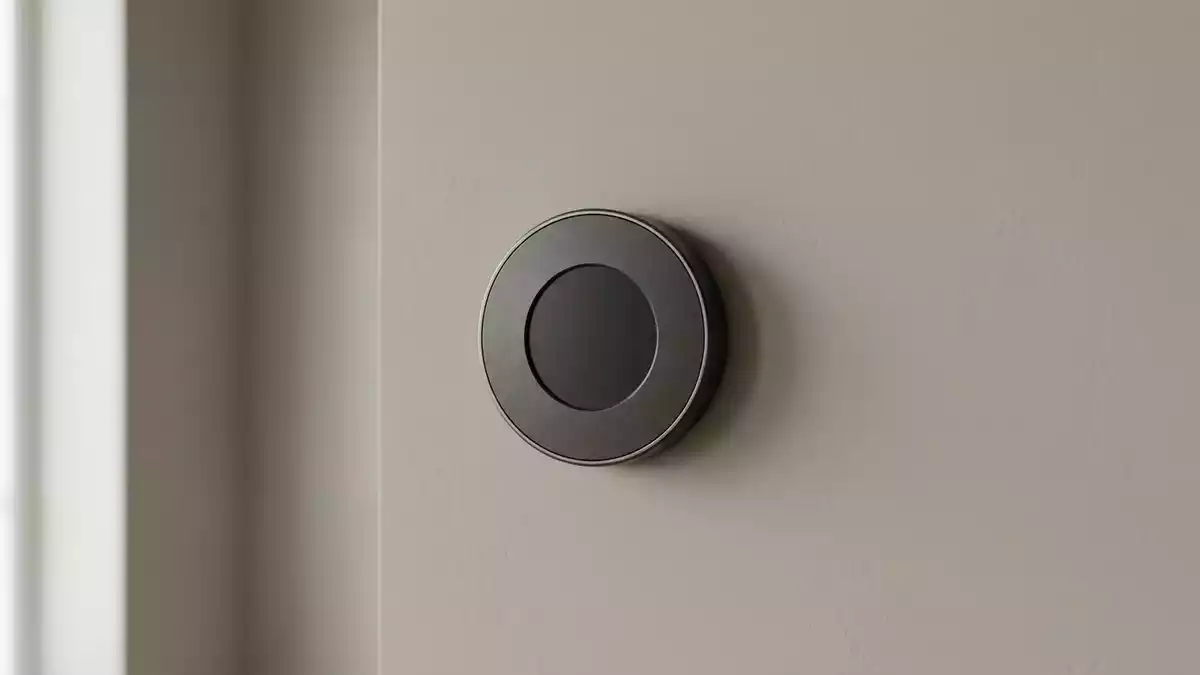
Google Nest Thermostat E targets US homeowners who want a compact smart thermostat with a frosted glass look and app control without a complex wiring job. The round thermostat measures 3.19 inches in diameter, weighs around 4.9 oz and uses a matte white polycarbonate shell that blends into most walls while still showing temperature and status on its LCD screen.Official tech specs describe it as an ENERGY STAR certified connected thermostat designed for common 24V heating and cooling systems.
Design, Display And Core Hardware
The Nest Thermostat E uses a round housing with a 3.19-inch diameter and about 1.14-inch depth, giving it a shallow profile on the wall compared with bulkier rectangular thermostats.Size and dimensions data confirm a mass of 4.9 oz, which keeps it light enough for standard drywall mounting. The display is a 24-bit color LCD with a 320 x 320 resolution at 182 pixels per inch, arranged behind frosted glass so the digits glow softly instead of showing a mirror-like finish.Display specs list a 4.5 cm diameter active area, enough for temperature, mode and simple menus without clutter.
Inside the housing, the thermostat combines several sensors: temperature, humidity, proximity, occupancy, ambient light and a magnetic sensor that monitors the ring position around the thermostat.Google's technical overview describes these components for Nest thermostats, and the dedicated Nest Thermostat E specs page confirms the same sensor set alongside a built-in rechargeable lithium-ion battery as the primary power store. According to the specs sheet, typical power consumption stays under 1 kWh per month, which is low enough not to change a household's electric bill in any noticeable way.Power consumption figure appears in the energy section of the document.
Connectivity, App Control And System Compatibility
For networking, Google Nest Thermostat E connects over 802.11 a/b/g/n Wi-Fi on 2.4 GHz and 5 GHz bands and also carries 802.15.4 plus Bluetooth Low Energy for communication with other home devices.Wireless specifications specify both frequency ranges and protocols. It works with the Google Home and Nest apps on phones and tablets and responds to voice commands via Google Assistant; retailer listings further highlight compatibility with Amazon Alexa and some home-automation platforms as a smart-home accessory rather than a stand-alone island.A US plumbing and HVAC distributor listing mentions Amazon Alexa, Google Assistant, Nest and Nexia in the smart-home compatibility field.
On the HVAC side, the thermostats are designed for 24V systems and support a typical US configuration of one stage of heating and cooling (W1 and Y1) plus a second stage of either heating or cooling (W2 or Y2). The terminals support fan control (G), power (C, Rh or Rc) and heat pump operation with auxiliary and emergency heat via O/B and AUX.Compatibility section states that Nest Thermostat E works with about 85% of 24V heating and cooling systems, including gas, electric, forced air, heat pumps, radiant, oil, hot water, solar and geothermal. That broad coverage makes it suitable for many detached homes and townhouses with central HVAC, but multistage systems with more complex zones or add-on dehumidifiers require more advanced models.
Installation Features And Power Options
Installation focuses on wall mounting using the base plate, screws and optional trim ring; manufacturer materials list the display, base, trim plate, mounting screws and labels, installation guide and a pro-installation card as the box contents for the US version.A major online retail listing for model T4000ES lists those items under included components. The thermostat base connects to the existing wall wires; Nest documentation notes that it is designed to work without a dedicated common (C) wire by sharing power through the control lines, but some systems, especially those with low voltage or older transformers, benefit from adding a C wire.
Power for the thermostat comes from the HVAC system wires plus the integrated rechargeable lithium-ion battery, which bridges temporary power interruptions and allows the thermostat to stay responsive. Advisory notes from testing organizations mention that the Nest Thermostat E will function with two-wire systems and can power itself via an internal rechargeable battery and power sharing, though they also flag that some installations may require a C wire to ensure stable operation.A consumer-focused test lab write-up summarizes that the primary power is supplied via an internal rechargeable battery and notes the device's ability to work with two-wire systems with power sharing features.
Smart Features, Learning And Energy Programs
The Nest Thermostat E supports scheduling, app-based control and home-away automation features that adjust temperature when occupants are detected or when phones leave the location. The occupancy sensor and geofencing features work with the Nest service to reduce heating or cooling when nobody is home and to resume comfort temperatures on return.The ENERGY STAR database entry for Google Nest Thermostat E lists features such as external temperature detection, geofencing based on user devices, humidity sensing and an on-device occupancy sensor as part of the connected thermostats program. Nest's software applies these signals to adjust setpoints automatically within user-defined schedules and comfort ranges rather than requiring manual manual changes several times a day.
Connected features extend to remote alerts if a system needs attention, according to trade distributor descriptions. System-monitoring features can send notifications when the HVAC system behaves unexpectedly, such as taking too long to reach a set temperature; this gives homeowners a chance to book service appointments before a complete failure.The Ferguson listing mentions that Nest can send remote alerts if a system needs attention, treating the thermostat as a simple diagnostic front end. Like other Nest devices, the thermostat connects into wider programs that some utilities run, such as demand-response events where the thermostat nudges temperatures slightly during peak periods; participation details depend on the utility, but the ENERGY STAR listing confirms that Nest Thermostat E is certified as a connected thermostat.
Price Positioning In The Smart Thermostat Market
Originally, Google Nest Thermostat E carried a list price of about $169 in the US market at launch, positioning it below the more premium Nest Learning Thermostat while still offering app control and energy features.A detailed review from a US tech publication cites a price when reviewed of $169.00. As of 09/09/2026, actual street prices for remaining US stock vary widely because the product has been superseded by newer Nest thermostats; historical listings showed prices dropping toward the $60-$110 band at large retailers during later years, which underscores its role as a budget smart thermostat option compared with higher-end models priced closer to $200.
Compared with the Nest Learning Thermostat, the Nest Thermostat E uses less expensive materials and a lower-resolution screen, but it still supports core smart functions such as scheduling, home-away detection and energy-use optimization.The same review notes that the E's polycarbonate casing and frosted glass LCD differ from the Learning Thermostat's metal finish and sharper display, and that the E supports single-stage heating and cooling with a secondary stage but not the more advanced multi-stage and accessory support found in the Learning model. That trade-off lets the E undercut the flagship on price while still delivering app control and automation for typical single-zone homes.
Learn More About Google Nest Thermostat E
Full technical details, compatibility information and installation notes for Google Nest Thermostat E are compiled on Google's official spec page.
Certification, Warranty And Build
From a regulatory standpoint, Google Nest Thermostat E carries UL 60730-1 safety certification for automatic controls and UL 60730-2-9 for temperature-sensing controls, marking it as compliant with mainstream US standards for household thermostats.Certification and environmental section lists UL marks and ENERGY STAR. Environmental compliance notes include RoHS and REACH, along with recyclable packaging and Title 20 battery charger compliance, which matter for California regulations. The product carries a one-year limited warranty, a standard term in the smart thermostat segment as documented on the spec sheet.
Materials are primarily plastic rather than metal, which keeps weight at 4.9 oz and allows the matte white finish and frosted glass look at a lower manufacturing cost than polished metal rings. The trade-offs in materials compared with the Nest Learning Thermostat do not affect core functionality but do shape the tactile feel and perceived premium level. In hands-on coverage, reviewers point out that the Nest Thermostat E's frosted LCD and muted casing suit discreet installation, whereas the Learning Thermostat aims to be a design focal point with metallic rings and a sharper display.One review explicitly compares the polycarbonate casing and frosted LCD with the Learning Thermostat's metal construction and higher-resolution screen.
Use Case, Alternatives And Position Today
In practice, Google Nest Thermostat E suits single-zone homes with typical 24V HVAC systems where owners want learning and remote control but do not need advanced accessory support or multiple stages beyond the 2H/2C configuration. By supporting about 85% of these systems and combining temperature, humidity and occupancy sensing, it offers a step beyond basic programmable thermostats that only follow fixed schedules. The product's connected features align with utility programs and can advance energy savings by automatically adjusting temperatures based on occupancy and weather information rather than requiring manual changes each day.
Compared with alternatives in the same category, such as newer Nest Thermostat models and the Nest Learning Thermostat, the E falls toward the value end of the range: it has a smaller display, simpler materials and more limited support for multi-stage systems and accessories, but it retains app control, voice compatibility and connected energy features.The general Nest thermostat technical overview shows broader capabilities for current Nest Thermostat and Nest Learning Thermostat models. For US homeowners comparing options, Nest Thermostat E sits as an earlier-generation budget smart thermostat that remains relevant where its compatibility limits are acceptable, but newer Nest devices offer broader HVAC support and updated interfaces for similar or slightly higher prices.
Google Nest Thermostat E Key Facts
- Product: Google Nest Thermostat E, T4000ES smart thermostat
- Manufacturer: Google LLC, Mountain View, CA (Google Nest brand)
- Category: Smart Wi-Fi thermostat (24V HVAC)
- Dimensions: 3.19 in diameter, 1.14 in depth, 4.9 oz mass
- Display: 24-bit color LCD, 320 x 320 resolution, 4.5 cm diameter
- Wireless: 802.11 a/b/g/n Wi-Fi (2.4/5 GHz), Bluetooth Low Energy, 802.15.4
- System compatibility: About 85% of 24V heating and cooling systems, 2H/2C support
- Power consumption: Less than 1 kWh per month
- Price: $169.00 original US list price (as of 09/29/2017)
- Target audience: US homeowners with standard 24V HVAC seeking affordable smart control


