
Meta Quest Touch Plus Controller Pair For Quest 3 - TruTouch Haptics And Hybrid CV-AI Tracking
Published on 09/21/2026 at 07:28 | Editorial responsibility: Rafael Müller, Editor-in-Chief AD HOC NEWS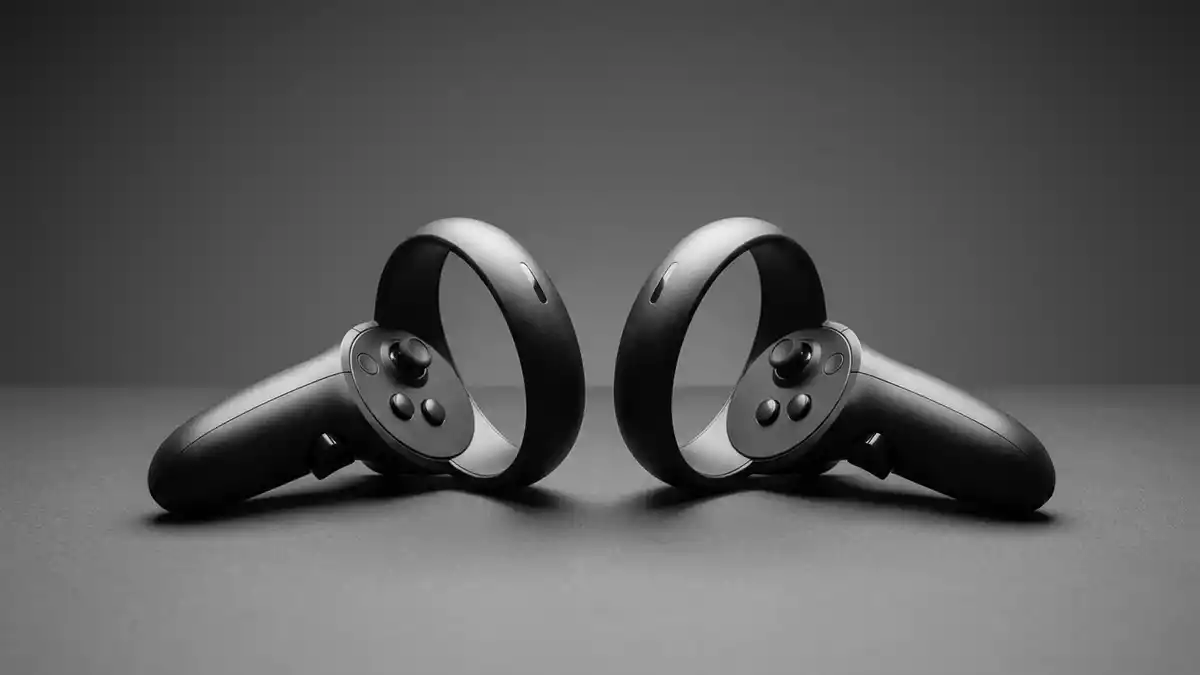
Meta Quest Touch Plus Controller Pair for Quest 3 and Quest 3S targets owners who want a full replacement set of the same controllers that come bundled with Meta's current consumer VR headset generation, keeping tracking, haptics and ergonomics consistent with the in-box experience.
Design, Buttons And Haptics
The Meta Quest Touch Plus controllers replace the familiar tracking ring of earlier Meta controllers with a compact, ringless body that integrates infrared emitters and sensors around the faceplate for positional tracking, a design change highlighted by VR coverage of Quest 3's launch in Quest 3 controller reports.
Each Touch Plus controller carries the familiar A/B/X/Y button cluster, an analog thumbstick, a thumbrest and two triggers, with the primary index trigger implemented as a two-stage trigger that can register an additional input when fully depressed, a feature documented for Touch Plus in developer documentation and controller databases that describe the two-stage index trigger and capacitive inputs.
Haptics on the Touch Plus controllers use TruTouch variable haptics, an implementation that pairs voice-coil vibration actuators with finer control over impact and texture feedback, as noted in accessory and controller roundups that position Touch Plus as Meta's most refined consumer VR controller generation to date in best-VR-controller comparisons.
Weight, Power And Box Contents
A Meta Quest Touch Plus Controller Pair consists of a dedicated right and left controller, each with a product weight of around 103 g and powered by a single AA battery under a removable battery cover near the thumbstick, a combination described in detailed accessory writeups about the pair set for Quest 3 and Quest 3S that outline weight and AA power per controller.
For battery changes, Meta's official Quest help pages specify that users press the battery cover release button located near the thumbstick, remove the cover, take out the existing AA cell and insert a new battery with the positive end pointed downward toward the bottom of the controller before replacing the cover, ensuring the controller is ready to power on and reconnect in the Touch Plus usage guide.
Each Touch Plus controller is supplied with a wrist strap that loops around the user's wrist to secure the controller during motion-intensive VR sessions, a safety accessory described in Quest 3 accessory overviews that list strap-equipped Touch Plus controllers among the default items bundled with every consumer Quest 3 headset package in Quest 3 accessory coverage.
Compatibility And Pairing With Quest 3
Meta limits the Quest Touch Plus controllers to Meta Quest 3 and Quest 3S headsets, with Quest help documentation explicitly stating that these controllers can only be used with Meta Quest 3 or Meta Quest 3S at this time and are not compatible with previous Quest generations such as the original Quest or Quest 2 in Meta's compatibility notes.
Pairing the Touch Plus controllers with Meta Quest 3 or Quest 3S uses the Meta Horizon mobile app and headset settings rather than manual Bluetooth pairing; Meta instructs users to open the app, select the target headset under Devices, open Headset settings, choose Controllers, then tap Pair New Controller and pick left or right, after which pairing is initiated by holding the Meta and B buttons on the right controller or the Menu and Y buttons on the left until the LED blinks and then lights continuously to confirm the link in the official Touch Plus pairing steps.
Once pairing has been completed, both controllers automatically reconnect to the Quest 3 or Quest 3S headset whenever it is powered on and within range, which allows the Meta Quest Touch Plus Controller Pair to behave like the original in-box controllers and keep interaction smooth when one or both original units have been replaced by the pair set according to Meta's reconnection description.
Tracking Approach And Feature Differences
The Touch Plus controllers use Hybrid CV-AI tracking, which shifts infrared emitters and sensors into the controller body and works in tandem with the Quest 3 and Quest 3S inside-out tracking system to determine controller position and orientation, a concept outlined in Quest 3 tracking analyses that detail how the ringless controllers rely on computer vision and AI rather than the prominent tracking ring of older designs in controller tracking coverage.
Beyond tracking, the Touch Plus generation adds trigger force sensing and trigger curl and slide sensing to the index trigger, capabilities documented in Meta Horizon OS developer material that list Touch Plus as having enhanced trigger sensing compared with earlier Touch controllers, making squeeze depth and motion more expressive inputs in supported titles in the Touch controller developer documentation.
Touch Plus also maintains capacitive sensing on buttons, thumbsticks and the controller faceplate, allowing Quest 3 to detect when a thumb or finger is resting on a control even before it is pressed, a capability highlighted in controller specifications that frame Touch Plus as an evolution over the previous Touch designs shipped with earlier Meta headsets in Touch Plus spec breakdowns.
Comparison With Earlier Meta Controllers
Compared with the Touch controllers bundled with Meta Quest 2, the Meta Quest Touch Plus Controller Pair removes the large plastic tracking ring and instead relies on a more compact, ringless housing while preserving and extending the standard button and thumbstick layout, a difference documented in Quest 3 launch coverage that contrasts the new controllers with their predecessors in controller comparison pieces.
The addition of a two-stage index trigger on Touch Plus provides an extra input layer that the Quest 2-era single-stage trigger did not offer, giving developers the option to differentiate between partial trigger pulls and fully depressed trigger squeezes in their control schemes, a capability noted in controller documentation that positions Touch Plus as more flexible for VR interaction design than earlier Meta controllers in trigger feature descriptions.
Hybrid CV-AI tracking on Touch Plus also reduces occlusion from the tracking ring and can expand effective tracking coverage in certain hand positions, an improvement that Quest 3 tracking analyses underscore when explaining why Meta moved away from the ring design while still keeping controller weight close to previous generations at around 103 g per unit for a familiar in-hand feel in coverage of ringless tracking.
Official Meta Quest Touch Plus Controller Information
Meta details the Touch Plus controller design, compatibility and replacement options on its Quest accessories pages, confirming that these controllers match the units shipped with every Quest 3 and Quest 3S headset.
Use Case, Audience And Value Positioning
The Meta Quest Touch Plus Controller Pair is purpose-built for Meta Quest 3 and Quest 3S owners whose original controllers have been damaged, lost or heavily worn, offering a matched left-and-right set with the same TruTouch haptics, Hybrid CV-AI tracking and two-stage triggers as the bundled units so user interaction remains consistent after replacement in pair-set product descriptions.
For VR players who frequently use physical accessories such as charging docks with rechargeable batteries or grip covers, accessory roundups suggest combining the Touch Plus Controller Pair with docks that support AA cells and grips designed for the ringless form factor, ensuring that the replacement controllers fit into the same accessory ecosystem used with the original Quest 3 setup in VR accessory guides.
Review-oriented lists of VR controllers that include the Meta Quest Touch Plus pair often highlight advanced haptics, capacitive thumbsticks and the two-stage trigger as standout features in the consumer VR controller segment, placing the pair as a strong option for players who value nuanced hand tracking and tactility within Meta's headset ecosystem rather than cross-platform compatibility with rival VR hardware in comparative controller reviews.
Placement In The VR Controller Market
Within the broader VR controller market, the Meta Quest Touch Plus Controller Pair aligns with Meta's strategy of pairing ringless, computer-vision-tracked controllers with standalone headsets, contrasting with some competitors that still ship ringed controllers or controllers tied to external tracking stations, a distinction emphasized in multi-headset accessory guides that compare Quest 3 setups against alternatives in headset accessory comparisons.
For Meta Quest 3 and Quest 3S owners in the United States, the pair serves primarily as a continuity accessory rather than a performance upgrade, preserving the feel and features of the original Touch Plus controllers while offering a straightforward path to restore full input capability if either controller needs to be replaced, a role underscored by descriptions that frame the product as a matched replacement set rather than an alternative controller line in pair-set overviews.
Key Facts At A Glance
- Product: Meta Quest Touch Plus Controller Pair for Meta Quest 3 and Quest 3S, left and right controllers
- Manufacturer: Meta Platforms Technologies, LLC, Menlo Park, CA
- Category: VR motion controller pair for standalone headset
- Controller weight: approximately 103 g per controller
- Power source: one AA battery per controller under a dedicated battery cover
- Compatibility: designed for Meta Quest 3 and Meta Quest 3S only
- Target audience: Meta Quest 3 and Quest 3S owners needing a full replacement set with TruTouch haptics and Hybrid CV-AI tracking


