
Centro Historico de Sucre and its white colonial cityscape
Published on 08/17/2026 at 13:54 | Editorial responsibility: Rafael Müller, Editor-in-Chief AD HOC NEWS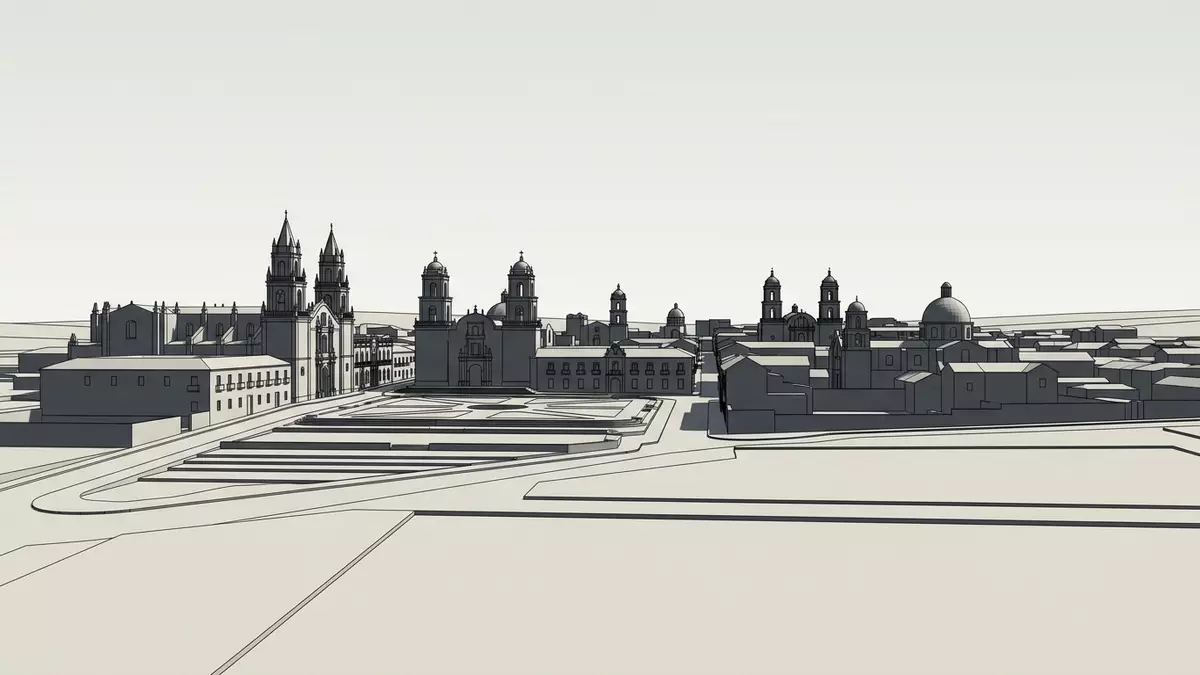
Centro Historico de Sucre is the historic heart of Sucre, Bolivia’s constitutional capital, and it is distinguished above all by its consistent white colonial cityscape. This compact district preserves an urban fabric from the Spanish colonial and republican periods, anchored by civic and religious buildings that remain central to Bolivia’s history.
White façades and a preserved colonial grid
The defining impression of Centro Historico de Sucre is the near-continuous run of whitewashed façades, red-tiled roofs and low-rise streets that form a coherent colonial panorama. Across the historic centre the buildings follow a grid laid out in the colonial period, with streets intersecting at right angles and blocks organised around internal courtyards.
The area recognised by UNESCO as the Historic City of Sucre lies in the foothills of the Sica Sica and Churuquella hills in central-southern Bolivia, and the inscription emphasises the intact state of preservation and the blending of local and European traditions in its architecture.Historic City of Sucre Within this grid, white walls often front enclosed patios, while wrought-iron balconies and carved portals mark the street front of houses, convents and civic buildings in Centro Historico de Sucre.white colonial streets
Plaza 25 de Mayo and the Casa de la Libertad
At the centre of Centro Historico de Sucre stands Plaza 25 de Mayo, the main square of the city and a focal point for public life. The plaza is framed by significant buildings, including the Cathedral of Sucre, municipal and departmental government offices and several historic structures that reflect the district’s importance in Bolivian history.Plaza 25 de Mayo Monuments in the square commemorate figures such as Simón Bolívar and Antonio José de Sucre, linking the urban centre to the wider story of South American independence.
On one side of Plaza 25 de Mayo stands the Casa de la Libertad, an eighteenth-century building that later became the setting for key moments in Bolivia’s statehood.Casa de la Libertad It is here that the Act of Independence of Bolivia was signed in 1825, and the building subsequently hosted the country’s early congress sessions, turning a former Jesuit college into a symbolically charged national site.House of Freedom Together, the square and the Casa de la Libertad place Centro Historico de Sucre at the centre of Bolivia’s constitutional history.
Architectural styles and urban protection
Beyond the main square, Centro Historico de Sucre contains a dense concentration of religious architecture, including the Cathedral and various churches and convents that display baroque and neoclassical elements in their façades and towers.Sucre Altstadt churches The Historic City of Sucre presents what UNESCO describes as an excellent and well-preserved illustration of the architectural blending achieved in Latin America, where indigenous traditions met styles imported from Europe.architectural blending
The historic centre has been formally protected for decades, reflecting its status as one of Bolivia’s key urban heritage sites. Sucre was declared Ciudad Histórica Monumental in 1969 and Patrimonio Histórico de los Bolivianos in 1970 by supreme decrees, and later received recognition as Ciudad Monumental de América from the Organisation of American States in 1979.historic designations The UNESCO World Heritage inscription of the Historic City of Sucre in 1991 added an international layer to this protection, focusing on the intact urban plan and the preservation of colonial and republican architecture.UNESCO recognition in 1991
Visiting Centro Historico de Sucre: what travellers from Western Europe should know
- Centro Historico de Sucre occupies the central district of Sucre in southern Bolivia, with Plaza 25 de Mayo acting as a natural reference point that is reached on foot from many parts of the city.
- The historic centre is laid out on a grid of streets with pavements and occasional gradients, and walking between plazas, churches and museums involves covering urban blocks rather than long rural stretches.
- The city stands at high altitude in the Bolivian Andes, so visitors experience thinner air than at sea level and streets rising away from the main square can include noticeable uphill sections.
- Spanish is the official language in Sucre and the national currency is the boliviano, used for local transport and services in and around Centro Historico de Sucre.
- Entry requirements depend on your nationality; UK travellers can check the FCDO travel advice at gov.uk/foreign-travel-advice, Irish travellers the Department of Foreign Affairs at ireland.ie.
Searching for Centro Historico de Sucre on social platforms
These links open searches for Centro Historico de Sucre on each platform.
Frequently asked questions about Centro Historico de Sucre
Where is Centro Historico de Sucre located?
Centro Historico de Sucre occupies the historic core of Sucre in central-southern Bolivia, set on Andean foothills and centred on Plaza 25 de Mayo.
What should visitors expect during a walk through the district?
Visitors encounter whitewashed colonial and republican buildings, churches, convents, museums and government offices arranged along a street grid that focuses on plazas and courtyards.
What makes Centro Historico de Sucre distinctive among Bolivian cities?
Its combination of a preserved colonial urban plan, white façades, significant independence-era buildings and long-standing heritage protection makes Centro Historico de Sucre a notable historic cityscape.


