
Deadvlei’s white clay pan and black trees in Namib-Naukluft
Published on 09/18/2026 at 13:52 | Editorial responsibility: Rafael Müller, Editor-in-Chief AD HOC NEWS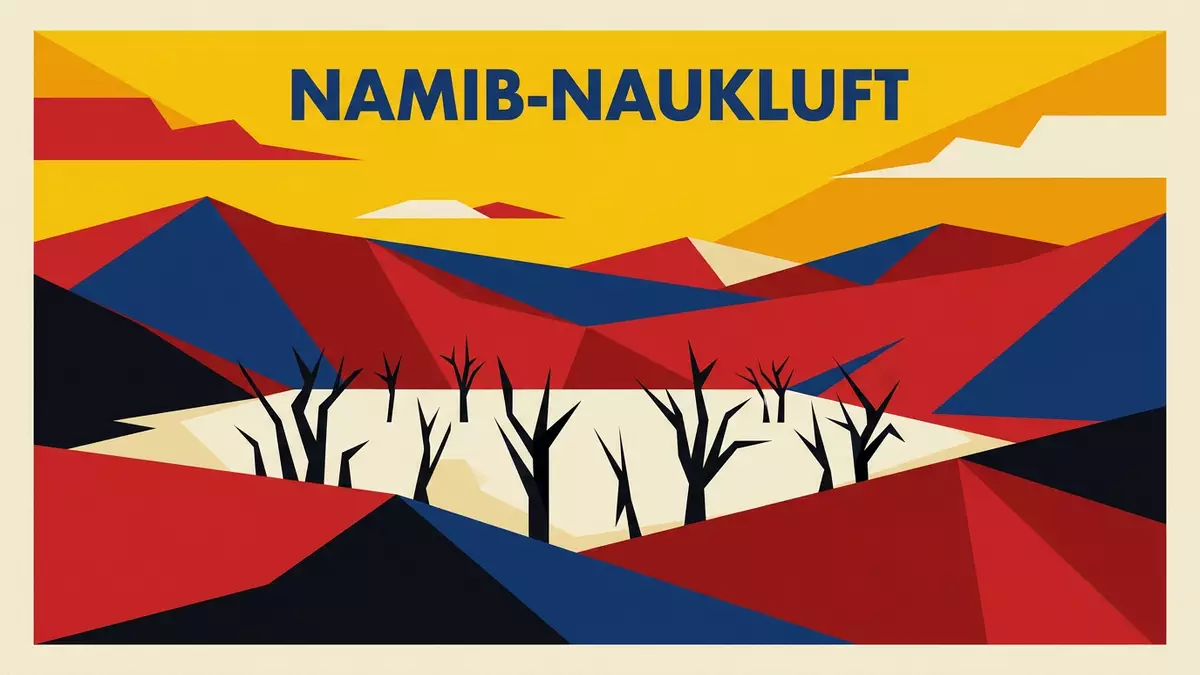
Deadvlei in Namibia’s Namib-Naukluft National Park is a white clay pan enclosed by high red-orange sand dunes, where dark camel thorn trees stand rooted in cracked ground that no longer receives surface water. The pan lies near the better-known basin of Sossusvlei in the Namib Desert, sharing the wider landscape of sand, clay and sparse vegetation shaped by the Tsauchab River.
A clay pan cut off from its river
Deadvlei is described as a white clay pan in Namib-Naukluft National Park in southern Namibia, close to the salt-and-clay basin of Sossusvlei where the Tsauchab River reaches the dunes.white clay pan The term “vlei” in its name reflects Afrikaans usage for a shallow lake or pan, while “dead” refers to a basin where river-fed water has withdrawn and vegetation has ceased to grow.name translated as dead marsh The pan sits within the Namib Sand Sea, part of Namib-Naukluft, surrounded by dunes whose slopes rise steeply from the floor.
Accounts of the landscape explain that floodwater from the Tsauchab River once reached Deadvlei, forming shallow pools on the clay and supporting camel thorn trees.Tsauchab river flooded creating pools Later the river’s path no longer extended into the basin, leaving the clay pan dry and isolating the trees from regular surface water.river changed course away from oasis What remains is a flat expanse of light-coloured clay marked by polygonal cracks, enclosed on several sides by high dunes that form a sand amphitheatre around the pan.
Blackened camel thorn trees on a white floor
The feature that distinguishes Deadvlei within Namib-Naukluft is the field of camel thorn trees that stand leafless on its clay floor, their trunks and branches dark against the pale ground.dark dead camel thorn trees These trees are described as dead camel thorn acacias that grew when floodwaters reached the basin and have remained standing long after the water ceased to arrive.dead camelthorn trees on clay floor Their wood has dried and darkened, but in the extreme aridity of the Namib Desert the trunks have not decomposed, leaving bare forms on the surface.
Sources converge on an approximate age of several centuries for the standing tree skeletons, giving ranges around 600 to 900 years for when they died.trees dated to around 900 years In descriptive accounts the trees are portrayed as black or nearly black, their bark gone and branches reaching upwards, set against the white clay and the intense colour of the surrounding dunes.blackened trunks against white clay The result is a landscape in which the ground, the trees and the sand form three distinct tones, all visible within a single basin.
Deadvlei within Namib-Naukluft and Sossusvlei
Deadvlei lies within Namib-Naukluft National Park, in the Namib Desert of southern Namibia, as part of the wider Sossusvlei area where the Tsauchab River meets the dunes.Deadvlei in Namib-Naukluft near Sossusvlei The clay pan is described as smaller than Sossusvlei’s main basin, set slightly apart and reached across sand from the end of the access track.another clay pan about 2 km from Sossusvlei It is enclosed closely by dunes, whose shapes and colours form the backdrop to the tree skeletons.
Descriptions of Namib-Naukluft explain that the park encompasses parts of the Namib Sand Sea, with dunes rising to significant heights and shifting over geological timescales.Deadvlei in Namib-Sandmeer within national park Within this setting Deadvlei appears as a clay basin among sand giants, its flat floor contrasting with the steep dune faces and providing a level surface from which the trees emerge.
Visiting Deadvlei: what travellers from Western Europe should know
- Deadvlei lies within Namib-Naukluft National Park in southern Namibia, in the Namib Desert, near Sossusvlei and Sesriem, and is reached from the Sossusvlei parking area on foot across sand.
- The terrain in the pan itself is largely flat clay underfoot, but the approach crosses loose sand and dune slopes, and the clay surface is broken into hard, irregular cracks.
- The wider landscape includes high dunes rising from the basin, and paths towards viewpoints involve walking on sand at desert altitudes where shade is limited.
- The official language is English and the currency is the Namibian dollar.
- Entry requirements depend on your nationality; UK travellers can check the FCDO travel advice at gov.uk/foreign-travel-advice, Irish travellers the Department of Foreign Affairs at ireland.ie.
Searching for Deadvlei on social platforms
These links open searches for Deadvlei on each platform.
Frequently asked questions about Deadvlei
Where is Deadvlei located?
Deadvlei is a white clay pan in Namibia’s Namib-Naukluft National Park, in the Namib Desert, near the salt-and-clay basin of Sossusvlei.
What can visitors expect when they reach the pan?
Visitors encounter a flat clay floor marked by cracks, enclosed by high red-orange dunes and dotted with leafless camel thorn trees that stand dark against the ground.
What makes Deadvlei distinctive within Namib-Naukluft?
The combination of a white clay basin, surrounding dunes and centuries-old dead camel thorn trees preserved by extreme aridity gives Deadvlei a stark appearance within the desert landscape.


