
Harvard Yard’s brick lawns at the heart of Cambridge
Published on 08/26/2026 at 12:47 | Editorial responsibility: Rafael Müller, Editor-in-Chief AD HOC NEWS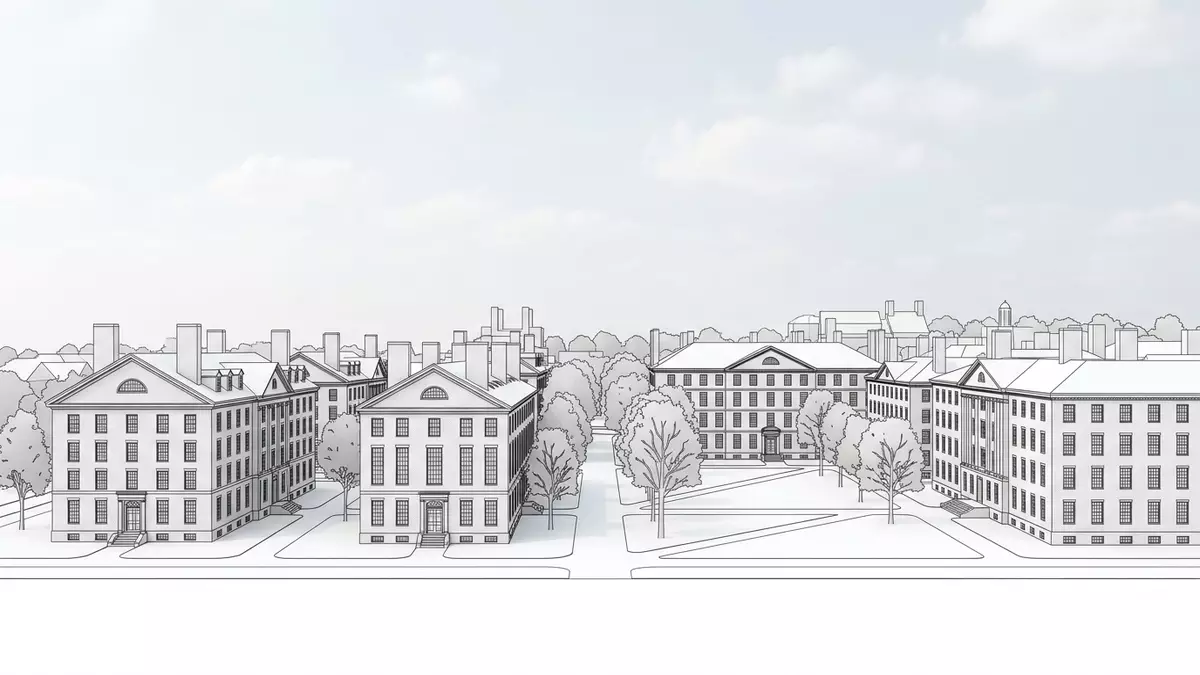
Harvard Yard in Cambridge, Massachusetts is a broad sweep of lawn framed by red-brick buildings and iron fencing, forming the historic heart of Harvard University and a daily crossroads between classrooms, libraries and student housing.
A seventeenth-century college green grown into a campus core
The story of Harvard Yard begins with the founding of Harvard College by the Massachusetts Bay Colony in 1636, when the Great and General Court authorised a college for the new settlement on the Charles River.Harvard College in 1636 A first parcel of land was purchased in 1637 on the edge of what was then Cow-yard Row, becoming the “College Yard” that formed the nucleus of the present precinct.the original College Yard parcel
Over the eighteenth and nineteenth centuries Harvard added adjoining pieces of pasture and town land, enlarging this early yard into a defined campus green between Massachusetts Avenue, Cambridge Street, Broadway and Quincy Street.the streets that bound the Yard In the early nineteenth century President John Thornton Kirkland, in office between 1810 and 1828, oversaw the installation of lawns, gravel paths and tree planting that began to give the area its park-like character, complemented in 1813 by Charles Bulfinch’s University Hall facing the central green.Kirkland and Bulfinch’s early nineteenth-century work
Brick buildings, gates and a defined rectangular green
Harvard Yard reads as a large rectangular park of just over 20 acres (about 8 or 9 ha), carpeted with grass and planted with trees, encircled by academic and residential buildings in Georgian and Colonial Revival styles.approximately 21 acres of lawn and buildings Paths thread the lawns between brick facades, linking libraries, classrooms, Memorial Church and freshman dormitories with the administrative offices of Harvard College and the wider university.the Yard’s mixture of academic and residential buildings
The perimeter is marked by a wrought-iron fence and brick piers, sometimes called the Memorial Fence, designed by the New York firm McKim, Mead & White and erected between about 1890 and 1930.the wrought-iron perimeter fence Within this fence line the Yard is entered through a series of gates, including the Johnston Gate completed in 1889 to a Georgian Revival design by McKim, Mead & White, opening towards the streets near Harvard Square.Johnston Gate in 1889
Historic buildings around the lawn
The buildings that frame Harvard Yard span centuries of collegiate architecture. Massachusetts Hall, dating from 1720, stands in the Old Yard and is recognised as the oldest surviving building on Harvard’s campus.Massachusetts Hall built in 1720 It has served different purposes over its three centuries, including housing students and university offices and providing quarters for soldiers during the American Revolutionary War.its use as an army barrack
Nearby, University Hall, designed by Charles Bulfinch and completed in the second decade of the nineteenth century, anchors the central lawn and set the scale for later development of the Yard’s quadrangles.University Hall by Bulfinch Later presidents, notably Charles William Eliot between 1869 and 1909, oversaw extensive building that filled the perimeter with red-brick dormitories and academic blocks, lending the precinct its consistent massing and giving physical form to Harvard’s expansion from a small colonial college into a modern university.nineteenth-century expansion under Eliot
Visiting Harvard Yard: what travellers from Western Europe should know
- Harvard Yard lies in Cambridge, Massachusetts, on the north bank of the Charles River, immediately adjoining the junction of streets known as Harvard Square.
- The green is level and covered with lawns and paths, but many of the surrounding buildings meet the Yard with steps, and some interiors are reached by staircases.
- Cambridge is served by regional rail and underground lines from Boston, with stations near Harvard Square giving direct access to the streets that border the Yard.
- The official language is English and the currency is the United States dollar.
- Entry requirements depend on your nationality; UK travellers can check the FCDO travel advice at gov.uk/foreign-travel-advice, Irish travellers the Department of Foreign Affairs at ireland.ie.
Searching for Harvard Yard on social platforms
These links open searches for Harvard Yard on each platform.
Frequently asked questions about Harvard Yard
Where is Harvard Yard within Cambridge?
Harvard Yard occupies a rectangular block in Cambridge, Massachusetts, bordered principally by Massachusetts Avenue, Cambridge Street, Broadway and Quincy Street, beside Harvard Square.
What should visitors expect when entering Harvard Yard?
Visitors step through iron gates into a fenced expanse of lawns, trees and crossing paths, surrounded by brick dormitories, libraries, church and classroom buildings.
What makes Harvard Yard distinctive among university campuses?
Harvard Yard combines a seventeenth-century college origin, an early nineteenth-century landscaped green and a perimeter of Georgian and Colonial Revival buildings behind a continuous wrought-iron fence.


