
Murano, island of glass in the Venetian lagoon
Published on 09/18/2026 at 12:42 | Editorial responsibility: Rafael Müller, Editor-in-Chief AD HOC NEWS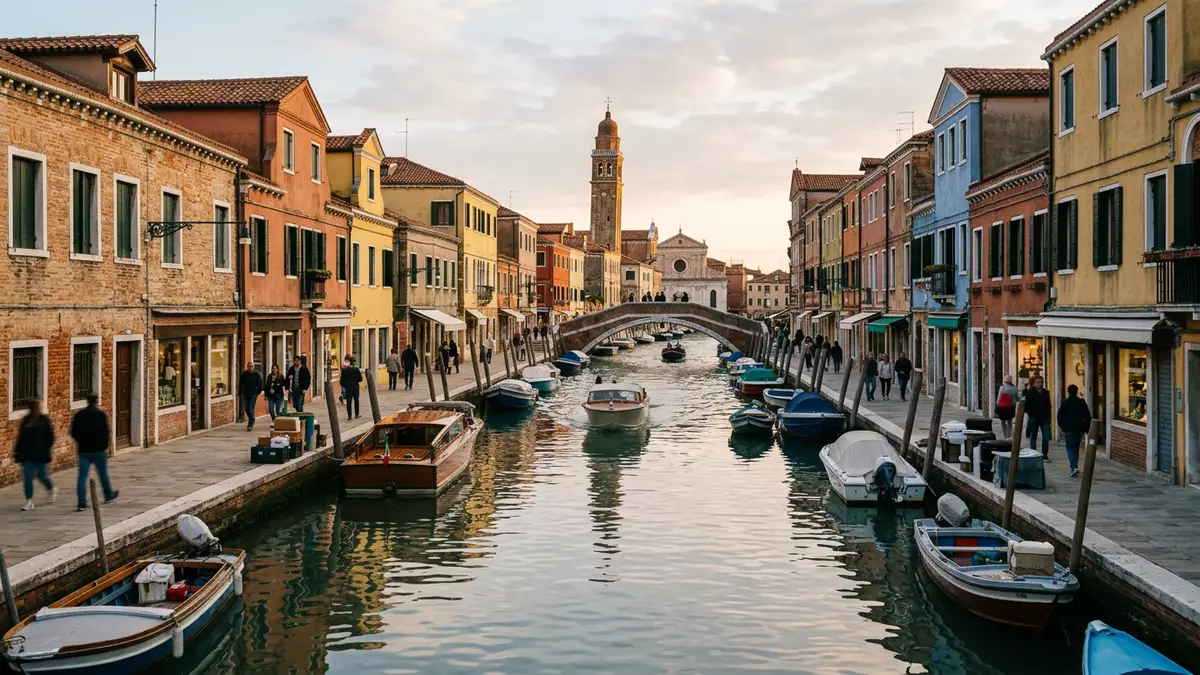
Murano is a low-lying island group in the Venetian lagoon, just north of Venedig, whose identity has been defined for centuries by glass furnaces lining its canals. The turning point came in 1291, when the government of Venice ordered its glassmakers to move their workshops to Murano, concentrating a hazardous craft away from the city’s dense wooden buildings and turning the island into a specialised glass district.
From lagoon settlement to glass island
Murano emerged as a distinct community in the Middle Ages, recorded under names such as Amorianas in agreements between Venice and the Carolingian Empire, a reminder that these sandbanks were settled long before the glass furnaces arrived.early references under the name Amorianas Over time the settlement consolidated into an island cluster separated from the main city by a stretch of lagoon, yet tied to Venice through administration, trade and shared waterways.
The decisive change in Murano’s story came on 8 November 1291, when the Great Council of Venice confined most of the city’s glassmaking to this island by decree.a decree of 1291 moved glass furnaces Glassmaking was already established in Venice around the year 1000, but this measure drew furnaces, masters and apprentices across the water and concentrated them in one place.glassmaking was widespread around the year 1000 From then on, Murano functioned as the manufacturing centre for Venetian glass heading to courts and markets across Europe.
Techniques, masters and guarded secrets
Once the furnaces were established on Murano, the island’s glassmakers — known locally as maestri — refined a repertoire of materials and techniques that became closely associated with Venetian glass.production concentrated on Murano from the thirteenth century They worked mainly with soda–lime mixtures, adjusting colour, clarity and viscosity to create both everyday vessels and elaborate showpieces.
In the fifteenth century Angelo Barovier, a Murano master, developed cristallo, a brilliantly clear glass that changed European tastes by replacing the green-tinged wares common in earlier centuries.Angelo Barovier developed cristallo Workshops on the island later became known for enamelled pieces, aventurine glass infused with fine metallic flecks, lattimo milk glass and millefiori patterns built from coloured canes, all part of a vocabulary that spread from Murano’s canals to dining tables and chapels across Europe.aventurine and millefiori glass were developed here
Canals, furnaces and visiting the workshops
Murano’s streets run as narrow lanes beside canals, with residential houses and palazzi standing alongside furnace complexes, warehouses and showrooms. The glass industry’s long presence has left kiln chimneys and workshop courtyards embedded among the urban fabric, creating an island where industrial structures and domestic buildings share the same waterfronts.glass furnaces and canals define the island
Visitors encounter working furnaces where molten, glowing glass is gathered from crucibles, blown and shaped on metal rods before being cooled and finished with enamel, gilding or engraving.techniques such as blowing and casting Showrooms display chandeliers, vases, beads and sculptural pieces, and some historic workshops trace their lineage to families such as Barovier and Toso that helped revive production in the nineteenth century.old glassblower families revived production
Visiting Murano: what travellers from Western Europe should know
- Murano lies in the northern part of the Venetian lagoon, separated from Venedig’s historic centre by channels that are served by public boats and other lagoon traffic.
- The island’s terrain is flat and urban, with walking routes that follow canals and cross low bridges; many furnaces and showrooms are reached along paved lanes.
- Neighbouring islands such as Burano and Torcello sit further into the lagoon, and their campanili and waterfronts can be seen from some quays on Murano.
- The official language is Italian and the currency is the euro.
Searching for Murano on social platforms
These links open searches for Murano on each platform.Frequently asked questions about Murano
Where is Murano in relation to Venedig?
Murano is an island cluster in the northern Venetian lagoon, lying a short stretch of water away from Venedig’s historic centre and linked by boat routes.
What can visitors expect on a trip to Murano?
Visitors encounter canals bordered by houses and palazzi, alongside working glass furnaces and showrooms where traditional techniques are demonstrated and finished pieces are displayed.
What makes Murano distinctive among lagoon islands?
Murano is distinguished by its long-standing concentration of glassmaking, rooted in the 1291 decree that moved furnaces from Venice and fostered specialised workshops and guarded techniques.


