
Palau de l'Almudaina, Palma’s royal stone palace beside the sea
Published on 09/19/2026 at 15:36 | Editorial responsibility: Rafael Müller, Editor-in-Chief AD HOC NEWS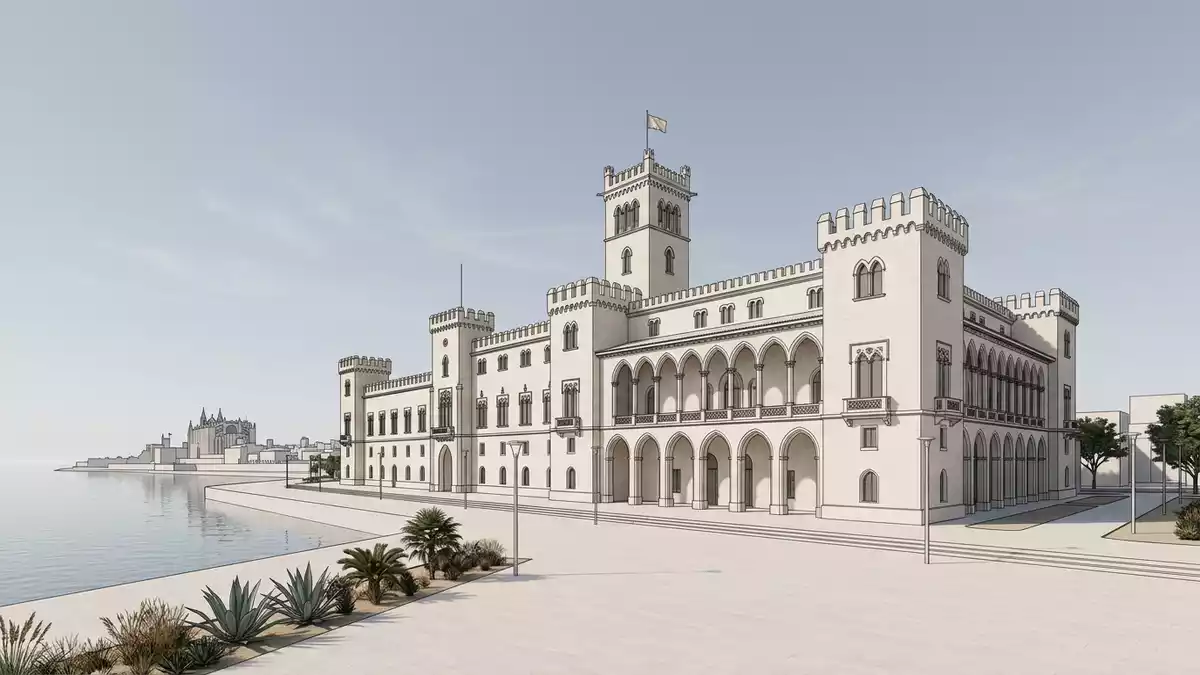
Palau de l'Almudaina in Palma is a royal stone palace that rises beside the cathedral and above the harbour, where Islamic foundations and Gothic rebuilding share the same walls. Its history ties the island of Mallorca to rulers from Muslim governors to the kings of Mallorca and the Spanish monarchy, and its present form reflects a medieval transformation in the late thirteenth and early fourteenth centuries.
A royal residence shaped by many rulers
Palau de l'Almudaina stands in Palma, the capital of Mallorca in Spain, directly opposite the city’s cathedral and close to the waterfront. The complex is one of the official residences of the Spanish royal family, used for receptions and ceremonies when the monarch stays on the island, and it forms part of the sites managed by the national heritage body.official royal residence The palace occupies a plot at Carrer del Palau Reial in the historic centre, where its towers and terraces line up with the long facade of the cathedral along the waterfront promenade.location opposite the cathedral
The origins of Palau de l'Almudaina lie in a fortified complex associated with Muslim rule on Mallorca, when governors known as walis used a stone citadel near the sea as their base.residence of Muslim governors That earlier fortress drew on Roman foundations, and elements of both periods survive within the fabric of the palace, where masonry and arches from the Islamic citadel sit alongside later Christian work.Roman origins and Arab fort After Jaume I of Aragon conquered Mallorca in 1229, the complex entered a new phase as part of the Kingdom of Mallorca, and it became a place where Christian monarchs established their presence on the island.
Gothic architecture on Islamic foundations
The present appearance of Palau de l'Almudaina is shaped above all by Gothic rebuilding under King Jaume II of Mallorca in the late thirteenth and early fourteenth centuries.Gothic palace under Jaume II Jaume II ordered extensive works, with architect Pere Salvà associated with a transformation that adapted the older fortress into a royal palace laid out with ceremonial halls and chapels. The dominant style of the exterior belongs to what is described as Levantine Gothic, which here means a combination of angular towers, battlemented walls and halls covered by ribbed vaulting.Levantine Gothic style
Inside, several rooms display strong Mudéjar decoration, where wooden ceilings and ornamental details reflect the blending of Islamic design with Christian rule.Mudéjar interiors The palace includes a chapel dedicated to Santa Anna, which dates to the early fourteenth century and forms part of the ensemble of Gothic religious spaces within the complex.chapel of Santa Anna In the twentieth century parts of the building underwent restoration, yet the outlines of the medieval towers, terraces and halls still define the silhouette that visitors recognise from the waterfront.
Courtyards, halls and the harbour setting
One way into Palau de l'Almudaina leads to the Pati del Rei or courtyard of honour, an open space framed by palace walls that once provided an approach to the royal apartments.Pati del Rei courtyard From there, routes branch towards audience halls and residential rooms, including spaces that in later centuries housed governors and military commanders. Halls such as the Tinell are associated with formal gatherings and have been adapted over time to suit changing ceremonial uses under different dynasties and administrations.Tinell hall for audiences
The position of Palau de l'Almudaina beside Palma Cathedral and looking towards the harbour gives the complex a clear relationship with the sea and the city. Terraces and walkways align with the promenade and overlook the waterfront, where ships once approached a shoreline dominated by the palace and the great Gothic church. The surrounding streets of the old town link the palace with other historic buildings, and its stone elevations form part of a long ensemble of walls and buttresses that defines the seafront of Palma’s historic centre.historic setting beside the harbour
Visiting Palau de l'Almudaina: what travellers from Western Europe should know
- Palau de l'Almudaina stands in the historic centre of Palma on Mallorca, beside the cathedral and close to the harbour, at Carrer del Palau Reial in Spain.
- Approaching the palace involves walking through the old town, where streets rise gently towards the terrace level and internal routes include staircases between halls and courtyards.
- The official language is Spanish and the currency is the euro.
- Other historic sites lie nearby, including Palma Cathedral directly opposite and the waterfront promenade stretching along the harbour below the palace terraces.
Searching for Palau de l'Almudaina on social platforms
These links open searches for Palau de l'Almudaina on each platform.
Frequently asked questions about Palau de l'Almudaina
Where is Palau de l'Almudaina located?
Palau de l'Almudaina is in Palma on the island of Mallorca in Spain, opposite Palma Cathedral and close to the harbourfront along Carrer del Palau Reial.
What can visitors expect when exploring the palace?
Visitors encounter stone terraces, towers, courtyards such as the Pati del Rei and Gothic halls with Mudéjar-influenced interiors, all set within a former fortress adapted as a royal residence.
What makes Palau de l'Almudaina distinctive among Mediterranean palaces?
The palace combines Roman and Islamic origins with Gothic rebuilding under Jaume II of Mallorca, and serves as an official residence of the Spanish royal family beside Palma’s cathedral and harbour.


