
Persepolis, stone terraces of the Achaemenid kings
Published on 09/21/2026 at 21:40 | Editorial responsibility: Rafael Müller, Editor-in-Chief AD HOC NEWS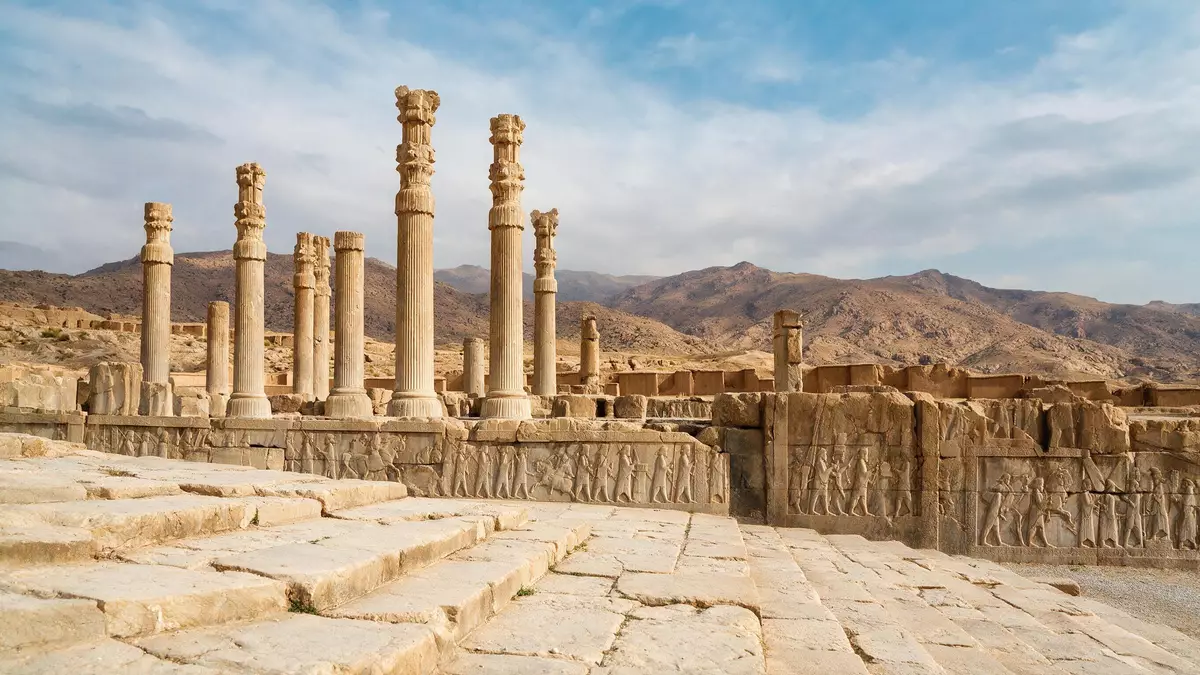
Persepolis near Shiraz in southwestern Iran is an ancient royal complex raised on a broad stone terrace at the foot of Kuh?e Rahmat, the “Mountain of Mercy”. Founded under Darius I in the late sixth century BC as a ceremonial capital of the Achaemenid Empire, it concentrates palaces, audience halls and gateways on a single elevated platform above the Marvdasht plain in Fars Province.
The Achaemenid ceremonial capital in stone
Persepolis was conceived under Darius I around 518 BC as the ceremonial seat of the Achaemenid dynasty rather than a conventional administrative city, a role reflected in the concentration of monumental halls and palaces on its stone terrace.Founded by Darius I in 518 BC The complex lies in Fars Province in south?western Iran, north?east of Shiraz, near the confluence of the Pulvar and Kor rivers, in a landscape where low limestone ridges frame the Marvdasht plain.location northeast of Shiraz
The heart of Persepolis is its vast terrace, partly carved from the bedrock of Kuh?e Rahmat and partly built from immense limestone blocks. On this platform the Achaemenid kings Darius I, Xerxes I and Artaxerxes I raised columned audience halls, palaces and gateways over several decades in the late sixth and early fifth centuries BC.terrace and royal buildings The terrace forms a single elevated architectural stage rather than scattered remains, a stone surface where broad staircases, colonnades and courtyards connect the principal buildings.
Palaces, gateways and carved reliefs
Several major structures define the upper surface of the Persepolis terrace. The Apadana, begun under Darius I and completed under Xerxes I, is a vast audience hall once carried on dozens of tall stone columns, accessed by monumental stairways lined with sculpted processions of tribute bearers and guards.Apadana audience hall Nearby, the Gate of All Nations attributed to Xerxes I stands at the western side of the terrace, where travellers would have entered through a gateway flanked by guardian figures into the ceremonial heart of the complex.Gate of All Nations
Further into the complex, the so?called Throne Hall or Hundred Columns and the smaller Tachara palace are associated with Xerxes I and Darius I, contributing additional columned halls and finely carved stone doorways to the ensemble.Throne Hall and Tachara Across many walls and stairways, bas?reliefs depict royal audiences, delegations bearing gifts, guards in patterned dress and animals in controlled combat, carved with a precision that shows the craftsmen’s command of both human and animal forms. Inscriptions in cuneiform scripts record Achaemenid royal names and titles, fixing the complex firmly in the historical record of the early Persian Empire.Achaemenid royal inscriptions
World Heritage status and the surrounding landscape
The monumental ruins of Persepolis, together with their setting at the foot of Kuh?e Rahmat, led to the inscription of the site on the UNESCO World Heritage List in 1979 as a cultural property.UNESCO World Heritage List in 1979 This status highlights the combination of architecture, urban planning, construction technique and art embodied in the terraced platform and its buildings.royal city of Persepolis The ensemble represents an important testimony to the power and self?presentation of the Achaemenid rulers who controlled a vast territory stretching across much of Western and Central Asia.
The wider landscape forms part of the experience of the archaeological site. The terrace rises above the Marvdasht plain, with cultivated land extending towards more distant hills and the low limestone slopes of the southern Zagros Mountains marking the horizon.Marvdasht plain and Zagros slopes The proximity of the Pulvar and Kor rivers, together with the backdrop of Kuh?e Rahmat, situates Persepolis within a wider Fars Province environment that was central to early Persian power.
Visiting Persepolis: what travellers from Western Europe should know
- Persepolis lies in Fars Province in south?western Iran, north?east of Shiraz, on the Marvdasht plain at the foot of Kuh?e Rahmat. Travellers usually reach it by road from Shiraz.
- The main archaeological area stands on an elevated stone terrace above the surrounding plain, reached by broad flights of steps from the lower level.
- The official language is Persian and the currency is the Iranian rial. Entry requirements depend on your nationality; UK travellers can check the FCDO travel advice at gov.uk/foreign-travel-advice, Irish travellers the Department of Foreign Affairs at ireland.ie.
Searching for Persepolis on social platforms
These links open searches for Persepolis on each platform.
Frequently asked questions about Persepolis
Where is Persepolis and what kind of place is it?
Persepolis is an archaeological complex in Fars Province in south?western Iran, on the Marvdasht plain north?east of Shiraz, centred on a monumental stone terrace.
What should visitors expect when they arrive at Persepolis?
Visitors encounter a broad elevated platform reached by stairways, with the remains of columned halls, palaces, gateways and extensive carved reliefs spread across the upper surface.
What makes Persepolis distinctive among ancient sites?
Persepolis stands out for its combination of a vast artificial terrace, royal Achaemenid architecture attributed to named kings and a dense programme of sculpted processions and inscriptions on stone surfaces.


