
Trinidad’s colonial heart of cobbles and pastel walls
Published on 09/18/2026 at 07:01 | Editorial responsibility: Rafael Müller, Editor-in-Chief AD HOC NEWS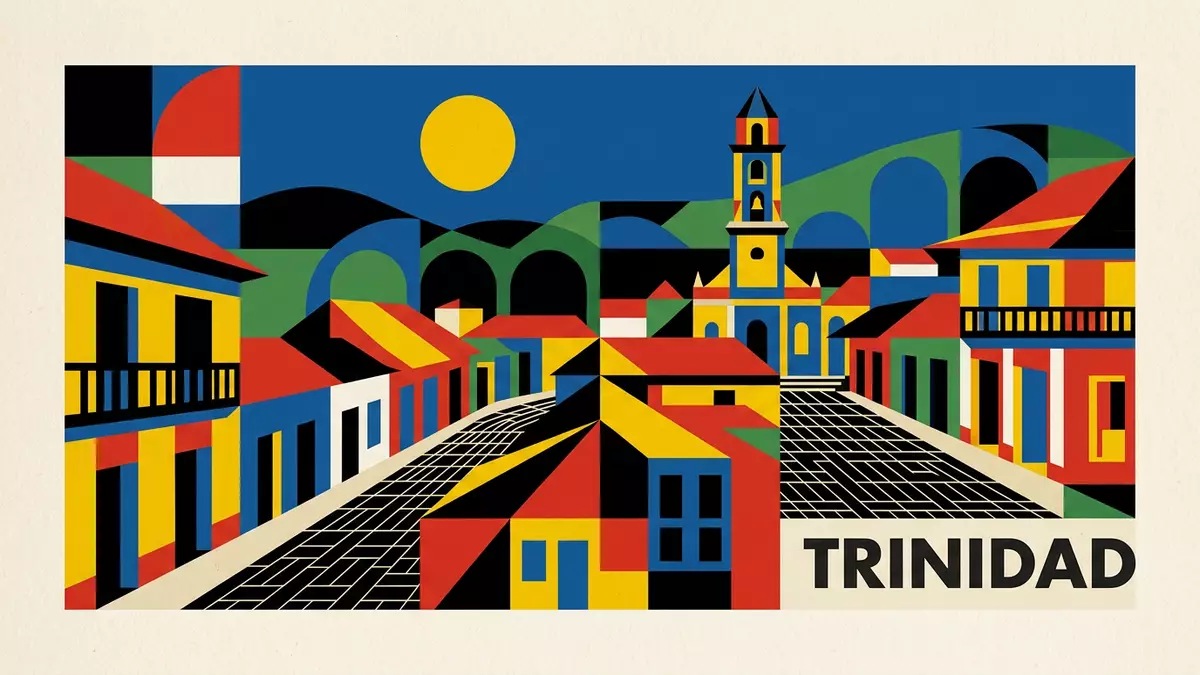
Trinidad in central Cuba is a colonial city whose historic centre forms a compact district of cobbled streets, pastel houses and sugar-era mansions linked to the surrounding sugar country. Together with the nearby Valle de los Ingenios, the Historic Centre of Trinidad has been recognised as a UNESCO World Heritage Site since 1988, reflecting its intact urban fabric from the eighteenth and nineteenth centuries and its role in the Caribbean sugar trade.Historic Centre of Trinidad and the Valley de los Ingenios
Plaza Mayor and the core of the old town
At the heart of Trinidad’s historic centre lies Plaza Mayor, a formal square framed by cobbled streets and low, pastel-coloured houses with wrought-iron grilles on their windows.cobbled streets and pastel houses The square has long been regarded as the historic core of the town, forming a compact urban ensemble where streets converge and many of the most notable buildings stand close together.Plaza Mayor, historic centre
Plaza Mayor is landscaped as a sequence of small fenced gardens with palms and ornamental planting edged by low balustrades, giving the centre of the square a green focus between the stone paving and surrounding facades.fenced gardens with palms From the edge of the square, cobbled streets lead out into the wider old town, lined with single- and two-storey houses whose walls are painted in soft colours and whose tiled roofs remain largely low and even, preserving a horizontal skyline broken mainly by church towers.
Sugar-era mansions and museums
The Historic Centre of Trinidad preserves an array of sugar-era mansions built in the eighteenth and nineteenth centuries, many of which now house museums and cultural institutions.colonial architecture of Trinidad Around Plaza Mayor stand several notable residences, including Palacio Brunet, whose interiors give a sense of the domestic world of Trinidad’s wealthy sugar families, and Palacio Cantero, a neoclassical mansion that contains the municipal history museum with exhibits on the town and the Valley de los Ingenios.Palacio Brunet and Palacio Cantero
Other historic houses close to the square include buildings that now hold collections of colonial architecture and local art, continuing the practice of reusing former residences as museums and galleries.mansions adapted as museums The campanile of the former Convento de San Francisco rises above these low roofs as one of Trinidad’s most recognisable vertical features, visible from many streets as a reference point above the pastel facades.Convento de San Francisco tower
Streets, styles and the sugar landscape
Trinidad’s historic streets retain a colonial plan with cobbled surfaces, narrow pavements and modestly scaled houses that together create a continuous streetscape from the sugar era.colonial plan and cobbled streets Architectural elements such as masonry walls, wooden ceilings covered with clay tiles and lime plastered facades give the town a strong sense of unity and a clear link to Spanish colonial building traditions in the Hispanic Caribbean.Trinitarian architecture
The recognition of Trinidad and the Valley de los Ingenios as a World Heritage Site reflects both the preserved urban centre and the surrounding sugar landscape where numerous former mills and plantations testify to the town’s economic history in the eighteenth and nineteenth centuries.sugar plantations and archaeological sites The historic streets of Trinidad rise gently towards the nearby Escambray range on one side and tilt towards the Caribbean coast on the other, giving views from some points where tiled roofs, church towers and distant hills line up in a single panorama.
Visiting Trinidad: what travellers from Western Europe should know
- Trinidad lies in Sancti Spíritus Province on Cuba’s southern coast, in the central part of the island, with the historic centre clustered around Plaza Mayor.
- Cobbled streets and uneven paving in the old town require firm footwear, and many routes involve short slopes rather than level ground.
- The nearby Valle de los Ingenios extends inland from Trinidad as a former sugar-growing region, reached by road through countryside dotted with old plantation structures.
- The official language is Spanish and the currency is the Cuban peso.
- Entry requirements depend on your nationality; UK travellers can check the FCDO travel advice at gov.uk/foreign-travel-advice, Irish travellers the Department of Foreign Affairs at ireland.ie.
Searching for Trinidad on social platforms
These links open searches for Trinidad on each platform.Frequently asked questions about Trinidad
Where is Trinidad and its historic centre located?
Trinidad is a colonial city in Sancti Spíritus Province in central Cuba, with its historic centre concentrated around Plaza Mayor on the island’s southern coast.
What can visitors expect when walking through Trinidad’s old town?
Visitors encounter cobbled streets, pastel-painted houses with tiled roofs, colonial churches and former sugar-era mansions, many of which now contain museums and cultural spaces.
What makes Trinidad’s historic centre distinctive among Caribbean towns?
The compact urban core around Plaza Mayor combines well-preserved colonial architecture, a formal landscaped square and a surrounding sugar landscape recognised together as a UNESCO World Heritage Site.


