
Vieille Ville de Luxembourg between plateau and deep valleys
Published on 09/18/2026 at 20:11 | Editorial responsibility: Rafael Müller, Editor-in-Chief AD HOC NEWS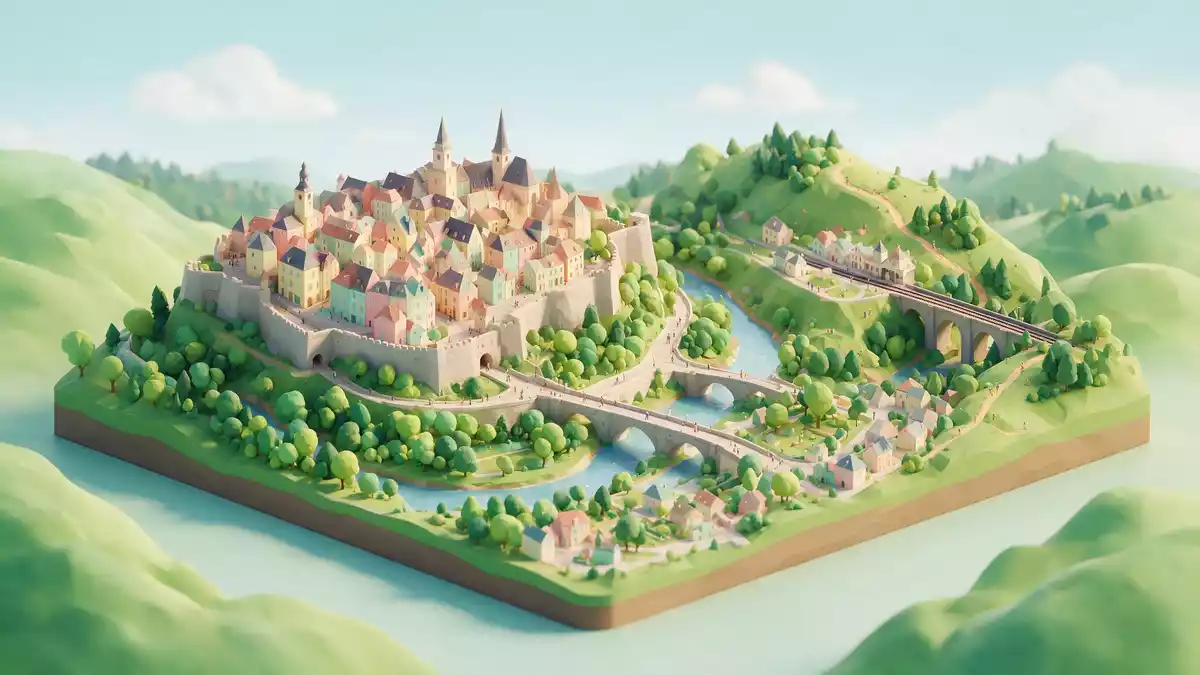
Vieille Ville de Luxembourg is the historic centre of Luxembourg City, arranged across a rocky plateau and deep river valleys where the capital of Luxembourg first took shape in the Middle Ages. The old quarters and the surviving fortifications form a single urban landscape recognised as a cultural World Heritage Site by UNESCO in 1994, with streets and ramparts that reveal how a compact stronghold grew into the seat of the Grand Duchy.City of Luxembourg inscription
A fortified old town on rock above the rivers
The Vieille Ville de Luxembourg occupies a dramatic setting at the confluence of the Alzette and Pétrusse rivers, where a steep rocky outcrop rises above the watercourses and natural ravines.steep rocky outcrop Upper streets and squares stand on this plateau, with views down to lower quarters grouped along the valley floor. The contrast between high town and river-level neighbourhoods is part of what defines the experience of moving through the old city.
The origin of the city lies in a fort built in the tenth century, established on this defensible rock and later expanded into a fortress complex that became one of the larger fortified ensembles in Europe.fort built in the 10th century Over centuries its bastions, walls and casemates were strengthened by successive powers, and although most of the fortress was dismantled in the nineteenth century, substantial sections of casemates and ramparts still thread through the landscape.exceptional variety of military vestiges
Old quarters and fortifications as a World Heritage ensemble
UNESCO lists the property under the title “City of Luxembourg: its Old Quarters and Fortifications”, highlighting an area where civil architecture in the upper town is interwoven with extensive defensive works around the edges.Old Quarters and Fortifications The listed property covers just under 30 ha, surrounded by a buffer zone that brings the total protected area to about 138 ha, which is a small proportion of the wider capital but dense with historical fabric.extent of UNESCO site
Within this ensemble, the Ville Haute quarter on the plateau includes civic buildings such as the Grand Ducal Palace and Notre-Dame Cathedral, streets of town houses and public squares that reflect Luxembourg’s role as a European capital.Ville Haute highlights Around and below it, neighbourhoods like Grund, Clausen and Pfaffenthal occupy the lower ground along the rivers, linked to the upper town by paths, bridges and lifts that make the change of level part of the route through the city.Grund, Clausen and Pfaffenthal
Walking the plateau edges and valley floors
Exploring the Vieille Ville de Luxembourg means moving repeatedly between the plateau rim and the valleys, with vantage points over the Alzette and Pétrusse gorges appearing along the way. Routes such as the Chemin de la Corniche trace the edge of the upper town, giving long views over the lower quarters and the line of former defences built into the slopes.Chemin de la Corniche Elsewhere paths drop to river level, where streets, bridges and embankments sit closer to the water and the scale of the rocky setting becomes more apparent.
The terrain is shaped by height differences and historic structures rather than broad open squares, so many approaches involve gradients, stairways and passages that thread beside walls or between buildings. Certain parts of the old town can also be reached by lifts and other mechanical links that ease the transition between levels, contributing to the network of ways through the historic quarters described in guides to the UNESCO site.accessible cultural tours
Visiting Vieille Ville de Luxembourg: what travellers from Western Europe should know
- Vieille Ville de Luxembourg forms part of Luxembourg City in Luxembourg, centred on the historic quarters and fortifications around the plateau above the Alzette and Pétrusse rivers.
- The terrain combines plateau streets with steep approaches to lower river quarters, including stairways and narrow routes alongside historic walls and buildings.
- Neighbourhoods such as Grund, Clausen and Pfaffenthal lie within the historic valleys close to the rivers, reached from the upper town by footpaths, bridges and mechanical links.
- The official languages of Luxembourg are Luxembourgish, French and German, and the currency is the euro.
Searching for Vieille Ville de Luxembourg on social platforms
These links open searches for Vieille Ville de Luxembourg on each platform.
Frequently asked questions about Vieille Ville de Luxembourg
Where is Vieille Ville de Luxembourg located?
Vieille Ville de Luxembourg is the historic centre of Luxembourg City in Luxembourg, focused on the plateau and valleys around the Alzette and Pétrusse rivers.
What should visitors expect on a first visit?
Visitors encounter a compact old town shaped by height differences, with fortified remains, civic buildings and river-level quarters linked by streets, bridges, stairways and lifts.
What makes Vieille Ville de Luxembourg distinctive among European old towns?
Its combination of medieval and later fortifications with civil architecture on a rocky outcrop above two rivers, recognised as a UNESCO World Heritage ensemble since 1994, gives it a pronounced vertical character.


