
Wat Rong Khun, a white artwork of faith near Chiang Rai
Published on 09/21/2026 at 08:34 | Editorial responsibility: Rafael Müller, Editor-in-Chief AD HOC NEWS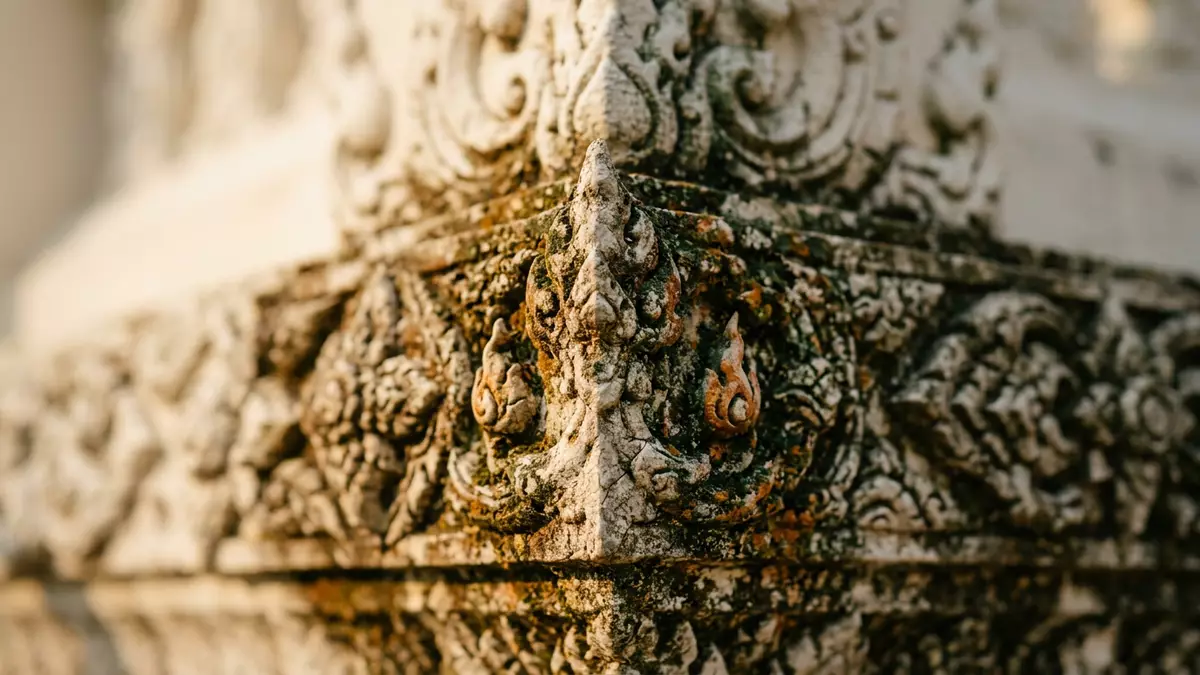
Wat Rong Khun near Chiang Rai in Thailand is a Buddhist temple complex remade as an all?white artwork in plaster and mirrored glass, conceived by the artist Chalermchai Kositpipat in the late twentieth century and opened to visitors in 1997.
A temple turned into contemporary white art
Wat Rong Khun presents a temple ground recast in white, where religious architecture, sculpture and painting are treated as a single contemporary artwork shaped by Chalermchai Kositpipat, a Chiang Rai?born artist recognised nationally for his work.Chalermchai Kositpipat At the centre stands the ordination hall, or ubosot, whose exterior is covered in white plaster inlaid with fragments of mirrored glass so that its surfaces catch and scatter light rather than relying on painted colour.white artwork in plaster and mirrored glass Around it, walkways, guardian figures and smaller structures continue the same palette, so that the entire complex reads as a single composition in white with reflective accents.
The project, begun in the 1990s and opened to visitors in 1997, is framed as long?term work that remains in progress, with further buildings planned around the central hall, including meditation spaces, galleries and facilities for monks.began taking its present form in 1997 The white surfaces contrast with the usual reds and golds of temple ornament in northern Thailand, and the mirrored glass gives sharp points of reflection across balustrades, rooflines and sculpted forms, making the complex stand out among the region’s more traditional monasteries.
Architecture, symbols and unexpected imagery
Architecturally, Wat Rong Khun combines elements of Thai and Lanna temple forms with contemporary reworking, joining layered roofs, ornamental finials and guardian figures with stylised flames and abstract patterns that run along the balustrades and up the walls.contemporary Thai architecture Approaching the ubosot involves crossing a bridge over a sculptural field whose forms echo traditional depictions of suffering and desire, leading towards the main hall and its calmer interior. Inside the ubosot, instead of the standard narrative paintings of the Buddha’s life, the walls carry large?scale murals that insert recognisable figures from contemporary culture into scenes representing samsara, the realm of rebirth and delusion.contemporary scenes representing samsara
Beyond the ubosot, the grounds include other structures and sculptural ensembles that extend the white and mirror vocabulary across different building types. Plans describe a complex of nine buildings, among them a hall of relics, meditation centre, art gallery and living quarters for monks, set around the central hall and linked by paths and ornamental bridges.nine buildings across the complex The grounds therefore function both as a religious site and as an open?air art installation, with each building contributing its own set of images, motifs and surfaces to the wider composition.
Origins, funding and an evolving project
Wat Rong Khun in its present form is the reconstruction of an earlier local temple, with work on the new complex beginning in the late twentieth century after the existing structures had fallen into disrepair.earlier local temple Chalermchai Kositpipat took on the rebuilding as his own project, financing the construction largely from his career as an artist rather than through traditional temple patronage, and over the years he has committed substantial personal funds to the site.funded by his art career The complex opened to visitors in 1997 and has expanded since, with additional buildings and sculptural groups added to the grounds as the project develops.
Plans describe the work continuing for decades, with some sources giving dates into the twenty?first century for the completion of the wider ensemble, and the temple is frequently described as unfinished in the sense that new elements are expected to appear over time.works are ongoing This long horizon, combined with its distinctive material palette and mixture of devotional and contemporary imagery, has made Wat Rong Khun a landmark of modern Thai religious architecture and a point of reference in discussions of how Buddhist temples can incorporate modern art into their fabric.
Visiting Wat Rong Khun: what travellers from Western Europe should know
- Wat Rong Khun stands south of Chiang Rai, along a main road that links the city with other parts of northern Thailand, and is reached most straightforwardly by road transport such as buses, tour vehicles or taxis.
- The complex is laid out on level ground, but moving between its halls and viewpoints involves walking along outdoor paths and crossing bridges and stairways, with some sections exposed to sun and rain.
- The official language is Thai and the currency is the Thai baht.
- Entry requirements depend on your nationality; UK travellers can check the FCDO travel advice at gov.uk/foreign-travel-advice, Irish travellers the Department of Foreign Affairs at ireland.ie.
Searching for Wat Rong Khun on social platforms
These links open searches for Wat Rong Khun on each platform.Frequently asked questions about Wat Rong Khun
Where is Wat Rong Khun and what kind of place is it?
Wat Rong Khun is a Buddhist temple complex near Chiang Rai in northern Thailand, rebuilt as an all?white artwork in plaster and mirrored glass in the late twentieth century.
What should visitors expect on a visit to Wat Rong Khun?
Visitors encounter a temple ground dominated by the white and mirror?inlaid ubosot, surrounded by sculptural bridges, guardian figures, murals with contemporary imagery and additional halls arranged around the main building.
What makes Wat Rong Khun distinctive among temples in Thailand?
Its combination of all?white surfaces, mirrored glass ornament, contemporary mural imagery and long?running construction under a single artist makes Wat Rong Khun stand apart from more traditional monasteries in the region.


