
Wat Rong Khun, the white vision outside Chiang Rai
Published on 09/19/2026 at 09:57 | Editorial responsibility: Rafael Müller, Editor-in-Chief AD HOC NEWS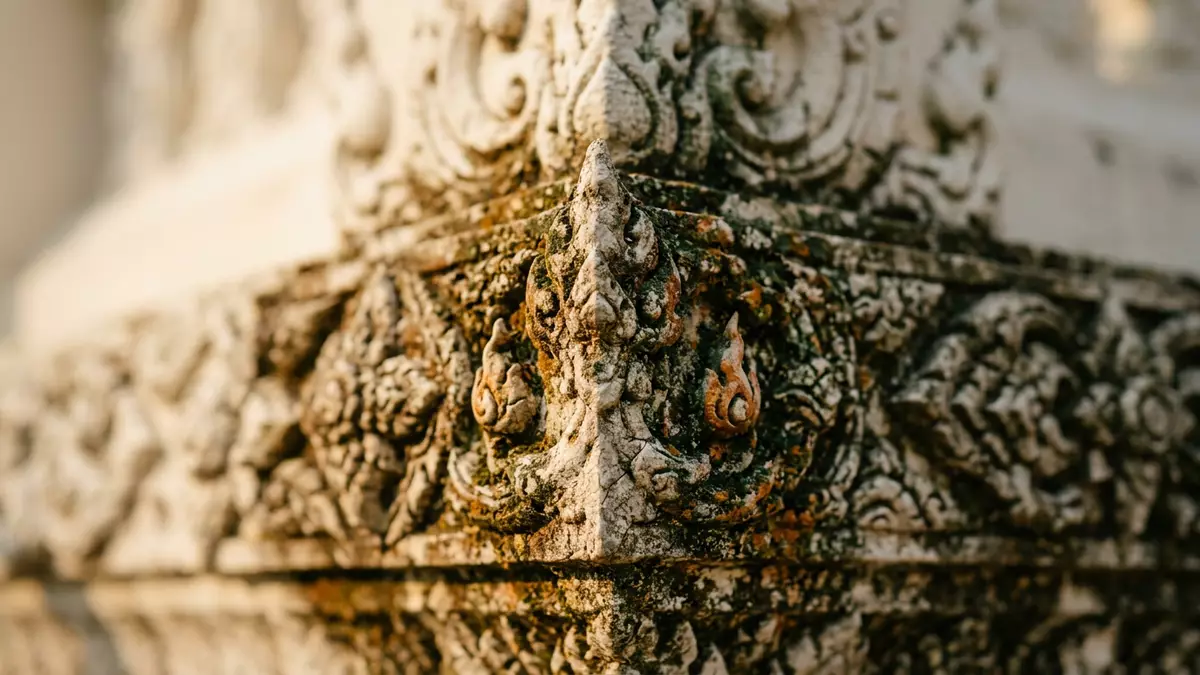
Wat Rong Khun in Chiang Rai is widely known in English as the White Temple, a Buddhist temple complex reimagined as a contemporary artwork by the Thai artist Chalermchai Kositpipat in the late twentieth century. Conceived as an all?white, mirror?bright ensemble and opened to visitors in 1997, it has become one of the defining sights of northern Thailand.
A white temple turned contemporary art
Wat Rong Khun stands on the edge of Pa O Don Chai in Mueang Chiang Rai district, a short distance south of Chiang Rai city in northern Thailand, amid lowland countryside and roadside houses.Wat Rong Khun The complex is presented in the form of a Buddhist temple ground, with an ordination hall, bridge and sculptural approach, yet it is also framed as a single ongoing artwork by Chalermchai Kositpipat, who was born in Chiang Rai province and is recognised nationally as an artist.the complex began taking its present form in 1997
Construction in its present form started in 1997, replacing an older local temple with a new complex shaped by Chalermchai’s own visual language and references. The main structures that visitors encounter are therefore contemporary, even though the ground plan draws on established temple components such as an ordination hall (ubosot), surrounding precincts and shrines.
Glass, plaster and vivid imagery
The defining impression of Wat Rong Khun is the predominance of white plaster surfaces highlighted with mirrored glass mosaics, which catch the strong light of northern Thailand and give the buildings a crystalline sheen.all-white, mirror-flecked Buddhist temple The main ordination hall rises on a platform reached by a bridge across a sculptural forecourt, where visitors walk between dense clusters of white figures and motifs that draw on Buddhist cosmology and more unexpected visual sources.
Inside the ordination hall the walls carry large murals that combine traditional Buddhist themes with scenes referencing contemporary culture, including cinema and comic?book imagery, executed in Chalermchai’s detailed illustrative style.large murals and concentration on pop culture Around the main hall stand auxiliary buildings and sculptures, among them a separate golden structure, galleries displaying Chalermchai’s paintings and drawings, and further shrines, giving the site the character of both a temple and an outdoor art museum.
An evolving project in northern Thailand
Wat Rong Khun is described as an ongoing project, with a long?term plan that extends beyond the buildings already completed and frames the site as an evolving work rather than a finished monument.His original master plan lists nine major buildings Chalermchai’s involvement has turned the complex into a landmark of modern Thai religious architecture, in which conventional elements such as the ubosot and the bridge of rebirth sit alongside figures, murals and installations drawn from his own artistic practice.
The temple lies in Chiang Rai province in northern Thailand, in a landscape of fields and low buildings, and is reached along the highway route from Chiang Rai city towards Pa O Don Chai.Located 13 km from Chiang Rai, Wat Rong Khun is a very recent temple The site’s combination of formal temple elements with contemporary art has made it a reference point for visitors interested in both Thai Buddhism and late twentieth?century Thai visual culture.
Visiting Wat Rong Khun: what travellers from Western Europe should know
- Wat Rong Khun stands in Pa O Don Chai in Mueang Chiang Rai district, south of Chiang Rai city in northern Thailand, reached along the main road route from the city.
- The complex is arranged as a temple ground with a bridge approach, external sculptural forecourt and an ordination hall reached by steps, so a visit involves walking across outdoor surfaces and ascending stairways.
- The surrounding area contains local houses and roadside businesses, with Chiang Rai city lying to the north and further temple sites and countryside reachable along the same highway corridor.
- Thailand’s official language is Thai and the currency is the Thai baht.
- Entry requirements depend on your nationality; UK travellers can check the FCDO travel advice at gov.uk/foreign-travel-advice, Irish travellers the Department of Foreign Affairs at ireland.ie.
Searching for Wat Rong Khun on social platforms
These links open searches for Wat Rong Khun on each platform.
Frequently asked questions about Wat Rong Khun
Where is Wat Rong Khun located?
Wat Rong Khun stands in Pa O Don Chai in Mueang Chiang Rai district in northern Thailand, beside the highway leading south from Chiang Rai city.
What should visitors expect on a visit?
Visitors encounter a white, mirror?bright temple complex laid out with a bridge, sculptural forecourt and an ordination hall with large interior murals and surrounding auxiliary buildings.
What makes Wat Rong Khun distinctive?
Its combination of all?white plaster and mirrored glass, contemporary pop?culture imagery and conventional Buddhist temple components reflects Chalermchai Kositpipat’s late twentieth?century artistic vision.


