
Wat Si Saket in Vientiane, a cloister of thousands of Buddhas
Published on 09/19/2026 at 13:19 | Editorial responsibility: Rafael Müller, Editor-in-Chief AD HOC NEWS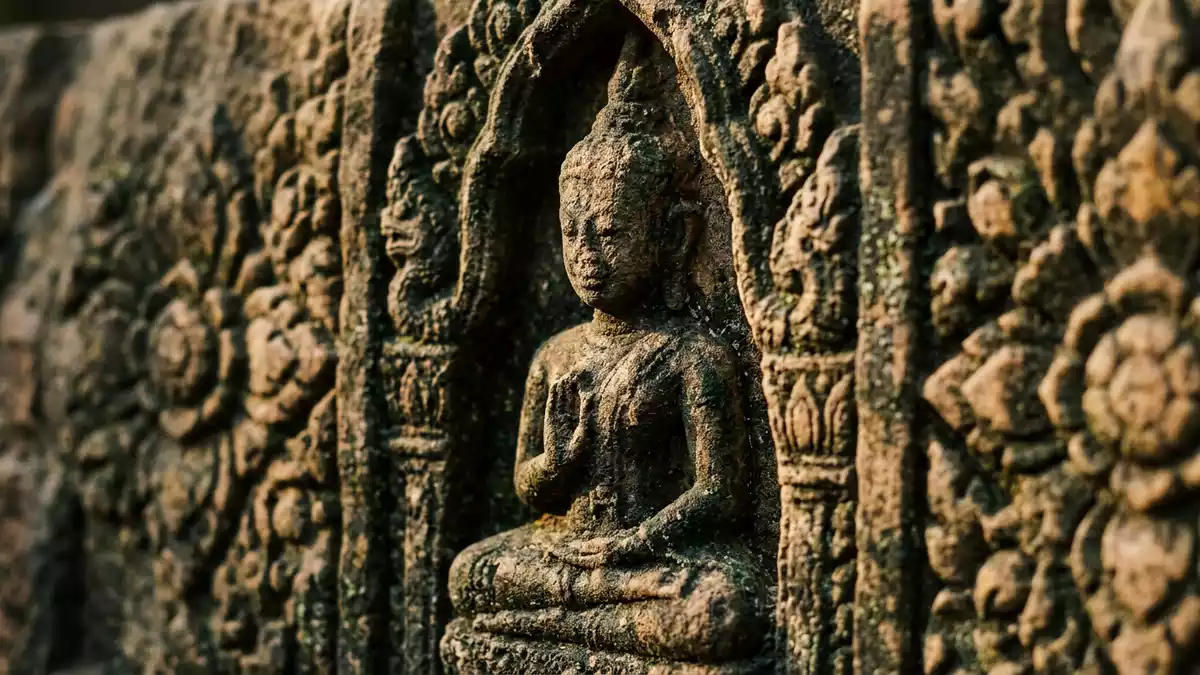
Wat Si Saket in Vientiane is an early nineteenth?century Buddhist temple where a central ordination hall stands within a walled courtyard ringed by cloistered galleries lined with Buddha images.
The oldest surviving temple in Vientiane
Wat Si Saket is a Theravada Buddhist wat in the historic core of Vientiane, the capital of Laos, on Lan Xang Road near the junction with Setthathirat Road.Theravada Buddhist wat The complex stands close to Haw Phra Kaew, the former royal chapel that once housed the Emerald Buddha, and sits within walking distance of the Presidential Palace on Lan Xang Avenue.Lan Xang Road near Setthathirat Road The temple is widely described as the oldest surviving Buddhist temple in Vientiane, a status linked to its survival during the destruction of the city by Siamese forces in 1828.oldest surviving Buddhist temple
Construction of Wat Si Saket is dated to 1818 under King Anouvong, also known as Chao Anou, the last monarch of the Lao kingdom of Vientiane.built in 1818 by King Anouvong This places the temple at the end of the Lan Xang era, a period when Laos was closely entangled with Siam. When Vientiane was sacked in 1828 many temples were destroyed, yet Wat Si Saket remained standing and retained its early nineteenth?century form.sack of Vientiane in 1828 Restoration work took place in the twentieth century under French colonial administration, but the basic layout of the wat still reflects its foundation under Anouvong.
Cloisters, galleries and the central sim
The main structure at Wat Si Saket is the sim, the ordination hall, which rises inside a rectangular courtyard framed by colonnaded galleries that create a continuous cloister around it.central temple surrounded by a terrace The sim is enclosed by an outer wall that marks the boundary of the temple grounds, giving the whole complex a layered sequence of enclosure: city street, outer wall, cloister, courtyard, and inner hall. The plan, with a single?nave sanctuary at the centre of a courtyard encircled by a gallery, is often connected with Siamese Buddhist architecture of the period.single?nave sanctuary in a courtyard
The roof of the sim is organised into several tiers with broad eaves and ornate decorative details along the ridges and gables, an arrangement associated with Bangkok?style temple architecture.multi?tiered roof in Bangkok style Around the sim, the cloister galleries carry their own roofs and are supported by regularly spaced pillars, forming shaded walkways that look inwards towards the courtyard. The fabric of the complex combines Lao elements with features drawn from Siamese models, so that the outer wall, colonnades and tiered roof together give Wat Si Saket a hybrid character that reflects the political and cultural ties between Vientiane and Bangkok in the early nineteenth century.fusion of Lao and Siamese elements
Thousands of Buddha images in the cloister
One of the most striking features of Wat Si Saket is the number of Buddha images housed in its cloistered galleries. The inner walls of the surrounding galleries are lined with niches containing numerous seated Buddhas in different materials and sizes, and there are further images displayed on shelves and pedestals along the walkways.contains thousands of Buddha images Guide descriptions and traveller accounts refer to several thousand figures, sometimes quantified as over 6,000, though the exact count can vary between sources.
Many of the Buddha images at Wat Si Saket are made of wood, stone or metal and show different styles linked to Lao and Siamese traditions.historically significant religious monument Together, the rows of niches and statues turn the cloister into a kind of open museum of regional Buddhist art. Within the sim itself, larger Buddha images and murals depict religious scenes and narratives, though the condition and dating of individual works vary. The combination of early nineteenth?century architecture, surviving wall paintings and dense arrays of Buddha images means that a walk through Wat Si Saket gives a concentrated view of the religious and artistic life of Vientiane in the period when the city stood at the intersection of Lao and Siamese influence.surviving early nineteenth?century complex
Visiting Wat Si Saket: what travellers from Western Europe should know
- Wat Si Saket stands on Lan Xang Avenue in central Vientiane, a short walk from Haw Phra Kaew and near major government buildings such as the Presidential Palace.
- The complex is enclosed by an outer wall; inside, the cloister galleries and the steps into the central sim involve short ascents on stone and plaster surfaces.
- The temple lies in the low?lying Mekong valley, and the courtyard and cloisters are largely level, with shaded walkways under the gallery roofs.
- The official language is Lao and the currency is the Lao kip.
- Entry requirements depend on your nationality; UK travellers can check the FCDO travel advice at gov.uk/foreign-travel-advice, Irish travellers the Department of Foreign Affairs at ireland.ie.
Searching for Wat Si Saket on social platforms
These links open searches for Wat Si Saket on each platform.
Frequently asked questions about Wat Si Saket
Where is Wat Si Saket located in Vientiane?
Wat Si Saket stands on Lan Xang Road in central Vientiane, close to Haw Phra Kaew and near the Presidential Palace in the city’s historic core.
What can visitors expect when entering Wat Si Saket?
Visitors pass through the outer wall into a courtyard framed by cloister galleries, with a central ordination hall, shaded walkways and thousands of Buddha images in wall niches.
What makes Wat Si Saket distinctive among temples in Laos?
Wat Si Saket combines early nineteenth?century Lao and Siamese architecture, a multi?tiered roofed sim and cloisters lined with thousands of Buddha images, and is recognised as Vientiane’s oldest surviving temple.


